CM Revanth's Cabinet Acts on El Niño Drought Crisis in Telangana

Synopsis
Telangana's 36th cabinet meeting, chaired by CM Revanth Reddy, sounded a drought alarm over El Niño-driven rainfall shortfall, launched a toll-free helpline, sought central aid, ordered a Dharani portal SIT probe, and approved transgender inclusion in municipal bodies.
Key Takeaways
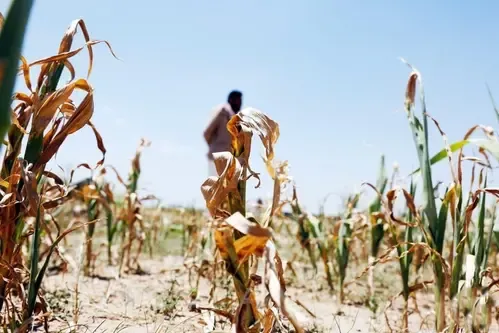
The 36th Telangana cabinet meeting chaired by CM Revanth Reddy declared a drought emergency due to El Niño -driven rainfall deficit, with no district recording normal rainfall this season.
A toll-free helpline 1-800-123-7157 has been set up at Praja Bhavan under the Agriculture Department, operational 10 AM–5 PM daily.
The cabinet will write to the central government seeking a special assessment team and financial aid for drought relief and alternative planning.
District-level meetings involving ministers, IAS officers, scientists, and farmers' representatives are scheduled for 20 July to compile district-wise damage reports.
A Special Investigation Team (SIT) will probe alleged irregularities in the Dharani portal covering all transactions since 29 October 2020 .
The cabinet approved amendments to nominate transgender persons as co-opted members in municipal corporations and to allow gram panchayat funds in nationalised banks, cooperative banks, or post offices.
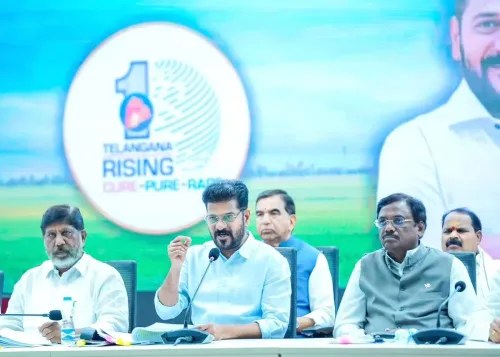
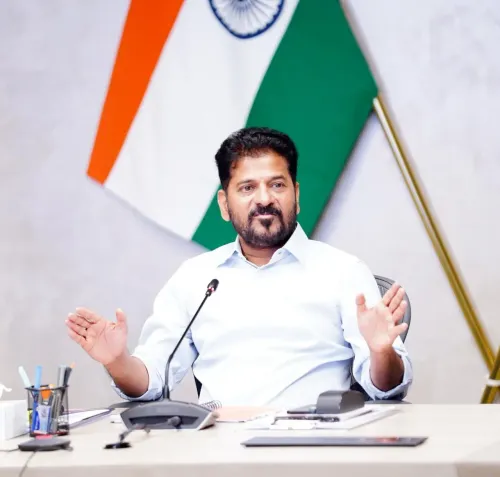
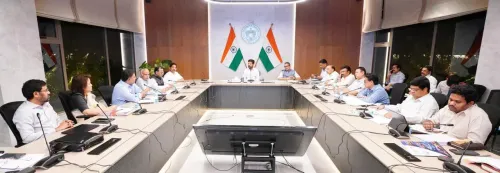
The Chief Minister's Office of Telangana announced on Friday, 17 July 2026 that the state cabinet, chaired by Chief Minister Revanth Reddy, convened its 36th cabinet meeting and expressed serious concern over severe rainfall deficit conditions caused by the El Niño phenomenon, resolving to write to the central government seeking urgent assistance and dispatching assessment teams to affected districts.
Context
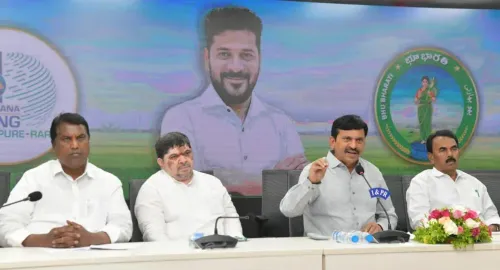
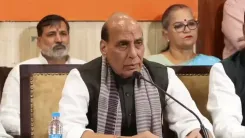
The cabinet communiqué, posted in Telugu, stated that vrishabhava paristhitulu (drought-like conditions) have gripped the state, with no region recording normal rainfall so far this season. The cabinet noted that rainfall across the state has not exceeded 30 to 35 per cent of normal levels in any district — a situation it described as deeply alarming. Ministers Ponguleti, Jupally Krishna Rao, Ponnam Prabhakar, and Adluri briefed the media following the meeting.
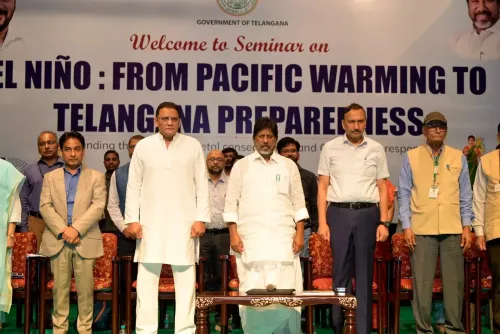
El Niño, the periodic warming of Pacific Ocean surface temperatures, is widely associated with weakened southwest monsoon performance over the Indian subcontinent. Indian states have historically activated contingency plans and approached the Union government for financial relief during such years, and Telangana is following that established pattern.
Policy Backdrop
Among the immediate steps announced, the cabinet directed the establishment of a toll-free helpline — 1-800-123-7157 — at Praja Bhavan, under the Agriculture Department, operational daily from 10 AM to 5 PM. The helpline is intended to receive farmer and public complaints related to drought conditions. District Collectors have been directed to remain on alert and respond immediately to drinking water grievances.
The cabinet resolved to prioritise drinking water needs over irrigation from available reservoir stocks, ensure uninterrupted power supply without load-shedding, and appeal to farmers to shift to short-duration crops (arutadi pantalu) suited to low-water conditions. State-wide awareness programmes and district-level meetings are to be held on 20 July, led by the respective in-charge minister and a senior IAS officer, bringing together elected representatives, agriculture officials, and scientists to compile district-wise loss reports.
The cabinet also resolved to request the central government to send a special assessment team to estimate losses and provide financial support for implementing alternative plans. State Planning Commission Vice-Chairman G. Chinna Reddy has been tasked with preparing a special report on El Niño's impact on agriculture, in consultation with agricultural experts and scientists.
Stakeholders and Impact
Farmers across Telangana face the most immediate risk, with the kharif sowing season under severe stress. Rural households dependent on tank and groundwater sources face potential drinking water shortages. The cabinet's directive to collectors to preempt complaints reflects the government's awareness that civic unrest over water scarcity can escalate quickly in summer-adjacent drought years.
Beyond the drought crisis, the cabinet cleared two significant legislative proposals. It approved an amendment to the Telangana Municipalities Act, 2019 to allow the nomination of transgender persons as co-opted members in municipal corporations — a step toward greater civic inclusion. It also approved an amendment to the Telangana Panchayat Raj Act, 2018 to permit gram panchayat funds to be deposited in nationalised banks, cooperative banks, or post offices, broadening fund management options for village bodies.
In a separate but significant decision, the cabinet resolved to constitute a Special Investigation Team (SIT) to probe alleged irregularities in land records and transactions through the Dharani portal — Telangana's integrated land registration system launched on 29 October 2020. The inquiry will cover the entire period since the portal's inception, examining suspicious registrations, record mutations, transfers of agricultural land, assigned land, and government land.
What's Next
The central government's response to Telangana's formal letter — particularly its decision on deploying an assessment team and releasing funds under the National Disaster Response Fund — will be the key determinant of the state's financial capacity to mount a sustained drought response. District-level meetings on 20 July are expected to generate granular loss data that will form the basis of the state's formal damage assessment submission to New Delhi. The SIT probe into the Dharani portal, covering transactions since 2020, is likely to become a politically charged process given that the portal was introduced by the previous BRS government.
Point of View
A central government appeal, and a high-profile SIT probe into the Dharani portal — signals that the Congress-led government is using the crisis both as a governance imperative and a political opportunity to contrast itself with the previous BRS administration. The Dharani inquiry, covering transactions since 2020, is a calculated move that keeps pressure on the opposition while the drought response positions Revanth Reddy as a proactive administrator ahead of any potential electoral cycle. The push to nominate transgender members in municipal corporations, tucked into the same cabinet sitting, reflects a broader pattern of incremental social inclusion legislation that carries low political cost but high symbolic value. Central government cooperation on the drought assessment team will be the real test of the state's ability to convert cabinet resolutions into tangible relief on the ground.
NationPress
16 Oct 2026
Frequently Asked Questions
What is the Telangana drought helpline number announced by the cabinet?
The toll-free helpline number is 1-800-123-7157 , set up at Praja Bhavan under the Agriculture Department and available daily from 10 AM to 5 PM .
Why is Telangana facing a drought in 2026?
The El Niño climate phenomenon has significantly weakened the southwest monsoon over Telangana, resulting in rainfall far below normal levels across all districts of the state.
What is the Dharani portal SIT probe about?
The Telangana cabinet resolved to form a Special Investigation Team to examine alleged irregularities in land registrations, record mutations, and transfers of agricultural, assigned, and government land through the Dharani portal since its launch on 29 October 2020 .
What has the Telangana government asked the central government to do about the drought?
The cabinet decided to write to the Union government requesting the dispatch of a special assessment team to estimate crop and other losses, and to seek financial assistance for implementing alternative drought-management plans.
What did the Telangana cabinet decide about transgender persons in municipal bodies?
The cabinet approved a proposal to amend the Telangana Municipalities Act, 2019 to allow transgender persons to be nominated as co-opted members in municipal corporations across the state.