CM Revanth Reddy orders 24/7 farm power as El Niño bites Telangana
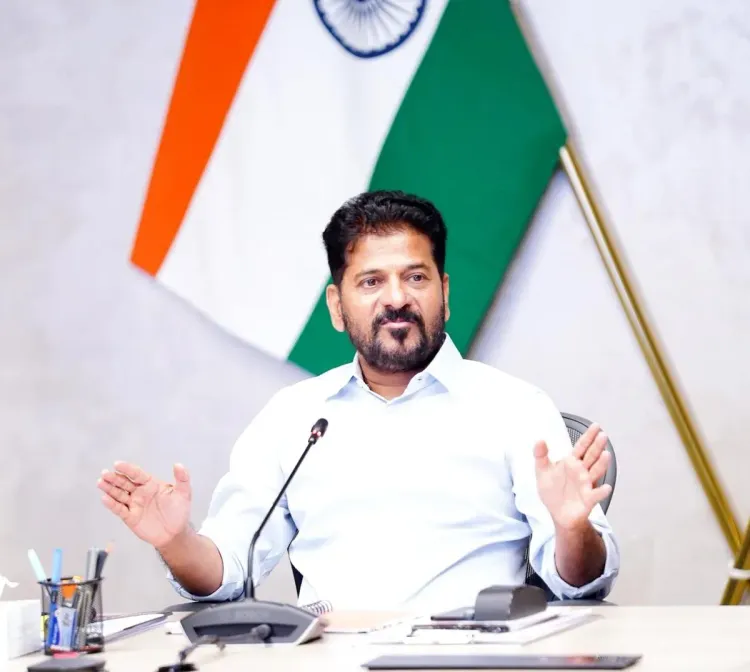
Synopsis
Telangana CM Revanth Reddy chaired an emergency drought review on 14 October 2026, ordering uninterrupted agricultural power for 20 critical crop days, framing El Niño as a COVID-scale disaster, and threatening to suspend power officials — including the GENCO CMD — if outages persist.
Key Takeaways
CM Revanth Reddy ordered 24/7 electricity supply to agriculture for the next 20 days , warning no crop losses due to power cuts will be accepted.
He threatened to suspend the Special CS of the Power Department , GENCO CMD , and relevant IAS officers if disruptions continue.
Yadadri Thermal Power Station was put on notice for failing to generate at full capacity despite coal linkages from Naini and Mahanadi .
El Niño has been officially designated a COVID-scale disaster ; every department must submit an action plan through June .
Group-1 and Group-2 officers will be assigned to every mandal to monitor drought conditions, reporting directly to Chief Secretary Sanjay Jaju .
Gram sabhas and kalajathas will be held statewide between Dasara and Diwali to build public awareness on El Niño, water conservation, and preparedness.
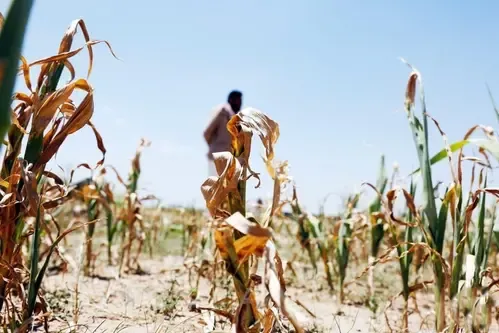
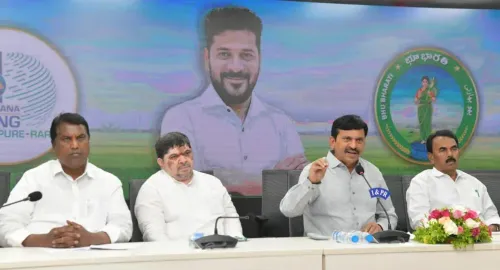
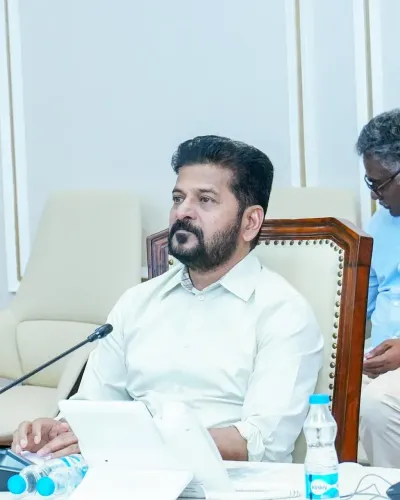
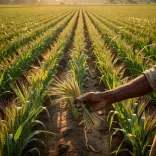
With standing crops across Telangana wilting under a drought-like sky and the El Niño weather pattern tightening its grip, Chief Minister A. Revanth Reddy summoned top officials on Wednesday, 14 October 2026, and delivered a blunt ultimatum: round-the-clock electricity for farmers — or face suspensions. The Chief Minister's Office of Telangana posted the full details of the high-level review, making clear that the next 20 days are critical for the state's standing crops.
The 20-day deadline — and a warning no official could miss
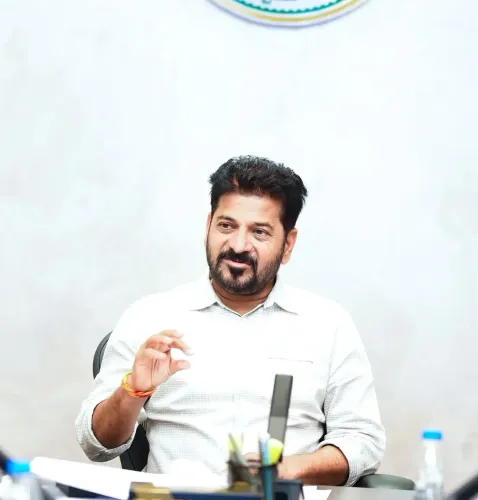
Revanth Reddy opened the review meeting with an unambiguous directive: power cuts must stop immediately and electricity supply to agriculture must continue day and night until harvests are safely in hand. 'Prajalu ku javabdaariganunnadii nenu' — 'I am the one accountable to the people,' he told officials — and warned that no excuse for disruption would be tolerated. He pointedly asked why repeated orders to stabilise supply had not translated into results on the ground.
The Chief Minister went further, threatening to suspend the Special Chief Secretary of the Power Department, the GENCO CMD, and the concerned IAS officers if breakdowns continued. 'Do not give a different reason for power outages every day,' he told the room. Officials were instructed to map high-demand agricultural zones and ramp up supply proportionally.
Yadadri plant in the crosshairs — coal linkages not delivering
A specific flashpoint was the Yadadri Thermal Power Station, Telangana's flagship coal-based plant. Despite coal supply linkages arranged from Naini and Mahanadi coalfields, the plant is not generating at full capacity — a gap the Chief Minister demanded be explained and closed immediately. The review exposed a disconnect between infrastructure commitments and on-ground delivery that officials struggled to justify.
El Niño declared a COVID-scale emergency
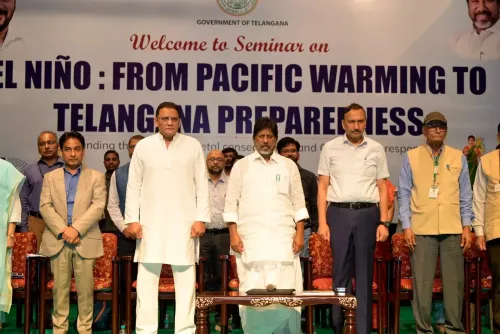
In arguably the meeting's most consequential framing, Revanth Reddy directed every government department to treat the El Niño-triggered drought conditions as a disaster on the scale of COVID-19. 'El Niño is a calamity like COVID. Nobody knows how long this situation will last. If we are not alert, what looks like a problem today will become a crisis,' he said. Each department was ordered to submit a 'watertight action plan' through to June next year — anticipating that rains may not return until then.
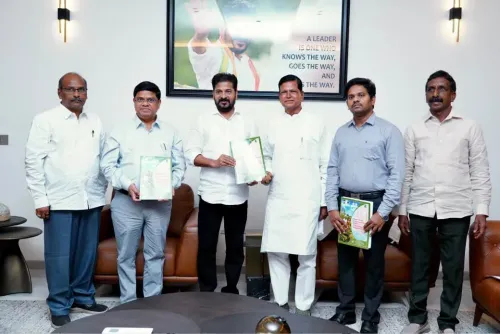
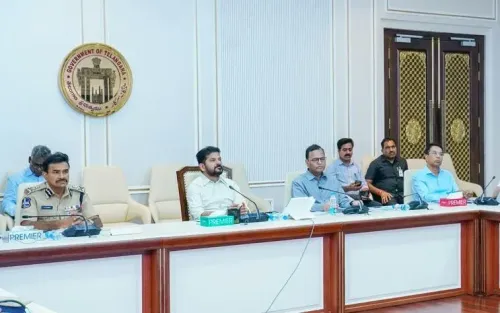
The framing carries institutional weight. Telangana has prior experience of multi-departmental crisis protocols during extreme weather, and invoking the COVID comparison signals that the government expects the same all-hands mobilisation — coordination across power, agriculture, revenue, health, municipal, panchayati raj, finance, and groundwater departments, all of whose senior officers attended the review alongside Chief Secretary Sanjay Jaju, MP Vem Narender Reddy, and CM Advisor K. Ramakrishna Rao.
Drinking water, cattle fodder, and treated sewage water for construction
Beyond crops, Revanth Reddy ordered officials to ensure uninterrupted drinking water supply across the state and to draft advance contingency plans. In a practical move for water conservation, Greater Hyderabad was instructed to use treated water from Sewage Treatment Plants (STPs) for construction and non-potable industrial needs, freeing up fresh water reserves. Special measures were also mandated to prevent a shortage of cattle fodder as El Niño stress spreads to livestock.
A monitoring officer for every mandal — and gram sabhas after Dasara
The government will deploy Group-1 and Group-2 level officers to every mandal in the state, giving each a dedicated responsibility to track rainfall deficits, power supply, drinking water, crop health, and fodder availability on a continuous basis. Field reports will flow directly to Chief Secretary Sanjay Jaju. The system is designed to eliminate the information gap between district realities and state-level decision-making.
On the public communication front, the Chief Minister ordered gram sabhas to be held across the state from after Dasara until Diwali, supplemented by kalajathas (awareness processions) to educate communities on El Niño's impact, water and electricity conservation, and precautions ahead of potential scarcity. The message is to go from village level to state level — no community left uninformed.
Telangana's farmers have seen drought-management commitments made and broken before. This time, the Chief Minister has put civil servants' careers on the line. Whether the machinery responds before crops fail will be the real test of whether a COVID-scale alert produces COVID-scale action.
Point of View
Still consolidating its position after its December 2023 election win, is acutely aware that farmer distress is its most politically combustible vulnerability. The June action-plan mandate also reveals an official acknowledgement that the dry spell could persist well beyond the current kharif season, with implications for rabi sowing and urban water supply that have not yet entered public debate. Whether the monitoring architecture — mandal-level officers reporting to the Chief Secretary — can translate political urgency into field-level delivery will determine whether this review meeting is remembered as a turning point or another unfulfilled commitment.
NationPress
14 Oct 2026
Frequently Asked Questions
Why is Telangana facing a power shortage for farmers in October 2026?
El Niño has reduced southwest monsoon rainfall across Telangana, leaving crops dependent on irrigation pumps running on electricity. CM Revanth Reddy held an emergency review on 14 October 2026 after repeated power outages threatened standing crops at a critical pre-harvest stage.
What did CM Revanth Reddy threaten officials with over the power crisis?
He warned that the Special Chief Secretary of the Power Department, GENCO CMD, and relevant IAS officers could be suspended if electricity disruptions to agricultural areas continued without resolution.
What is the issue with the Yadadri Thermal Power Station?
Despite coal supply linkages being arranged from Naini and Mahanadi coalfields, the Yadadri plant is not operating at its full generation capacity. CM Revanth Reddy demanded officials explain the shortfall immediately.
Why is El Niño being compared to COVID-19 in Telangana?
CM Revanth Reddy used the comparison to signal that the drought-like crisis requires the same all-government, multi-departmental emergency mobilisation that was deployed during the pandemic — not routine departmental responses.
What is the Telangana government planning for public awareness on El Niño?
The government will hold gram sabhas statewide between Dasara and Diwali, supported by kalajathas — community awareness processions — to inform citizens about El Niño's impact, water and electricity conservation, and precautions for the months ahead.