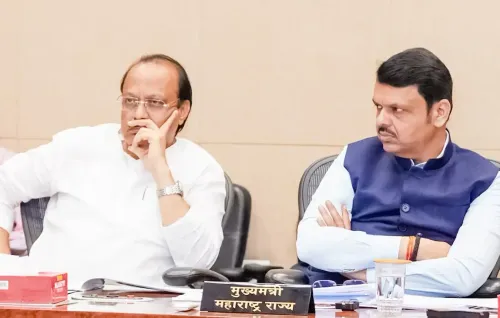
CM Fadnavis Urges Sugar Mills to Start Crushing Season Early

Synopsis
Maharashtra Chief Minister Devendra Fadnavis on October 14, 2026 publicly urged sugar mills to start the crushing season early and ensure timely FRP-linked payments to farmers, intervening at the critical October threshold of the annual sugarcane season.
Key Takeaways
CM Devendra Fadnavis issued a public appeal on October 14, 2026 urging Maharashtra sugar mills to begin the crushing season without delay.
He called for timely payment of sugarcane bills to farmers, a recurring issue at the start of every October–November crushing season.
Maharashtra's sugar sector operates under the Fair and Remunerative Price (FRP) mechanism introduced by the central government in 2009 .
Mills are legally required to pay farmers within 14 days of cane delivery under the Sugarcane Control Order, though enforcement has been inconsistent.
Maharashtra has over 200 sugar factories, making it India's largest sugar-producing state, with western Maharashtra districts at the political and economic centre of the sector.
The Chief Minister's appeal follows a well-established pattern of state executive intervention at the start of each crushing season to mediate between mill operators and farmers.
With Maharashtra's sugarcane fields ready for harvest and farmers waiting on payments, Maharashtra Chief Minister Devendra Fadnavis stepped into a familiar seasonal standoff on Wednesday, October 14, 2026 — publicly pressing sugar mills in Pune to start the crushing season without delay and clear farmer dues on time.
Posting in both Marathi and Hindi, Fadnavis appealed for a spirit of accommodation from all stakeholders: 'सर्वांनी सामंजस्याची भूमिका घेऊन साखर कारखाने लवकर सुरू करावेत' — 'All should adopt a cooperative approach, start sugar factories early, ensure sugarcane is crushed quickly, and see that farmers receive payment for their cane bills on time.'
Why October is crunch time for Maharashtra's sugar belt
Every year, the October–November window marks the official start of the sugarcane crushing season across Maharashtra — India's largest sugar-producing state. Sugar mills, a mix of cooperatives and private players, are required to begin operations and disburse payments under the Fair and Remunerative Price (FRP) mechanism, which the central government introduced in 2009 to replace the older Statutory Minimum Price and guarantee farmers a baseline rate for their crop.
The problem is structural. Mills routinely cite liquidity constraints at the start of the season to delay both crushing commencement and farmer payments. The result: cane sits in fields, farmers wait on cash, and the state government scrambles to mediate. It is a cycle Maharashtra has watched repeat for years — and one that carries outsized political weight in the cooperative-dominated districts of western Maharashtra.
The FRP guarantee and the gap between promise and payday
The FRP framework is legally binding — mills that fail to pay within 14 days of cane delivery are liable under the Sugarcane Control Order. Yet enforcement has historically been uneven, with state governments stepping in each season to pressure mills into compliance. Fadnavis's public appeal follows this established pattern of executive nudging: a high-visibility signal to mill managements that the government is watching and expects swift action.
The Chief Minister's choice to post in both Marathi and Hindi broadens the message beyond Maharashtra's borders, signalling awareness that the sugar sector's health resonates with farm communities across multiple states where BJP holds political stakes.
What the 2026-27 crushing season needs to deliver
For the appeal to translate into outcomes, mills will need to obtain state-level permissions, secure working capital, and coordinate cane survey logistics — all typically front-loaded into October. Any further delay pushes peak crushing into summer months, reducing recovery rates and squeezing mill revenues, which in turn delays the very farmer payments the FRP is designed to protect. The Chief Minister's intervention, timed at the season's threshold, is a bid to break that chain before it forms.
If the mills respond, Maharashtra's roughly 200-plus sugar factories could begin operations within days — releasing the first wave of FRP payments to hundreds of thousands of sugarcane farmers across the state's western heartland.
Point of View
Knowing that delayed payments in western Maharashtra's sugarcane belt translate directly into rural discontent. The appeal sits within a decade-long pattern of FRP enforcement gaps that successive state governments have patched with public pressure rather than structural reform. By posting in both Marathi and Hindi, Fadnavis signals that the message is calibrated for a national audience, reinforcing BJP's broader agrarian-welfare narrative. The real test is whether this season delivers measurable improvement in payment timelines — or whether the cycle simply resets in November.
NationPress
15 Oct 2026
Frequently Asked Questions
Why did CM Fadnavis urge sugar mills to start early in October 2026?
October marks the start of Maharashtra's annual sugarcane crushing season. CM Fadnavis urged mills to begin operations early and pay farmers on time to prevent the recurring delays in cane crushing and farmer due payments that have historically plagued the sector.
What is the Fair and Remunerative Price for sugarcane?
The Fair and Remunerative Price (FRP) is a minimum price fixed by the central government that sugar mills must pay to farmers for their sugarcane. It replaced the older Statutory Minimum Price in 2009 and is legally binding on all mills.
How long do sugar mills have to pay farmers after cane delivery?
Under the Sugarcane Control Order, sugar mills are required to pay farmers within 14 days of cane delivery at the FRP rate. Mills that fail to comply are liable under the order.
How many sugar factories does Maharashtra have?
Maharashtra has over 200 sugar factories, making it India's largest sugar-producing state. The sector is dominated by cooperatives, particularly in western Maharashtra districts.
Why are sugarcane farmer payments often delayed in Maharashtra?
Sugar mills frequently cite liquidity constraints at the start of the crushing season as a reason for delays. This structural issue recurs every year, prompting state government interventions and public appeals to ensure timely FRP payments to farmers.