El Nino to hit Telugu states hardest, Telangana rolls out action plan
Synopsis
Telangana is sounding its loudest El Niño alarm yet — deploying senior IAS officers across every erstwhile district, drafting alternative-crop policies for farmers, and managing a power demand that has already hit summer-peak levels in the middle of monsoon season. The Telugu states, according to the state's own ministers, face the sharpest rainfall shortfall in the country.
Key Takeaways
Revenue Minister Ponguleti Srinivas Reddy warned on 21 July that El Niño's rainfall deficit will be most severe in Telangana and Andhra Pradesh .
A senior IAS officer has been appointed as Special Officer for each erstwhile district to monitor agriculture, drinking water, groundwater, and rainfall conditions.
A comprehensive rain-deficit report is being prepared for submission to the Centre to seek federal assistance.
Deputy CM Mallu Bhatti Vikramarka said electricity demand in Telangana has reached April summer peak levels due to El Niño — unusual for the monsoon season.
The government is promoting low-water alternative crops to protect farmers from potential drought-related losses.
A state-level awareness session was held in Hyderabad to prepare communities at the individual, village, and district levels.
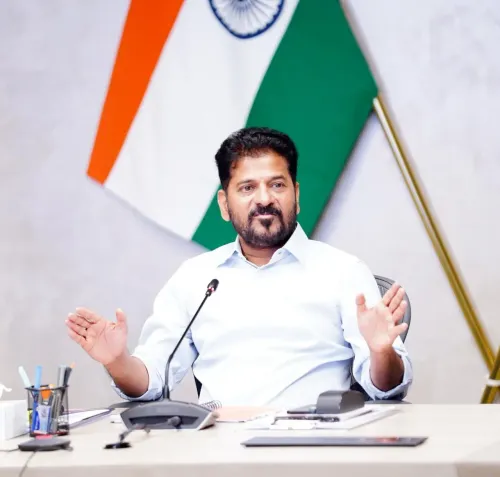
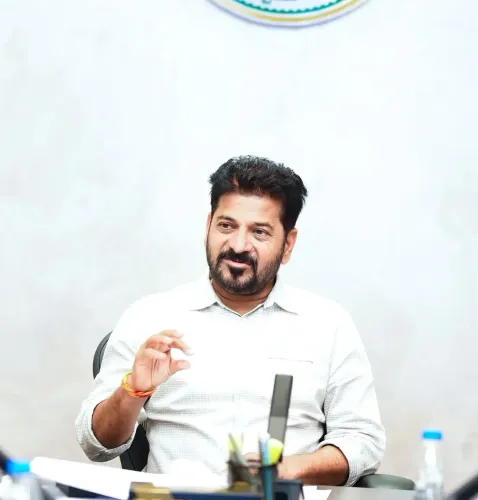
Telangana's Revenue Minister Ponguleti Srinivas Reddy warned on Tuesday, 21 July that the El Niño weather phenomenon is set to deliver its most severe rainfall deficit in the southern states, with Telangana and Andhra Pradesh facing a particularly acute impact. Speaking after a review meeting at the Hanamkonda Collectorate, the minister said rainfall across the Telugu-speaking states is likely to be significantly below normal this year, triggering a multi-pronged government response covering agriculture, drinking water, and power supply.
State-Level Preparedness Measures
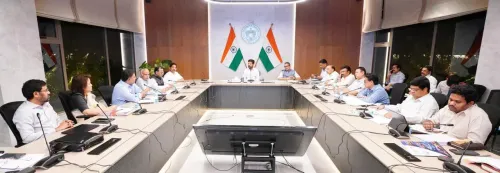
Srinivas Reddy, who also holds charge of Warangal district, chaired the review meeting with district officials to assess contingency plans and departmental readiness. The state government has appointed a senior IAS officer as a Special Officer for each erstwhile district to continuously monitor the rainfall deficit situation. These officers will submit detailed reports covering agriculture conditions, drinking water availability, groundwater levels, and rainfall data directly to the Chief Minister and the state cabinet.
A special action plan has been devised to help districts manage the shortfall, reassure farmers, and prevent drinking water shortages. A comprehensive report on prevailing rain-deficit conditions is also being prepared for submission to the Centre, with the state seeking federal assistance and support.
Deputy CM Outlines Broader Strategy
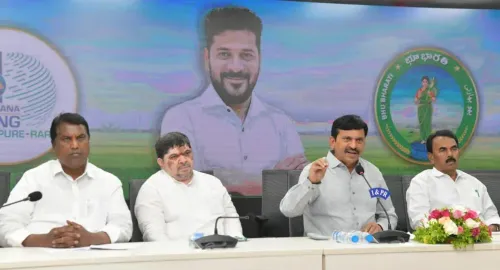
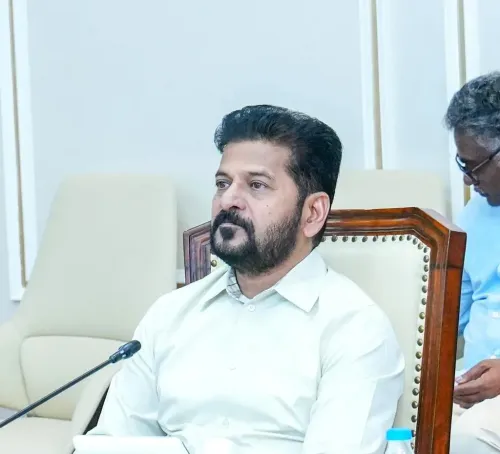
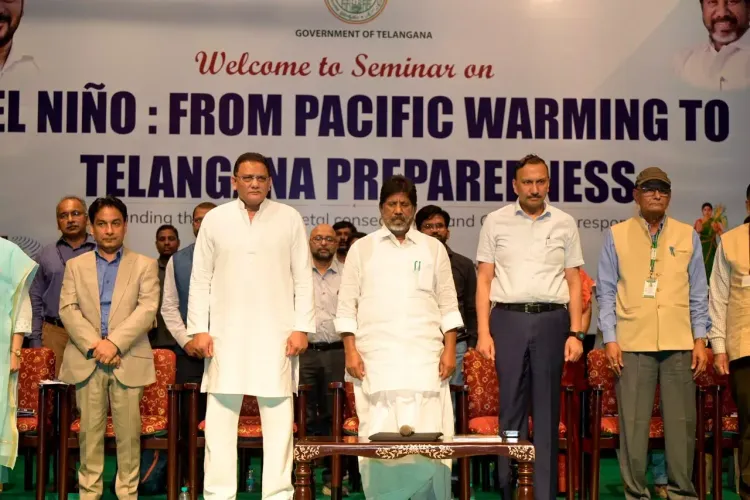
Deputy Chief Minister and Finance Minister Mallu Bhatti Vikramarka said the Telangana government is formulating comprehensive plans to shield agriculture, drinking water supply, and the power sector from El Niño's fallout. He was addressing a state-level awareness session in Hyderabad organised by the Planning Department on the theme 'From temperature rise in the Pacific Ocean to Telangana's preparedness.' Minister for Minority Welfare Mohammed Azharuddin also attended the event.
'If the severity of the problem is understood in advance, every family and every village can make their own proper plans,' Bhatti Vikramarka said. He noted that scientists are studying how temperature shifts in the equatorial Pacific Ocean, thousands of kilometres away, ripple through to the state's ponds, canals, and villages — and that action plans are being drawn up accordingly.
Agriculture and Water Security
The government is promoting a policy of alternative, low-water crops based on expert recommendations to ensure farmers do not suffer economic losses even if drought conditions materialise. Advance plans are also being prepared to secure drinking water, irrigation water, and water and food requirements for cattle, birds, and wildlife across the state.
Power Demand Surges to Summer Peak Levels
Bhatti Vikramarka, who also holds the energy portfolio, flagged an unusual power demand surge driven by El Niño. Electricity consumption — typically low during the monsoon season — has currently reached levels comparable to the April summer peak, with demand for fans, air conditioners, borewells, and lift irrigation motors running without the usual day-night distinction.
To manage this, the government is maximising the use of low-cost solar power during daytime hours to reduce financial burden, while using thermal power systematically for residual needs. Grid stability is being maintained through efficient solar-thermal coordination, the Deputy CM said.
Public Awareness Drive
The awareness session aims to prepare individuals, families, villages, mandals, and districts to respond at their respective levels. Bhatti Vikramarka commended television channels for broadcasting the information live to rural households. The government's stated goal is to ensure that no community is caught off guard by the unfolding climatic conditions.
With both the Revenue Ministry and the Deputy CM's office now actively coordinating El Niño response, the coming weeks will test whether Telangana's preparedness framework translates into on-ground relief for farmers and residents facing an increasingly water-stressed season.
Point of View
Water, and energy in a single coordinated push. Yet the real test is execution: past drought contingency plans in the Deccan have often stalled at the reporting stage without translating into timely farmer relief or water-table interventions. The power demand already touching April-peak levels mid-monsoon is the sharpest signal yet that El Niño is not a future risk but a present one. Whether the Centre responds with adequate support to a state that is politically at odds with the ruling dispensation in Delhi will be worth watching closely.
NationPress
20 Oct 2026
Frequently Asked Questions
Why is El Niño expected to be more severe in Telangana and Andhra Pradesh?
According to Telangana Revenue Minister Ponguleti Srinivas Reddy, while El Niño is affecting multiple states across India, the rainfall deficit is expected to be particularly acute in the Telugu-speaking states of Telangana and Andhra Pradesh. The minister did not specify the precise meteorological reason but flagged it as a priority concern warranting special government intervention.
What steps has the Telangana government taken to address the El Niño impact?
The state has appointed a senior IAS officer as Special Officer for each erstwhile district to monitor rainfall, agriculture, drinking water, and groundwater conditions. A special action plan has been devised for districts, and a comprehensive report is being prepared for submission to the Centre to seek federal assistance.
How is El Niño affecting electricity demand in Telangana?
Deputy CM Mallu Bhatti Vikramarka stated that electricity demand in Telangana has reached levels comparable to the April summer peak — an anomaly for the monsoon season. Increased use of fans, air conditioners, borewells, and lift irrigation motors is driving the surge, and the government is maximising solar power use during daytime to manage the load.
What is the government doing to protect farmers from El Niño-related drought?
The Telangana government is promoting alternative crops that require less water, based on expert recommendations, to prevent economic losses for farmers if drought conditions develop. Advance plans are also being prepared to secure irrigation water alongside drinking water for both people and livestock.
What was the state-level awareness session on El Niño about?
The session, organised by Telangana's Planning Department in Hyderabad on the theme 'From temperature rise in the Pacific Ocean to Telangana's preparedness,' aimed to educate citizens about El Niño's mechanics and encourage preparedness at the individual, family, village, and district levels. Deputy CM Bhatti Vikramarka addressed the session, with Minister Mohammed Azharuddin also in attendance.