CM Dhami Greets RSS on Its 101st Foundation Day
Synopsis
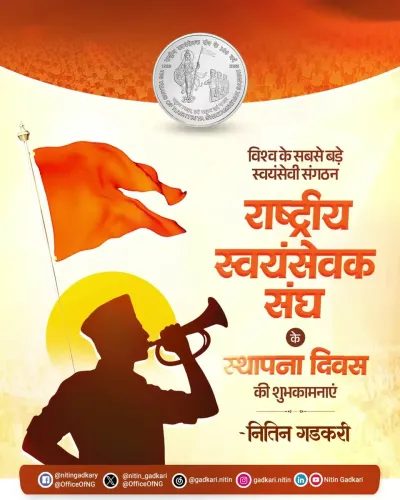
Uttarakhand CM Pushkar Singh Dhami greeted RSS swayamsevaks on the organisation's 101st foundation day, crediting founder Dr. Keshav Baliram Hedgewar's vision for building a nationwide network active in service, education and disaster relief.
Key Takeaways
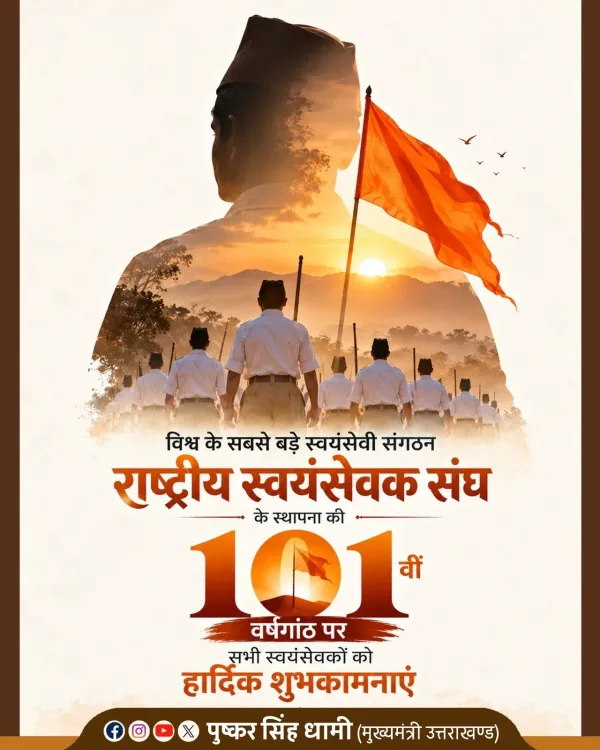
Uttarakhand CM Pushkar Singh Dhami posted a tribute on 20 October 2026 marking the RSS's 101st foundation anniversary .
The RSS was founded on 27 September 1925 by Dr.
Keshav Baliram Hedgewar in Nagpur .
Dhami described the RSS as a symbol of discipline, service, and national consciousness.
He highlighted swayamsevaks' contributions in service, education, disaster relief, and social harmony.
BJP-led state governments routinely issue public acknowledgments on the RSS foundation day, reflecting deep organisational ties.
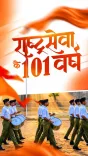
A 101-year-old organisation rooted in a single daily drill now spans every corner of India — and Uttarakhand Chief Minister Pushkar Singh Dhami marked the milestone with a warm tribute on Tuesday, 20 October 2026, saluting the Rashtriya Swayamsevak Sangh on its 101st foundation anniversary.
Posting in Hindi, CM Dhami extended 'heartfelt congratulations and best wishes to all swayamsevaks,' describing the RSS as a symbol of 'anushasan, seva aur rashtriya chetna' — discipline, service, and national consciousness. He credited the organisation's towering growth to the 'visionary leadership' of its founder, Dr. Keshav Baliram Hedgewar, saying the seed he planted has grown into a vast tree whose branches now reach every corner of the country.
From a single Nagpur shakha to a nationwide network
The RSS was founded on 27 September 1925 by Dr. Keshav Baliram Hedgewar in Nagpur, with the daily shakha — a morning assembly of physical drills, prayers, and ideological instruction — as its core unit. What began as a handful of participants in a Nagpur field has evolved into one of the world's largest voluntary organisations. Dhami noted that the journey that started with the daily shakha is today visible in swayamsevaks' selfless contributions across service, education, disaster relief, and social harmony.
BJP-governed states and the RSS anniversary tradition
Public tributes from BJP-led state governments on the RSS foundation day have become a consistent annual feature, reflecting the longstanding organisational and ideological ties between the two. Uttarakhand, governed by Dhami since 2021, is no exception. The messaging underscores a broader pattern: as the RSS crosses the century mark into its second hundred years, its affiliated political ecosystem amplifies the occasion with visible, coordinated acknowledgment at every tier of governance.
The organisation's expansion into disaster relief and education programmes has given it a civic footprint that extends well beyond its ideological origins — a point Dhami leaned into heavily in his post, framing swayamsevak work as national service in the broadest sense.
As BJP chief ministers and central leaders line up their own anniversary messages, one question looms over the centennial-plus moment: can an organisation built on face-to-face daily shakhas sustain that intimacy as it scales deeper into the 21st century?
Point of View
The messaging also signals an ongoing effort to present the RSS as a civic institution, not merely a political feeder organisation. Watch for similar, likely coordinated statements from other BJP chief ministers as the day unfolds.
NationPress
20 Oct 2026
Frequently Asked Questions
When was the RSS founded and by whom?
The RSS was founded on 27 September 1925 by Dr. Keshav Baliram Hedgewar in Nagpur, with the daily shakha as its foundational activity.
What did CM Dhami say about RSS on its 101st anniversary?
CM Pushkar Singh Dhami congratulated all swayamsevaks and described the RSS as a symbol of discipline, service, and national consciousness, crediting Dr. Hedgewar's visionary leadership for its nationwide growth.
What work does the RSS do beyond its shakhas?
The RSS has expanded into service, education, disaster relief, and social harmony programmes through its vast volunteer network across India.
Why do BJP leaders regularly mark the RSS foundation day?
The BJP and RSS share longstanding organisational and ideological ties; public tributes on the RSS foundation day reflect that relationship and have become a consistent annual practice for BJP-governed states.
What is a 'shakha' in the context of the RSS?
A shakha is the RSS's core daily assembly unit — a structured morning gathering involving physical drills, prayers, and ideological discussions that has been central to the organisation since its founding in 1925.