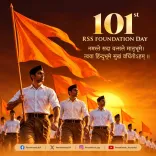
Mandaviya greets RSS on 101 years of national service
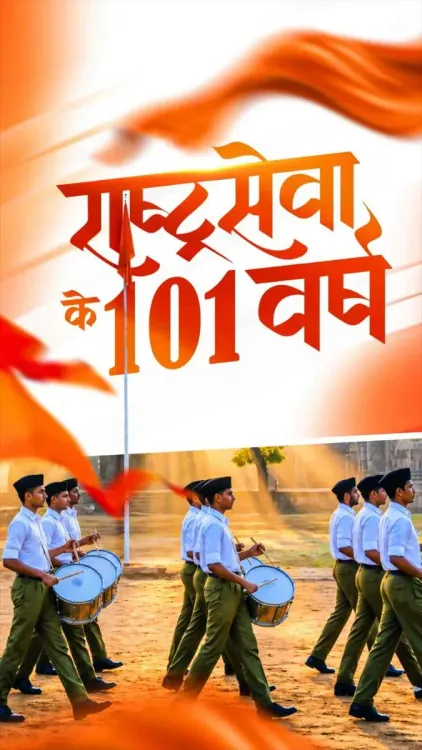
Synopsis
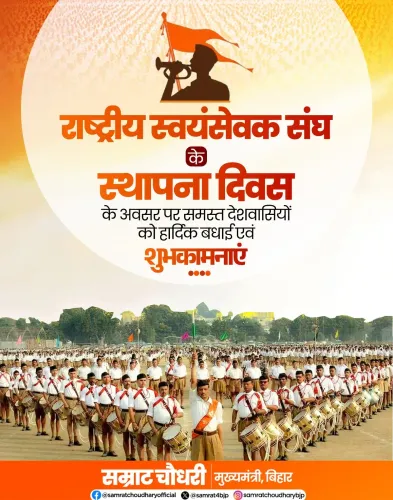
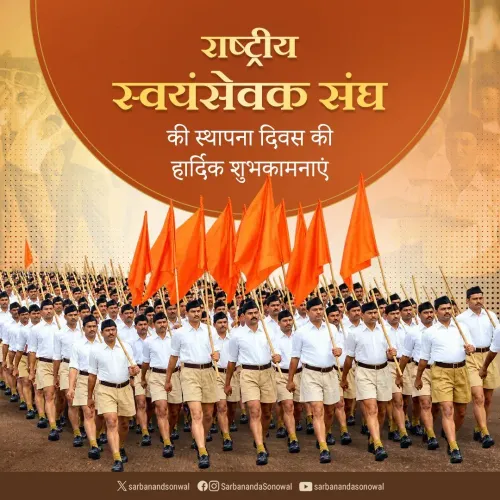
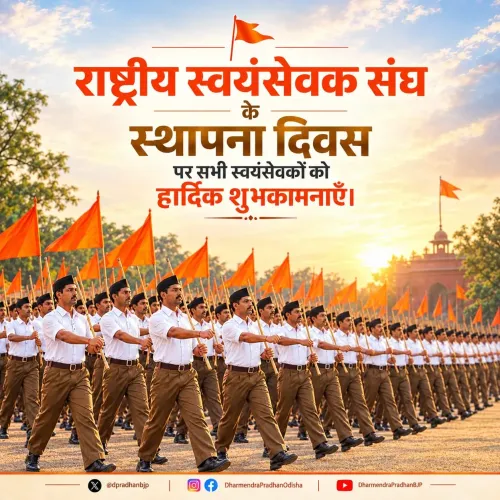
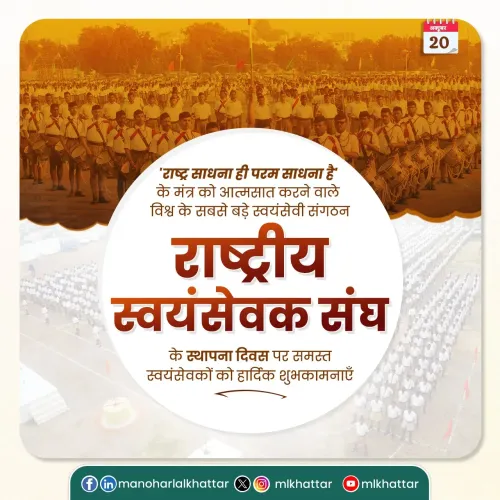
Union Labour and Sports Minister Mansukh Mandaviya greeted RSS workers on the organisation's 101st anniversary, invoking the Sanskrit ideal 'idam na mam' — not for me, but for the nation — to mark over a century of voluntary national service.
Key Takeaways
Union Minister Mansukh Mandaviya posted greetings to RSS workers on 20 October 2026 .
The post marks 101 years of the RSS, founded on 27 September 1925 in Nagpur by Dr.
Keshav Baliram Hedgewar .
Mandaviya invoked the Sanskrit phrase 'Rashtraya swaha, idam na mam' — 'offered to the nation, not for me.' BJP ministers publicly marking RSS milestones is a consistent pattern, reflecting the Sangh Parivar's ideological ecosystem.
The RSS is considered the ideological parent body of the BJP, supplying cadre and leadership across decades.
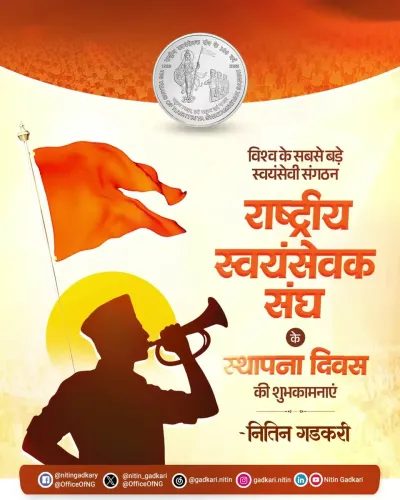
A century of grassroots nation-building — and then one more year. On Tuesday, 20 October 2026, Union Labour and Sports Minister Mansukh Mandaviya extended warm greetings to all workers of the Rashtriya Swayamsevak Sangh (RSS) as the organisation marks 101 years of dedicated service to the nation.
Invoking a Sanskrit phrase rooted in Vedic sacrifice, Mandaviya wrote: 'Rashtraya swaha, idam rashtraya idam na mam' — meaning, 'offered to the nation, this is for the nation, not for me.' The line is not merely ceremonial. It encapsulates the ideological spine of the RSS: selfless, ego-less service to rashtra, the nation.
From Nagpur, 1925: how RSS became the Sangh Parivar's bedrock
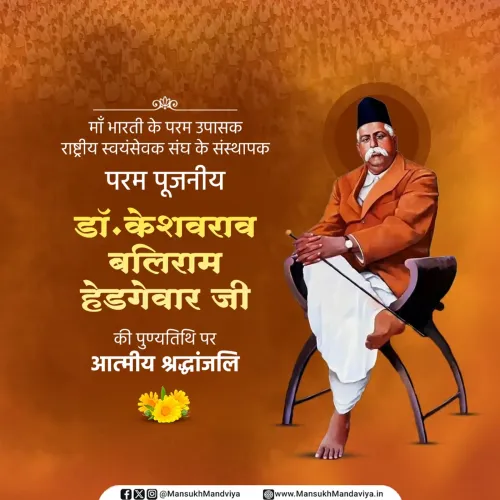
The RSS was founded on 27 September 1925 in Nagpur by Dr. Keshav Baliram Hedgewar, a physician-turned-activist who believed that Hindu social unity was the prerequisite for any durable national independence. Starting with a handful of volunteers in a single city, it grew into one of the world's largest voluntary organisations, running a vast network of shakhas (daily drills and study circles) across India and abroad.
Its relationship with the BJP — the party from which virtually every senior minister in the current Union Cabinet, including Mandaviya, draws political identity — is foundational. The RSS is widely regarded as the ideological parent body of the BJP, supplying cadre, discipline, and ideological orientation across generations of leadership.
Why BJP ministers mark this milestone so publicly
Senior BJP leaders routinely issue public acknowledgments of RSS milestones, and the pattern around the centenary and now the 101st year has been particularly prominent. The messaging is deliberate: 'rashtra seva' as a lived philosophy, not a political slogan. For Mandaviya — a minister who oversees both labour welfare and youth sports — invoking that ethic publicly signals alignment with the Sangh Parivar's broader civilisational framing of governance as service.
At 101 years, the RSS enters what its leadership has called an era of consolidation after the centenary — expanding its footprint in tribal, coastal, and urban-poor communities while deepening engagement with youth through its affiliated wings. Whether the next hundred years begin as deliberately as the first will depend on how successfully it transitions from its founding generation's memory to the lived experience of a new India.
Point of View
The year after its centenary. The choice of the Vedic phrase 'idam na mam' is not incidental; it ties ministerial office explicitly to the RSS's founding philosophy of ego-less service, blurring the line between governance and organisational identity. For the BJP, such gestures serve a dual purpose: reaffirming grassroots cadre loyalty while framing the ruling dispensation's policy agenda as a continuation of a century-old civilisational mission. As the RSS enters its 101st year, expect the party's communication machinery to lean harder on that continuity narrative ahead of upcoming electoral cycles.
NationPress
20 Oct 2026
Frequently Asked Questions
When was the RSS founded and by whom?
The RSS was founded on 27 September 1925 in Nagpur by Dr. Keshav Baliram Hedgewar , a physician and activist who sought to build Hindu social unity.
What does 'idam na mam' mean?
'Idam na mam' is a Sanskrit phrase meaning 'this is not mine' or 'not for me.' It comes from Vedic tradition and is used by the RSS to express the ideal of selfless, ego-free service to the nation.
Why did Mansukh Mandaviya congratulate the RSS?
Mandaviya, a senior BJP leader and Union Minister, posted greetings to all RSS workers to mark the organisation's 101st founding anniversary in October 2026.
What is the relationship between the BJP and the RSS?
The RSS is widely regarded as the ideological parent body of the BJP. It supplies cadre, organisational discipline, and ideological direction to the party, and virtually all senior BJP leaders have backgrounds in or strong ties to the RSS.
What is the RSS's mission?
The RSS describes its mission as character-building and social service rooted in Hindu nationalist values. It runs a nationwide network of shakhas — daily volunteer gatherings — and is affiliated with a range of social, cultural, and political organisations collectively called the Sangh Parivar.