Jaishankar at Raisina Dialogue Abu Dhabi: India-UAE as a Model for a Shifting World
Synopsis
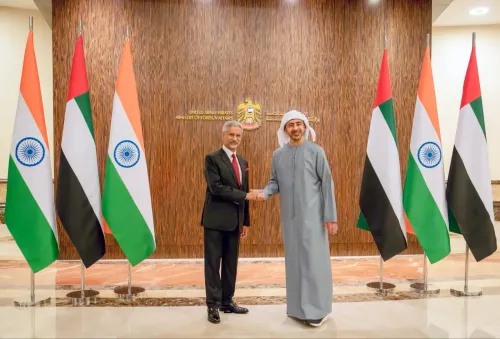
EAM Dr. S. Jaishankar joined UAE DPM and FM Sheikh Abdullah Bin Zayed in Abu Dhabi for a Raisina Dialogue Middle East session, arguing that nations must develop sharper strategic awareness, support multilateral reform through minilateralism, and pointing to the India-UAE decade-long partnership as a model for navigating global change.
Key Takeaways
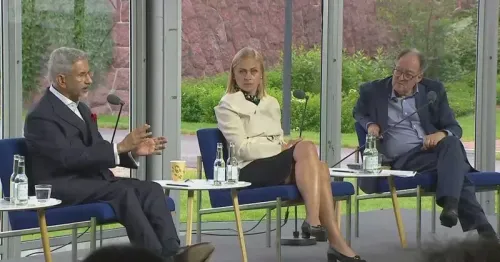
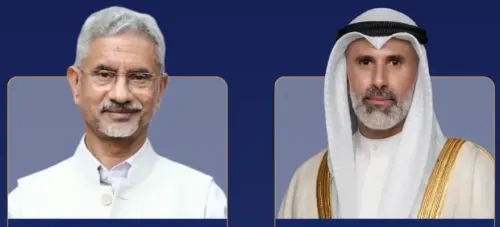
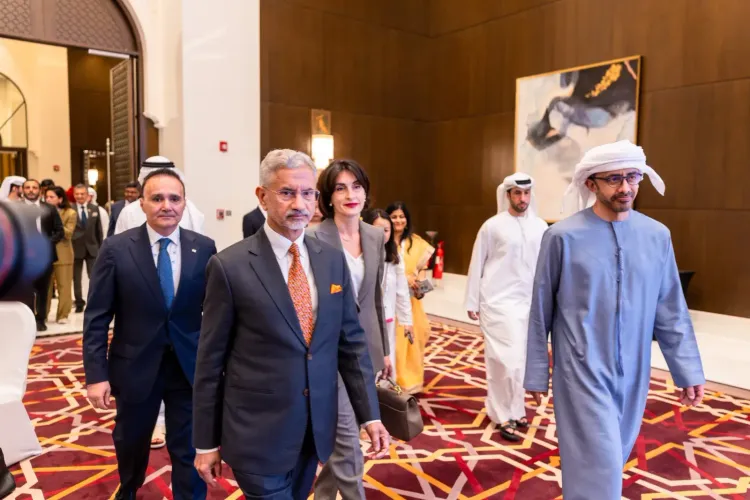
Jaishankar participated in the Raisina Dialogue Middle East session in Abu Dhabi alongside UAE DPM and FM Sheikh Abdullah Bin Zayed Al-Nahyan .
Jaishankar argued that the pace of change in the global order reflects both long-term trends and immediate shocks, compelling countries to explore new partnerships.
He called multilateral reform urgent and advocated stronger minilateralism as a complementary mechanism — consistent with India's involvement in groupings like the Quad and I2U2.
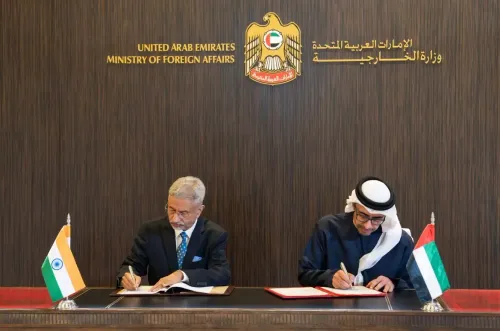
The India-UAE Comprehensive Economic Partnership Agreement , signed in February 2022 , was cited as a model of two nations successfully adapting to a shifting global environment.
The UAE hosts nearly 3.5 million Indians , making it one of India's most consequential bilateral relationships across trade, energy, and people-to-people ties.
The Abu Dhabi venue itself marked an expansion of the Raisina Dialogue format beyond its traditional New Delhi base.
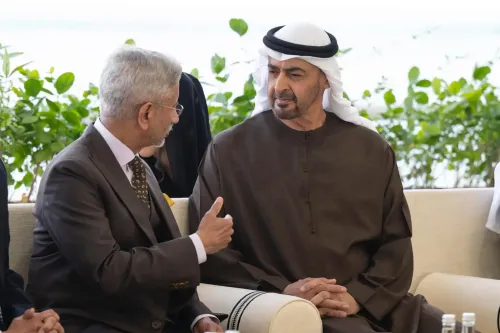
In Abu Dhabi, Union External Affairs Minister Dr. S. Jaishankar sat across from UAE Deputy Prime Minister and Foreign Minister Sheikh Abdullah Bin Zayed Al-Nahyan at the Raisina Dialogue's Middle East session — and made the case that the world is changing fast enough that every country must now think beyond its traditional comfort zones.
A high-altitude conversation in Abu Dhabi
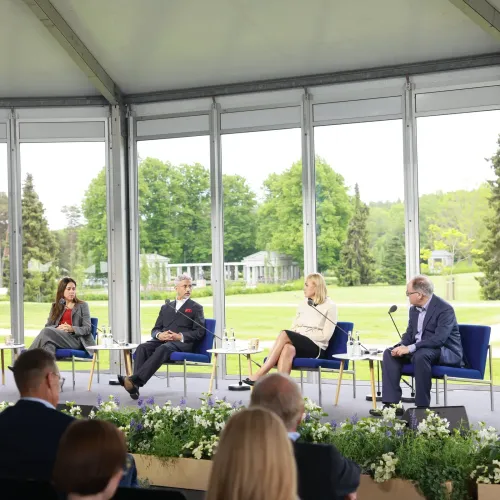
The session, titled 'The World Ahead: Power, Purpose and Possibility', brought India's top diplomat and the UAE's foreign minister together on the same stage for what Dr. Jaishankar described as an exploration of how nations navigate accelerating global change. The Raisina Dialogue — India's flagship annual geopolitical conference — has previously been hosted in New Delhi; this Middle East edition signals the format's expanding geographic ambition.
Dr. Jaishankar underscored that the churn in the global order reflects 'both long-term trends and immediate shocks' — a framing that captures everything from the realignment of supply chains to the fracturing of post-Cold War alliances. Countries, he argued, are responding 'as per their specific situation,' inevitably exploring 'new partnerships and fresh options.'
Minilateralism as the answer to multilateral gridlock
One of the sharpest points Dr. Jaishankar made was on the architecture of global governance: multilateral reform is urgent, but it can be supported — and in the meantime, partially compensated for — through stronger minilateralism. India has long pushed for UN Security Council reform and expanded representation in global bodies, a campaign running back to the early 2000s. The endorsement of minilateral groupings — smaller, purpose-built coalitions — reflects a pragmatic acceptance that the big institutions move slowly while the world does not wait.
This is consistent with India's track record: from the Quad to the I2U2 grouping (which includes India, Israel, the UAE and the United States), New Delhi has pursued nimble formats that deliver outcomes without requiring consensus from 193 UN member states.
A decade of India-UAE transformation
Dr. Jaishankar held up the India-UAE partnership of the last decade as a concrete exhibit of two countries that successfully adapted to a changing environment. That partnership has real weight behind it. The two nations signed a Comprehensive Economic Partnership Agreement in February 2022, one of the fastest trade deals India has ever concluded, covering goods, services and investment. Bilateral trade had already surpassed $85 billion in the years leading up to the agreement, making the UAE one of India's largest trading partners.
Beyond trade, the relationship spans energy, technology, defence, and the welfare of nearly 3.5 million Indians who live and work in the UAE — the single largest expatriate community in the country. Sheikh Abdullah has been central to that deepening, navigating both economic ambition and strategic alignment with New Delhi through a decade of high-level engagement.
Strategic awareness as the new currency
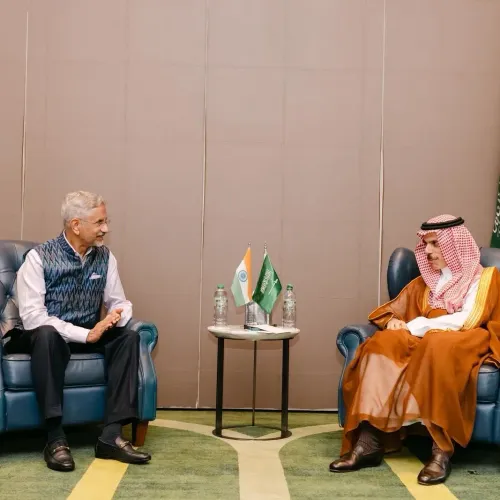
Perhaps the most consequential phrase from Dr. Jaishankar's remarks was his call for 'sharper strategic awareness' — the idea that in a world of multiplying options, clarity of purpose and the willingness to move beyond inherited alignments is not optional but essential. For India, that has meant engaging simultaneously with Washington, Moscow, Riyadh, and Abu Dhabi without subordinating its foreign policy to any single axis.
The Abu Dhabi setting itself makes that point elegantly: a Raisina session in the Gulf, co-hosted with the UAE's top diplomat, is a diplomatic statement as much as a conference panel.
If the India-UAE partnership is the proof of concept, Dr. Jaishankar's message in Abu Dhabi was clear — the countries that thrive in the world ahead will be those bold enough to write new rules rather than waiting for old institutions to catch up.
Point of View
Reinforcing that New Delhi's foreign policy operates on its own strategic logic rather than in any single great power's orbit. Elevating the India-UAE partnership as a model — rather than simply a bilateral — signals that India wants this relationship to serve as a template for how emerging economies can build consequential ties outside the traditional Western-anchored framework. The push for minilateralism alongside multilateral reform is also a coded acknowledgement that India's UNSC reform campaign is stalled, and purpose-built coalitions are the practical workaround. Watching whether the I2U2 format or new India-Gulf groupings gain momentum in the months ahead will reveal how much of this Abu Dhabi framing translates into concrete architecture.
NationPress
15 Oct 2026
Frequently Asked Questions
What is the Raisina Dialogue and why was it held in Abu Dhabi?
The Raisina Dialogue is India's flagship annual geopolitical conference. This Middle East edition was convened in Abu Dhabi, marking an expansion of the format beyond its traditional New Delhi base to engage Gulf partners directly.
What did Jaishankar say at the Raisina Dialogue Middle East session?
Dr. Jaishankar underscored that the global order is changing rapidly due to both long-term trends and immediate shocks, that countries must explore new partnerships and develop sharper strategic awareness, and that multilateral reform should be supported through stronger minilateralism.
What is the India-UAE Comprehensive Economic Partnership Agreement?
India and the UAE signed a Comprehensive Economic Partnership Agreement in February 2022 , one of India's fastest-concluded trade deals, covering goods, services and investment. It formalised a bilateral trade relationship that had already exceeded $85 billion annually.
What does minilateralism mean in Indian foreign policy?
Minilateralism refers to smaller, purpose-built groupings of a few like-minded countries — such as the Quad or the I2U2 — that can act quickly on shared goals without requiring consensus from large multilateral bodies like the United Nations.
Who is Sheikh Abdullah Bin Zayed Al-Nahyan?
Sheikh Abdullah Bin Zayed Al-Nahyan is the UAE's Deputy Prime Minister and Minister of Foreign Affairs, and has been a central figure in deepening strategic and economic ties between the UAE and India over the past decade.