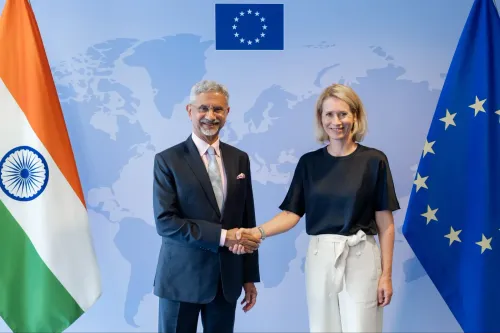
Jaishankar joins Finland, UAE FMs at Kultaranta Talks panel
Synopsis
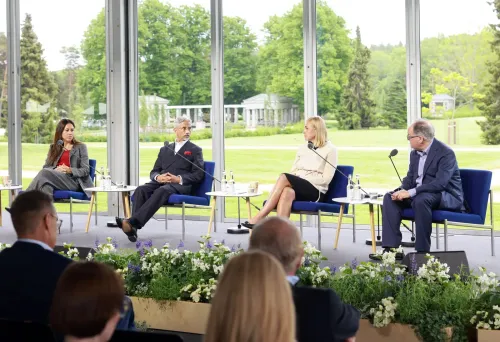
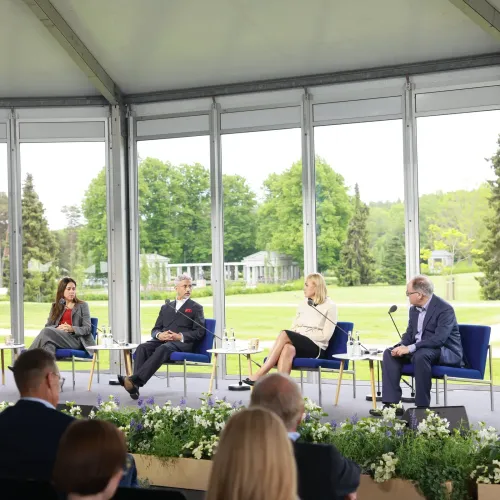
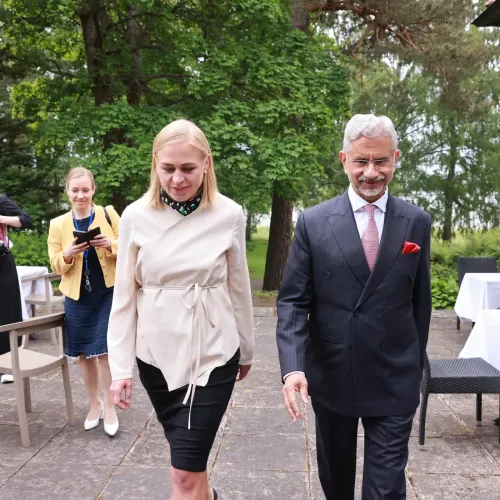
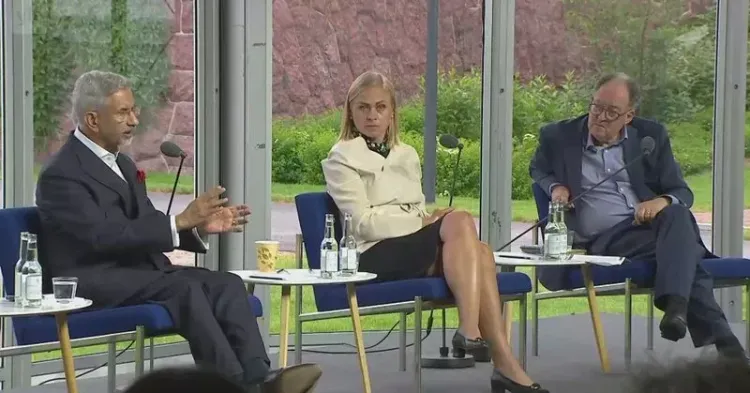
External Affairs Minister Dr. S. Jaishankar participated in a Kultaranta Talks panel on 'Emerging Powers and the New Geopolitical Competition' alongside Finnish FM Elina Valtonen and UAE Assistant FM Lana Nusseibeh on 11 June 2026, reinforcing India's multi-alignment diplomacy at a key Nordic security forum.
Key Takeaways
Jaishankar joined a panel at the Kultaranta Talks in Finland on 11 June 2026 , themed 'Emerging Powers and the New Geopolitical Competition'.
Co-panellists were Finnish Foreign Minister Elina Valtonen and UAE Assistant Foreign Minister Lana Nusseibeh .
The Kultaranta Talks is an annual forum held at the Finnish President's summer residence, running since 2013 .
Finland joined NATO in 2023 ; the UAE and India signed a CEPA in 2022 , deepening ties across both partnerships.
India's participation underscores its multi-alignment strategy, engaging Nordic, European and Gulf partners simultaneously amid intensifying US-China competition.
Follow-up diplomacy at the UN General Assembly and bilateral technology meetings between the three nations is anticipated.
Union External Affairs Minister Dr. S. Jaishankar participated in a panel discussion at the Kultaranta Talks in Finland on 11 June 2026, joining Finnish Foreign Minister Elina Valtonen and UAE Assistant Foreign Minister Lana Nusseibeh to deliberate on the theme 'Emerging Powers and the New Geopolitical Competition'.
Context
The Kultaranta Talks is an annual foreign and security policy forum held at the Finnish President's summer residence. Convening international leaders since 2013, the forum has grown into a significant platform for candid multilateral exchange on global security and governance. Dr. Jaishankar's participation marks India's engagement at a traditionally Nordic-European forum, underscoring New Delhi's outreach across regions.
The panel's theme — 'Emerging Powers and the New Geopolitical Competition' — directly engages the central fault lines of contemporary international relations: the shifting balance between established Western powers and rising nations, and the intensifying strategic competition between the United States and China.
Policy Backdrop
Finland joined NATO in 2023, fundamentally reorienting its security posture after decades of neutrality. As a member of the European Union, Helsinki has been actively aligning its foreign policy with broader EU frameworks while also expanding bilateral partnerships in technology, education and sustainable development — areas where India is a key interlocutor.
The United Arab Emirates represents one of India's most consequential partnerships in West Asia. The two countries signed a Comprehensive Economic Partnership Agreement (CEPA) in 2022, substantially boosting bilateral trade and investment flows. Lana Nusseibeh, who previously served as the UAE's Permanent Representative to the United Nations, brings deep experience in multilateral diplomacy and regional security to the panel.
India's own positioning as a leading voice for multipolarity gained significant momentum during its G20 Presidency in 2023, when New Delhi successfully championed the inclusion of the African Union as a permanent member of the grouping. These positions form the bedrock of India's articulation at forums such as Kultaranta.
Stakeholders and Impact
For the diplomatic community, the optics of an Indian External Affairs Minister sharing a panel with counterparts from a NATO-member Nordic state and a Gulf nation are significant. It signals that India is not merely a passive observer of geopolitical shifts but an active participant in shaping the narrative around emerging power dynamics.
Emerging economies and the broader Global South stand to benefit from India's consistent articulation of strategic autonomy, reformed multilateralism and diversified supply chains — themes that resonate strongly in the current global environment. Such engagements complement parallel tracks like the expanded India-EU and India-GCC dialogues that New Delhi has been deepening in recent years.
What's Next
The Kultaranta panel is likely to feed into broader diplomatic momentum heading into the second half of 2026. Follow-up conversations on the sidelines of the UN General Assembly or in the context of bilateral technology and trade meetings between India, Finland and the UAE are plausible next steps. India's multi-alignment posture — engaging simultaneously with European security partners and Gulf economic allies — is expected to remain a defining feature of its foreign policy as global power competition intensifies.
Point of View
India has leveraged high-visibility multilateral moments to advance its case for reformed global governance and strategic autonomy. The Kultaranta panel reinforces that this is not opportunistic diplomacy but a structured, long-term arc.
NationPress
13 Sept 2026
Frequently Asked Questions
What is the Kultaranta Talks?
The Kultaranta Talks is an annual foreign and security policy forum held at the Finnish President's summer residence, bringing together international leaders for candid discussions on global security since 2013.
Who participated in the Kultaranta Talks panel with Jaishankar?
External Affairs Minister Dr. S. Jaishankar was joined on the panel by Finnish Foreign Minister Elina Valtonen and UAE Assistant Foreign Minister Lana Nusseibeh.
What was the topic of the Kultaranta Talks panel on 11 June 2026?
The panel discussion was themed 'Emerging Powers and the New Geopolitical Competition', addressing the shifting global balance of power and intensifying strategic rivalries.
Why is Jaishankar attending a Nordic forum like Kultaranta Talks?
India's participation reflects its multi-alignment foreign policy strategy, seeking to engage European, Nordic and Gulf partners simultaneously rather than aligning exclusively with any single power bloc.
What is India's relationship with Finland and the UAE?
India and Finland cooperate in education, technology and sustainable development; India and the UAE signed a Comprehensive Economic Partnership Agreement (CEPA) in 2022, significantly boosting bilateral trade and investment.