Jaishankar meets EU's Kallas, discusses India-EU ties and West Asia
Synopsis
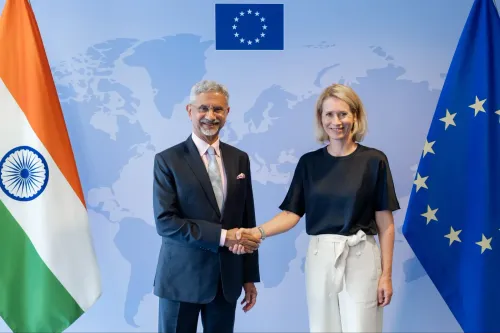
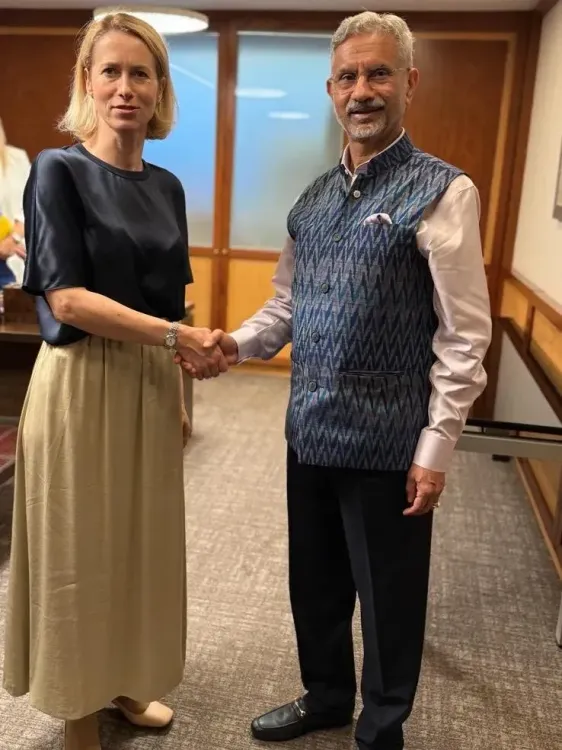
External Affairs Minister Dr. S. Jaishankar met EU foreign policy chief Kaja Kallas on the sidelines of the Gymnich Forum on 27 May 2026. Their talks covered India-EU cooperation and the evolving situation in West Asia, reinforcing the depth of the India-EU Strategic Partnership.
Key Takeaways
Jaishankar met EU High Representative Kaja Kallas on 27 May 2026 at the Gymnich Forum .
Discussions covered India-EU cooperation and the West Asia/Middle East situation.
India and the EU have maintained a Strategic Partnership since 2004 , covering trade, security and technology.
The EU-India Trade and Technology Council , set up in 2022 , provides an institutional framework for bilateral dialogue.
Negotiations on the Broad-based Trade and Investment Agreement (BTIA) have been ongoing since 2007 with renewed momentum post- 2020 .
The meeting fits a broader pattern of India engaging EU counterparts directly on West Asia while maintaining an independent diplomatic posture.
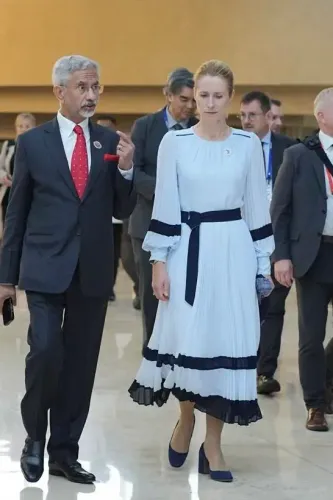
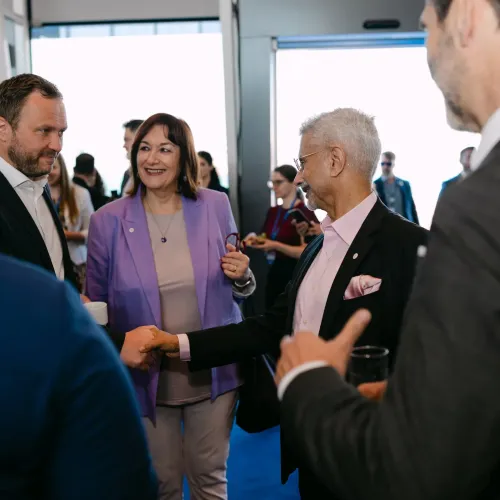
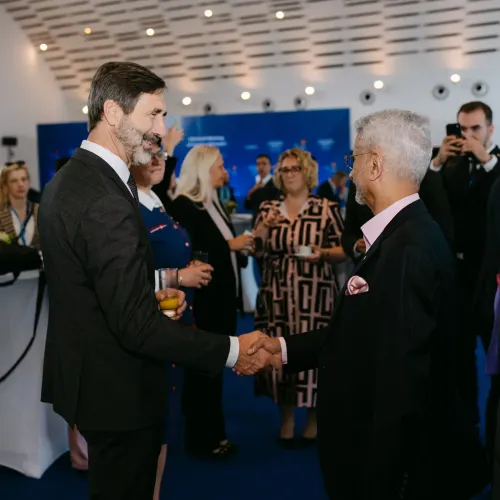
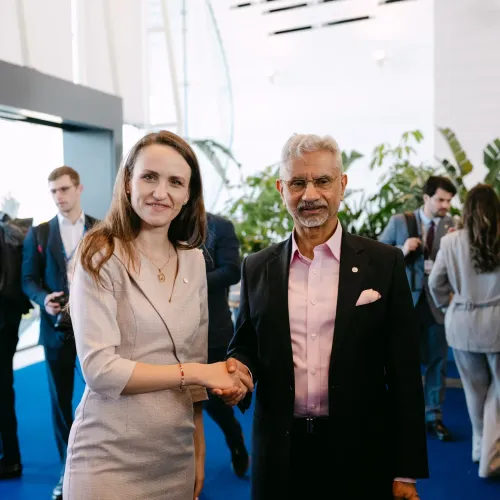
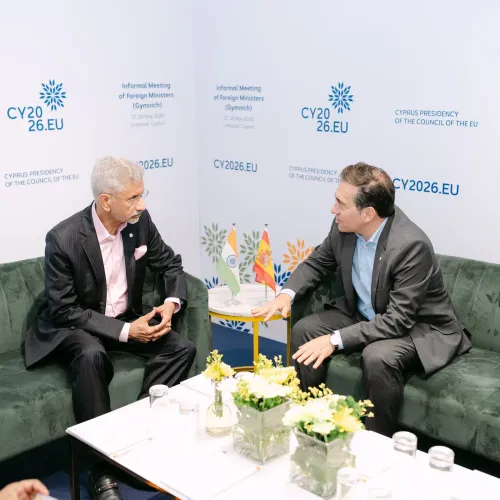
Union External Affairs Minister Dr. S. Jaishankar met European Union High Representative for Foreign Affairs and Security Policy Kaja Kallas on the evening of Wednesday, 27 May 2026 on the sidelines of the Gymnich Forum, covering India-EU cooperation and the situation in West Asia.
Context
The Gymnich Forum is an informal gathering of EU foreign ministers held several times a year to deliberate on foreign policy issues outside the constraints of formal conclusions. India's participation or engagement on the sidelines of such formats reflects New Delhi's sustained effort to maintain high-level contact with European counterparts on both bilateral and global files.
Dr. Jaishankar noted on X that the meeting was a 'pleasure,' with discussions spanning India-EU cooperation and the West Asia/Middle East situation — two of the most consequential tracks in the current India-EU relationship.
Policy Backdrop
India and the European Union have maintained a Strategic Partnership since 2004, which has expanded over two decades to cover trade, security, climate and technology. The EU-India Trade and Technology Council, established in 2022, institutionalised dialogue on trade, technology and global supply chains, adding a structural layer to the relationship beyond periodic summits.
Negotiations on a Broad-based Trade and Investment Agreement (BTIA) — initiated in 2007 — have seen renewed momentum since 2020, making ministerial-level exchanges critical for sustaining political will on both sides. The West Asia dimension adds urgency: the region is central to India's energy security, trade routes through the Red Sea corridor, and the welfare of millions of Indian diaspora members in Gulf states.
Stakeholders and Impact
Indian exporters and industry stand to benefit most from any forward movement on the BTIA, which would open preferential access to the 27-nation EU single market. EU member states that are major energy importers watch India's positioning on West Asia closely, given New Delhi's independent diplomatic posture and its relationships with key regional actors.
For Kaja Kallas, as the EU's top diplomat, engagement with India represents a priority in the bloc's effort to diversify strategic partnerships amid shifting global alignments. India's willingness to engage on West Asia at forums like Gymnich signals that New Delhi is prepared to convey its positions directly to European counterparts rather than through intermediary channels.
What's Next
Observers will watch for any follow-up statements from the next India-EU summit or a planned session of the Trade and Technology Council that may build on the ground covered in this bilateral meeting. Progress on the long-pending BTIA remains the single most consequential deliverable the two sides could announce.
The meeting reinforces a wider pattern of India using bilateral and plurilateral channels — including informal EU formats — to manage its relationships with Western partners while preserving its independent posture on regional conflicts. As the West Asia situation continues to evolve, such direct ministerial exchanges are likely to become more, not less, frequent.
Point of View
New Delhi reinforces its role as an indispensable interlocutor that Western partners must consult on regional stability. This fits the External Affairs Ministry's consistent strategy of diversifying India's diplomatic bandwidth — deepening EU ties through the Trade and Technology Council and BTIA track while simultaneously engaging Gulf states and other West Asian actors. The dual agenda of trade cooperation and regional security reflects how India increasingly frames its European engagement as inseparable from its broader Indo-Pacific and West Asian calculus.
NationPress
12 Oct 2026
Frequently Asked Questions
What did Jaishankar and Kaja Kallas discuss at the Gymnich Forum?
They discussed India-EU cooperation and the situation in West Asia/Middle East, according to Dr. Jaishankar's post on X following the meeting on 27 May 2026.
What is the Gymnich Forum?
The Gymnich Forum is an informal gathering of EU foreign ministers held several times a year to discuss foreign policy issues without issuing formal conclusions.
What is the India-EU Strategic Partnership?
India and the EU launched a Strategic Partnership in 2004 that has expanded to cover trade, security, climate and technology, including the Trade and Technology Council established in 2022.
What is the India-EU BTIA?
The Broad-based Trade and Investment Agreement (BTIA) is a comprehensive free trade deal being negotiated between India and the EU since 2007, with renewed momentum after 2020.