What is the Significance of EU HRVP Kaja Kallas' Visit to India?

Synopsis
On January 24, Kaja Kallas, the EU's High Representative for Foreign Affairs, embarked on her first official visit to India. The Ministry of External Affairs emphasized the trip's significance in strengthening India-EU ties amidst global challenges, highlighting the strategic importance of this partnership.
Key Takeaways
Kaja Kallas visits India to reinforce the India–EU Strategic Partnership .
The visit coincides with India’s 77th Republic Day.
Discussions will focus on economic cooperation and global stability.
High-level engagements indicate growing strategic importance.
Collaboration on humanitarian and security issues is a priority.
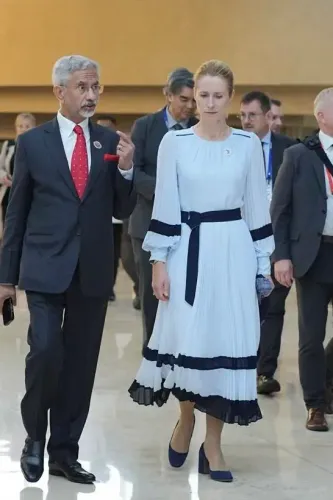
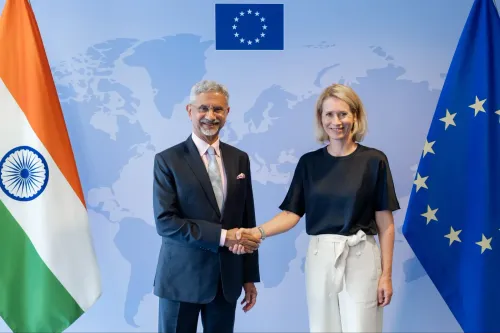
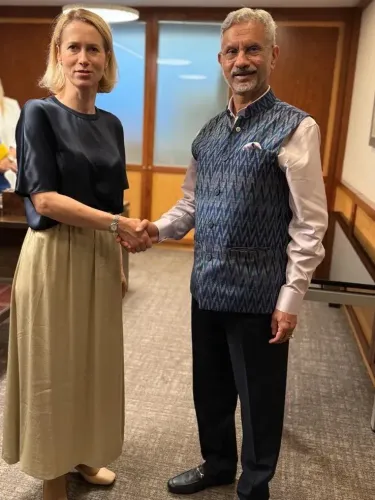
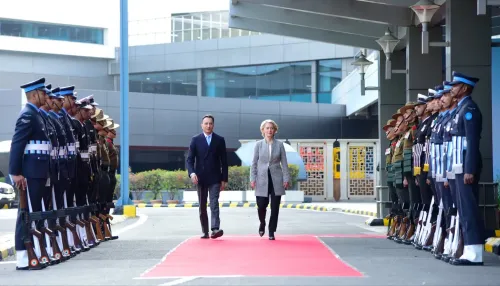
New Delhi, Jan 24 (NationPress) The European Union's High Representative for Foreign Affairs and Security Policy, Kaja Kallas, landed in India on Saturday for her inaugural official trip. The Ministry of External Affairs (MEA) highlighted the significance of this visit in reinforcing the India–EU Strategic Partnership, especially in light of ongoing high-level interactions between the two parties.
MEA spokesperson Randhir Jaiswal shared the news via a post on X, emphasizing the importance and timing of this visit for the bilateral ties.
“We extend a warm welcome to EU HRVP @kajakallas on her maiden official visit to India as the EU High Representative/Vice-President. This visit is well-timed to enhance the India–EU Strategic Partnership, building on the momentum from regular high-level engagements,” Jaiswal stated.
Kallas’ trip comes at a time of heightened diplomatic activity between India and the European Union, with both parties aiming to expand collaboration amidst global instability and geopolitical challenges.
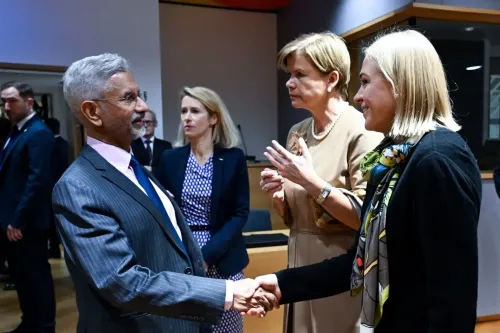
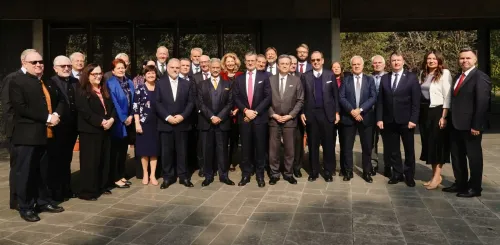
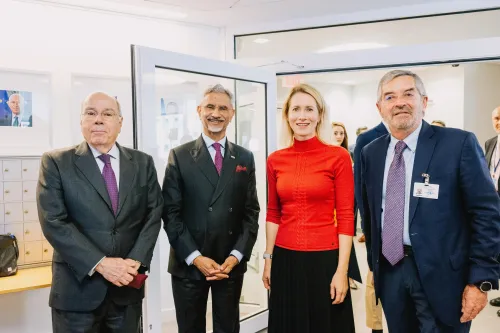
Just the previous Thursday, External Affairs Minister (EAM) S. Jaishankar engaged with ambassadors from EU member states in New Delhi. Jaishankar noted that discussions centered on the current global climate characterized by instability and rapidly evolving dynamics.
“I was pleased to converse with the ambassadors from EU nations today. We discussed the state of the world, where volatility and instability have become the new normal,” Jaishankar remarked on X following the meeting.
Jaishankar strongly advocated for closer India–EU cooperation, underscoring potential areas where their partnership could contribute to global stability. He stated that enhanced ties would facilitate “derisking the world economy” through collaboration on robust supply chains, reassure the global community by providing public goods such as Humanitarian Assistance and Disaster Relief (HADR), anti-piracy initiatives, and development projects, and foster a stable global order through improved trade, mobility, and security collaborations.
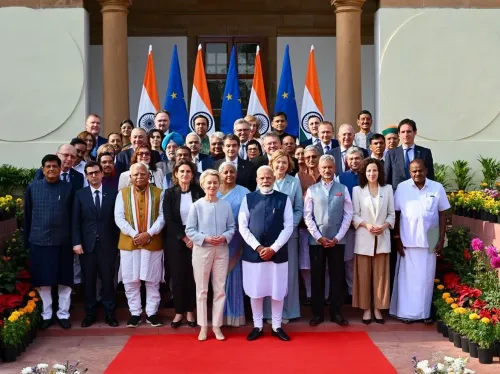
The engagement with EU ambassadors precedes the upcoming State Visit to India by European Council President Antonio Luis Santos da Costa and European Commission President Ursula von der Leyen. These two EU leaders are set to be the Chief Guests at India’s 77th Republic Day celebrations on January 26, marking a pivotal moment in India–EU relations.
Jaishankar expressed anticipation for hosting the EU leaders, who are visiting at the invitation of Prime Minister Narendra Modi. During their stay, Costa and Ursula von der Leyen will co-chair the 16th India–EU Summit on January 27.
As part of their agenda, the EU leaders will meet with President Droupadi Murmu and hold both restricted and delegation-level discussions with Prime Minister Modi. An India–EU Business Forum is also slated to occur alongside the summit, underscoring the emphasis both sides place on economic cooperation and trade.
The series of high-level visits and diplomatic dialogues highlight the increasing strategic significance of the India–EU partnership in the face of global uncertainty and shared challenges.
Point of View
It is essential to recognize that the visit of Kaja Kallas to India underscores a critical moment for the India–EU partnership. This engagement not only reflects the commitment to bilateral relations but also aims to address significant global issues. It is a step towards fostering cooperation and stability in an increasingly volatile world, with both sides looking to collaborate on pressing challenges.
NationPress
20 Sept 2026
Frequently Asked Questions
What is the purpose of Kaja Kallas' visit to India?
The primary purpose of Kaja Kallas' visit is to strengthen the India–EU Strategic Partnership , especially amidst ongoing global volatility and geopolitical uncertainty.
What meetings are scheduled during the visit?
Kaja Kallas is expected to meet with key Indian officials, including Prime Minister Narendra Modi , and participate in discussions centered around enhancing cooperation in various sectors.
How does this visit relate to India’s Republic Day celebrations?
Kaja Kallas' visit coincides with India’s 77th Republic Day celebrations, where she will attend as part of the EU delegation alongside other leaders.
What are the expected outcomes of this visit?
The visit aims to solidify bilateral ties and facilitate discussions on economic cooperation, security partnerships, and addressing global challenges.
Why is the India-EU relationship important?
The India-EU relationship is crucial for addressing mutual challenges, promoting trade, and ensuring stability in an increasingly unpredictable global landscape.