Jaishankar meets Polish, Romanian, Dutch FMs at Gymnich in Cyprus
Synopsis
External Affairs Minister Dr. S. Jaishankar held sideline meetings with the foreign ministers of Poland, Romania, and the Netherlands at the Gymnich informal EU ministerial in Cyprus on 28 May 2026, advancing India's dual-track European diplomatic strategy.
Key Takeaways
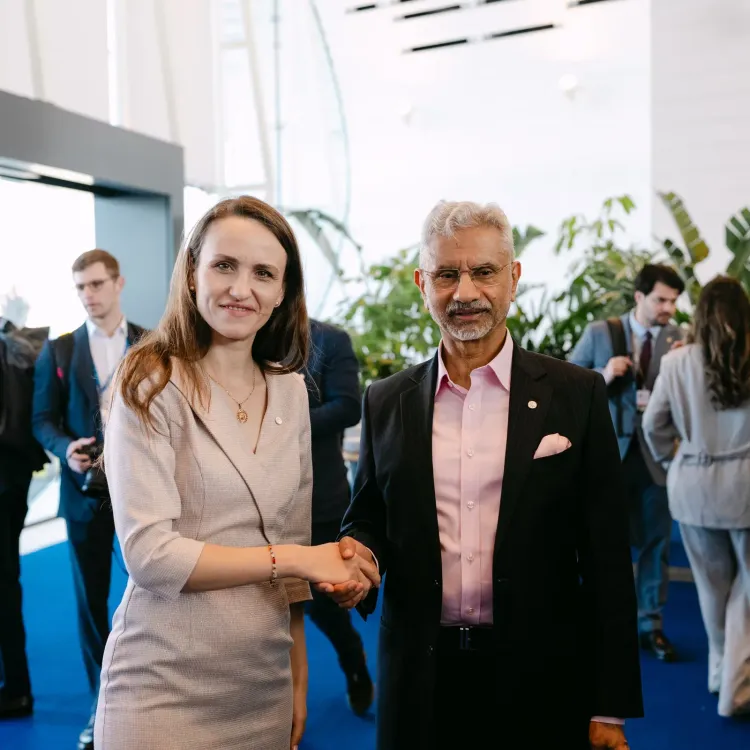
Jaishankar met three EU foreign ministers — Radek Sikorski (Poland), Oana Toiu (Romania), and Tom Berendsen (Netherlands) — on 28 May 2026 in Cyprus .
The meetings took place on the sidelines of the Gymnich , the EU's informal foreign ministers' forum.
The outreach spans Central, Southeast, and Western Europe , reflecting India's broad-based European engagement strategy.
India has maintained a Strategic Partnership with the EU since 2004 , pairing institutional Brussels ties with direct bilateral outreach.
The engagements are expected to lay groundwork for follow-up bilateral visits and potential outcomes at the next India-EU summit .
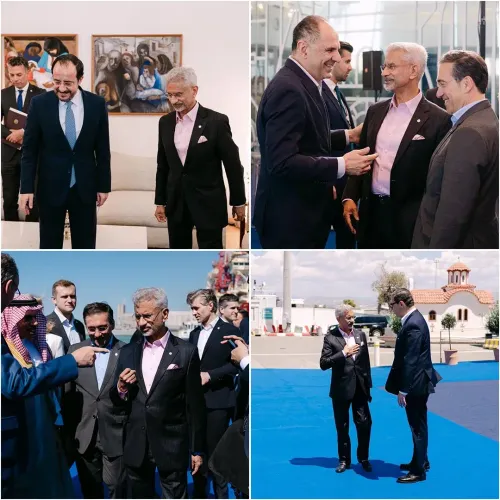
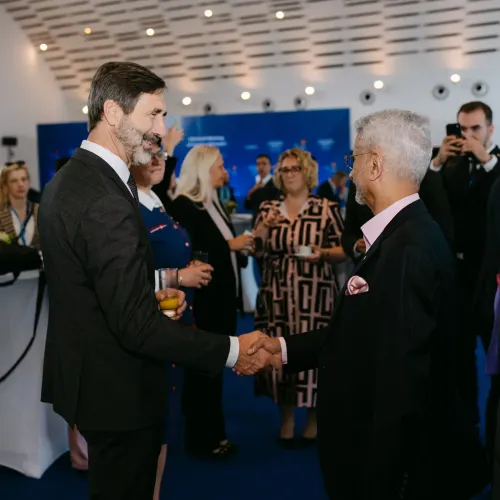
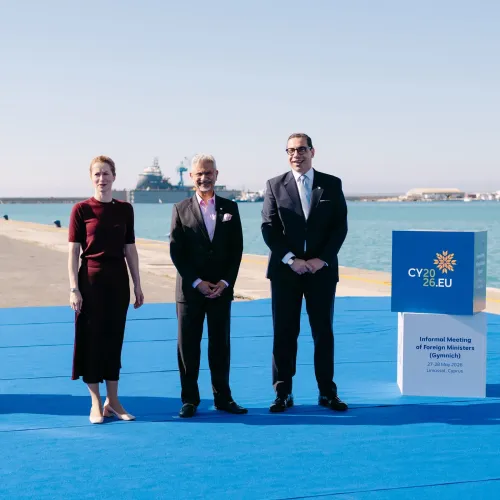
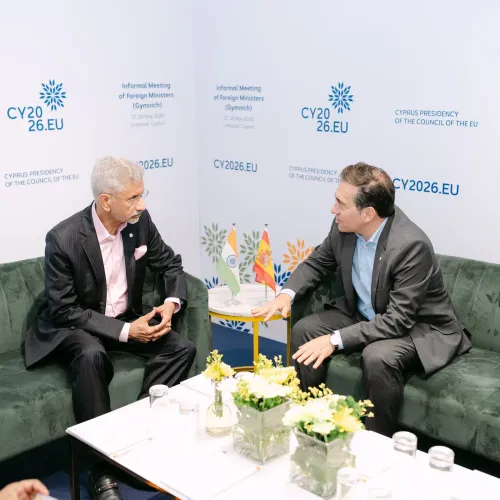
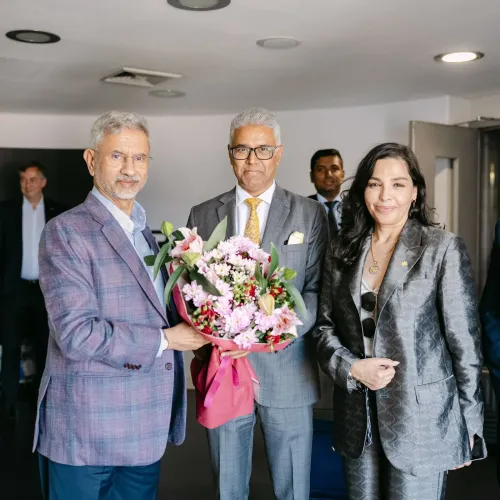
Union External Affairs Minister Dr. S. Jaishankar held brief bilateral meetings with the foreign ministers of Poland, Romania, and the Netherlands on the sidelines of the Gymnich informal EU foreign ministers' meeting in Cyprus on Thursday, 28 May 2026. The engagements mark India's continued outreach to individual European Union member states even as its institutional ties with Brussels deepen.
Context
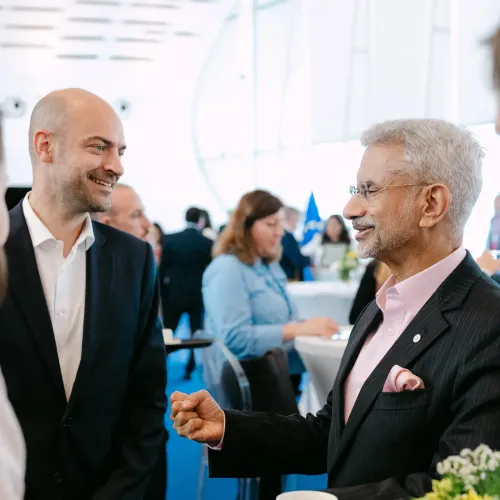
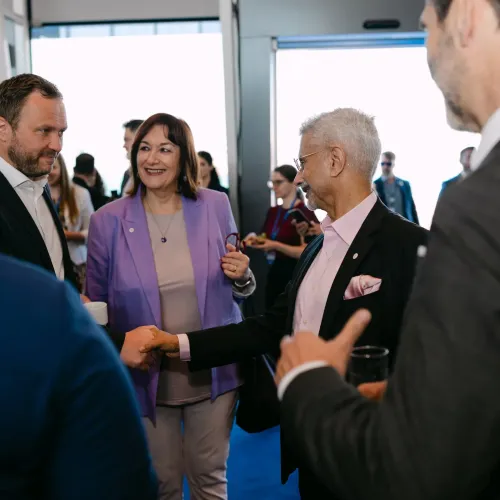
Dr. Jaishankar described the meetings as 'a quick catch up' with Deputy Prime Minister and Foreign Minister Radek Sikorski of Poland, Foreign Minister Oana Toiu of Romania, and Foreign Minister Tom Berendsen of the Netherlands. All three leaders were present in Cyprus for the same Gymnich gathering, providing a natural window for India's top diplomat to conduct compact but substantive side engagements.
The Gymnich format — named after the German castle where such meetings were first held — is a longstanding informal forum for EU foreign ministers to exchange views outside the constraints of formal Council sessions. Its relaxed structure has historically made it a favoured venue for third-country diplomats to hold corridor diplomacy with multiple European counterparts in a single trip.
Policy Backdrop
India and the European Union formalised their Strategic Partnership in 2004, and the relationship has since expanded through regular summits, trade and technology dialogues, and security consultations. India's approach has consistently paired engagement with EU institutions in Brussels with direct bilateral outreach to individual member capitals — a dual-track strategy that allows New Delhi to cultivate specific interests in areas such as defence, energy, and digital technology.
Poland, as a frontline NATO member and one of Europe's most vocal advocates for a robust transatlantic and Indo-Pacific security posture, holds particular strategic relevance for India. Romania, a Black Sea state and EU member, has growing importance in energy transit and regional security discussions. The Netherlands, a founding EU member and major trade and technology hub, is a significant partner for India in areas including semiconductor supply chains and port logistics.
Stakeholders and Impact
The meetings signal that India's diplomatic footprint at multilateral European gatherings continues to expand, with Dr. Jaishankar leveraging every available multilateral forum to advance bilateral agendas simultaneously. For European diplomats, the engagements reflect growing interest in deepening ties with New Delhi as the EU recalibrates its global partnerships amid shifting geopolitical alignments.
Indian business and foreign-policy communities will note the breadth of the outreach — three EU member states across Central, Southeast, and Western Europe engaged in a single day — as evidence of the government's intent to diversify and deepen its European relationships beyond the traditional focus on larger economies such as Germany and France.
What's Next
Observers will watch for any follow-up announcements, including scheduling of dedicated bilateral visits by the Polish, Romanian, or Dutch foreign ministers to New Delhi, or reciprocal invitations from Dr. Jaishankar. The next India-EU summit, whenever convened, is expected to reflect the groundwork being laid through precisely these kinds of informal side engagements. As India's European diplomacy matures, the Gymnich encounter in Cyprus may well serve as a precursor to more structured bilateral outcomes in the months ahead.
Point of View
Romania, and the Netherlands is telling: these are not the EU's largest economies, but they represent strategically important nodes in security, energy, and technology supply chains that matter to India's medium-term interests. At a moment when Europe is reconfiguring its external partnerships, New Delhi's visible presence at an intra-EU forum like Gymnich signals that India considers itself a serious and proactive partner rather than a passive recipient of European outreach. The cumulative effect of such engagements is to build the interpersonal and institutional capital that sustains partnerships through changes in government on either side.
NationPress
22 Oct 2026
Frequently Asked Questions
What is the Gymnich meeting and why does it matter for India?
The Gymnich is an informal gathering of EU foreign ministers held periodically to discuss foreign policy without formal Council procedures. For India, it matters because it concentrates multiple European decision-makers in one location, allowing Indian diplomats to conduct several bilateral engagements efficiently on the sidelines.
Who did Jaishankar meet at the Gymnich in Cyprus?
Dr. S. Jaishankar met Deputy Prime Minister and Foreign Minister Radek Sikorski of Poland, Foreign Minister Oana Toiu of Romania, and Foreign Minister Tom Berendsen of the Netherlands during the Gymnich meeting in Cyprus on 28 May 2026.
What is the India-EU Strategic Partnership?
The India-EU Strategic Partnership was launched in 2004 and provides the framework for regular summits, trade and technology dialogues, and security consultations between India and the European Union as a whole, complementing India's individual bilateral ties with EU member states.
Why is Poland strategically important for India in Europe?
Poland is a frontline NATO member and one of Europe's most active voices on transatlantic and Indo-Pacific security, making it a relevant partner for India as New Delhi deepens its defence and strategic dialogues with European nations.
What could follow from Jaishankar's meetings at Gymnich 2026?
Likely follow-ups include scheduling of dedicated bilateral visits by the Polish, Romanian, or Dutch foreign ministers to New Delhi, and the meetings may feed into preparations for the next India-EU summit.