Jaishankar meets 8 EU foreign ministers at Cyprus Gymnich 2025
Synopsis
India's External Affairs Minister S. Jaishankar held eight back-to-back bilateral meetings at the EU's Gymnich summit in Limassol — from Ukraine's foreign minister to Saudi Arabia's — in a single diplomatic sprint that captures New Delhi's increasingly assertive multi-vector foreign policy at a time of global realignment.
Key Takeaways
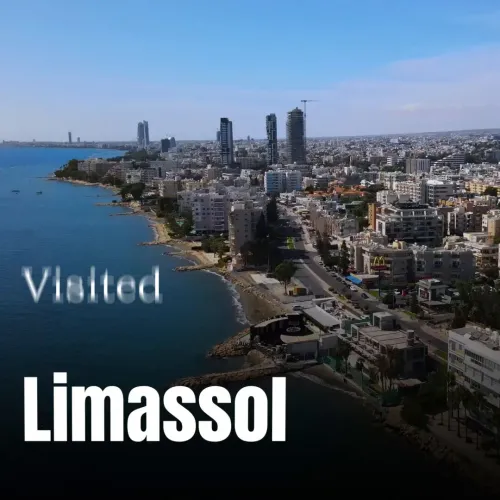
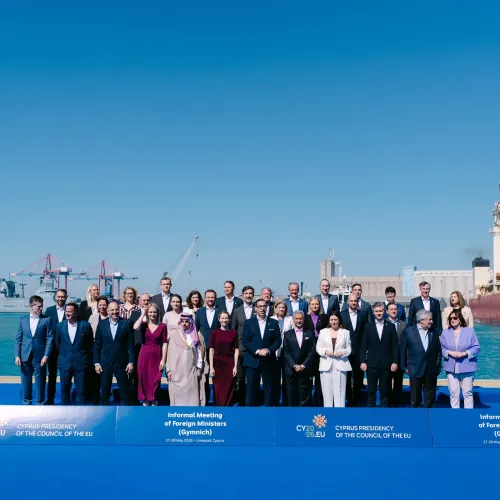
Jaishankar attended the EU Gymnich meeting in Limassol, Cyprus on 27–28 May 2025 — a rare invitation for a non-EU country.
He held bilaterals with foreign ministers of Estonia, France, Romania, Slovakia, Poland, the Netherlands, Spain, and Ukraine .
Talks with Spain's Jose Manuel Albares covered trade, technology, defence, and people-to-people ties .
Jaishankar met Ukraine FM Andrii Sybiha to discuss the Ukraine conflict and bilateral cooperation.
He also met Saudi FM Prince Faisal bin Farhan Al Saud on the evolving situation in West Asia .
Jaishankar met EU High Representative Kaja Kallas on India-EU cooperation and West Asia geopolitics.
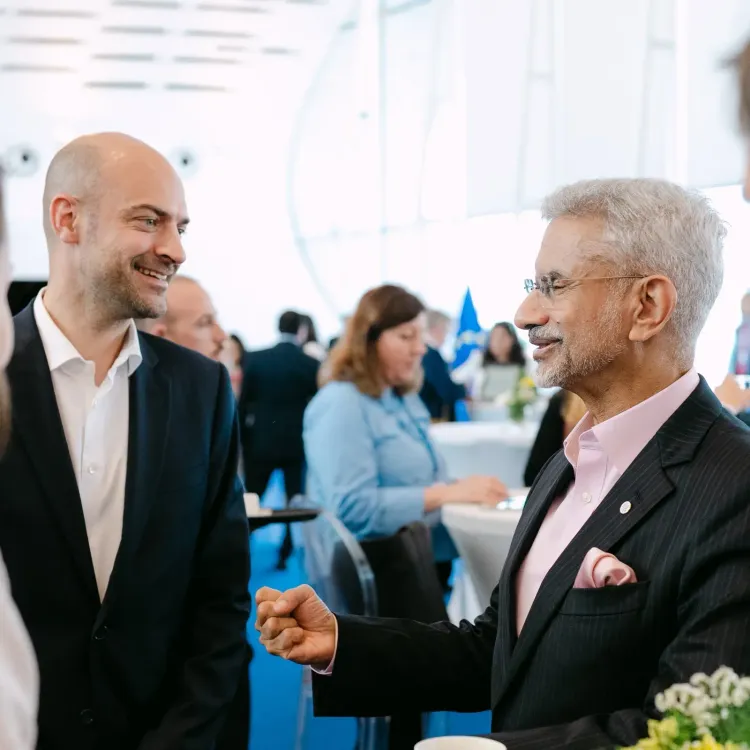
External Affairs Minister S. Jaishankar held a series of bilateral meetings with counterparts from Estonia, France, Romania, Slovakia, Poland, the Netherlands, Spain, and Ukraine on the sidelines of the Informal Meeting of EU Foreign Affairs Ministers (Gymnich) in Limassol, Cyprus on 27–28 May 2025. The diplomatic blitz underscores India's deepening engagement with European capitals at a moment of heightened geopolitical flux.
Key Bilateral Meetings
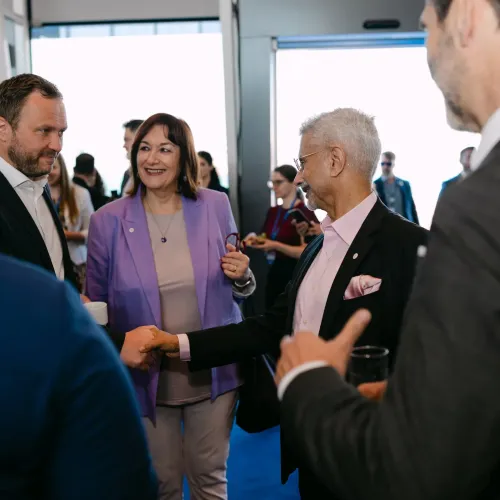
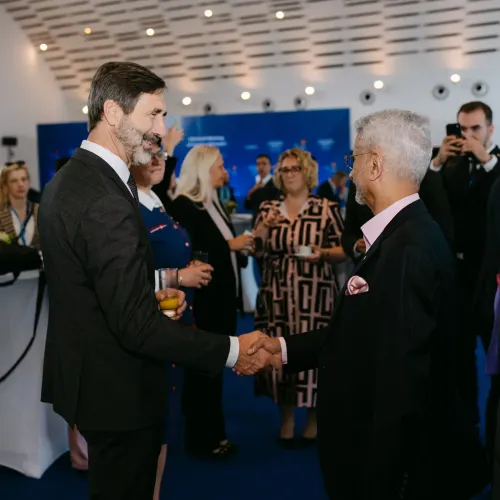
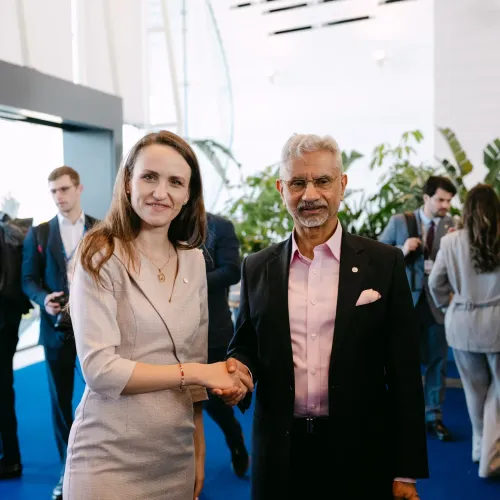
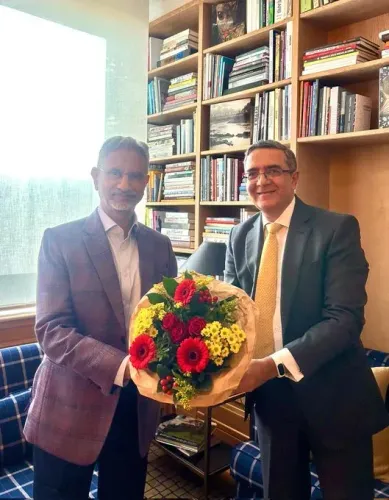
Jaishankar met Polish Deputy Prime Minister and Foreign Minister Radoslaw Sikorski, Romanian Foreign Minister Toiu Oana, and Dutch Foreign Minister Tom Berendsen in a joint catch-up. He separately held talks with Slovakian Foreign Minister Juraj Blanar and French Foreign Minister Jean-Noel Barrot, describing the France meeting as a recurring and productive exchange.
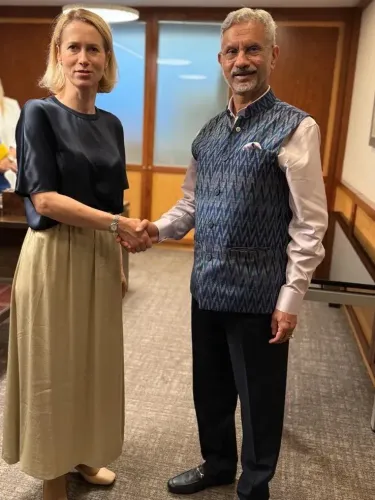
On the EU institutional side, Jaishankar met European Commissioner for the Mediterranean Dubravka Suica and EU High Representative for Foreign Affairs and Security Policy Kaja Kallas, with discussions covering India-EU cooperation and the geopolitical situation in West Asia.
India-Spain: Trade, Technology and Defence on the Agenda
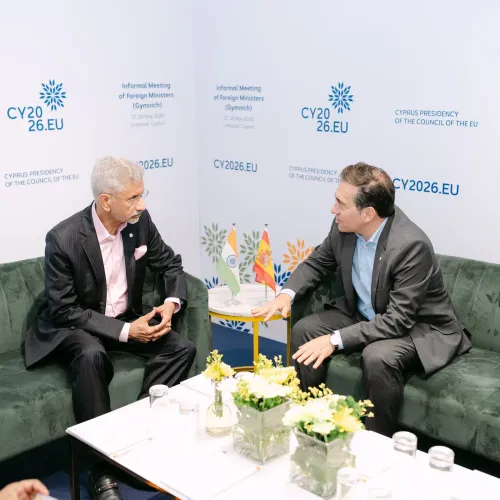
A notable bilateral was with Spanish Foreign Minister Jose Manuel Albares, where the two sides reviewed progress on trade, technology, defence, and people-to-people ties. Jaishankar said he appreciated Albares's perspective on ongoing global and regional developments, signalling that Madrid is emerging as a significant European partner for New Delhi.
Ukraine Conflict and West Asia Discussed
Jaishankar held talks with Ukrainian Foreign Minister Andrii Sybiha, exchanging views on the Ukraine conflict and exploring avenues to deepen bilateral cooperation — a meeting that reflects India's continued diplomatic engagement with Kyiv despite its historically calibrated stance on the war. He also sat down with Saudi Arabian Foreign Minister Prince Faisal bin Farhan Al Saud, discussing the evolving situation in West Asia and the Middle East.
India at the Gymnich: What It Signals
India's invitation to the Gymnich — an informal, candid format typically reserved for EU member states — is itself a diplomatic signal. Jaishankar described the meeting as an opportunity to discuss 'opportunities, practical collaborations and our shared interests in the emerging multipolar order.' This is the latest in a series of high-level India-EU engagements as both sides work toward finalising a long-pending Free Trade Agreement. Notably, the breadth of bilateral meetings — spanning Eastern Europe, Western Europe, the Mediterranean, West Asia, and the war in Ukraine — reflects New Delhi's multi-vector foreign policy posture.
With the India-EU FTA negotiations at a critical stage and geopolitical pressures mounting, Jaishankar's Limassol engagements are likely to feed directly into the next round of structured diplomatic dialogue between New Delhi and Brussels.
Point of View
Saudi Arabia, and a clutch of EU states in a single visit is tactically impressive, yet India's multi-alignment means it rarely converts diplomatic access into binding commitments. The breadth of the Limassol meetings is a headline; the depth of follow-through will determine whether this is strategy or optics.
NationPress
21 Sept 2026
Frequently Asked Questions
Why was India's EAM invited to the EU Gymnich meeting in Cyprus?
The EU's Gymnich is an informal format usually limited to EU member states, so India's invitation signals the bloc's intent to engage New Delhi as a strategic partner. Jaishankar attended to discuss shared interests in the emerging multipolar order, India-EU cooperation, and regional geopolitics.
Which foreign ministers did Jaishankar meet in Cyprus?
Jaishankar met counterparts from Poland, Romania, the Netherlands, Slovakia, France, Estonia, Spain, and Ukraine, as well as EU High Representative Kaja Kallas, EU Mediterranean Commissioner Dubravka Suica, and Saudi Arabian Foreign Minister Prince Faisal bin Farhan Al Saud.
What did Jaishankar discuss with Ukraine's foreign minister?
Jaishankar met Ukrainian Foreign Minister Andrii Sybiha to exchange views on the ongoing Ukraine conflict and to explore ways to deepen bilateral cooperation between India and Ukraine.
What was discussed in the India-Spain bilateral at Cyprus?
Jaishankar and Spanish Foreign Minister Jose Manuel Albares discussed further steps for trade, technology, defence, and people-to-people ties, along with views on global and regional developments.
What is the significance of India attending the EU Gymnich?
The Gymnich is a candid, informal EU foreign ministers' forum not typically open to outside nations. India's invitation reflects the deepening India-EU strategic partnership and comes as both sides work toward a long-pending Free Trade Agreement.