Jaishankar at CHOGM 2026: India's Blueprint for Commonwealth Growth
Synopsis
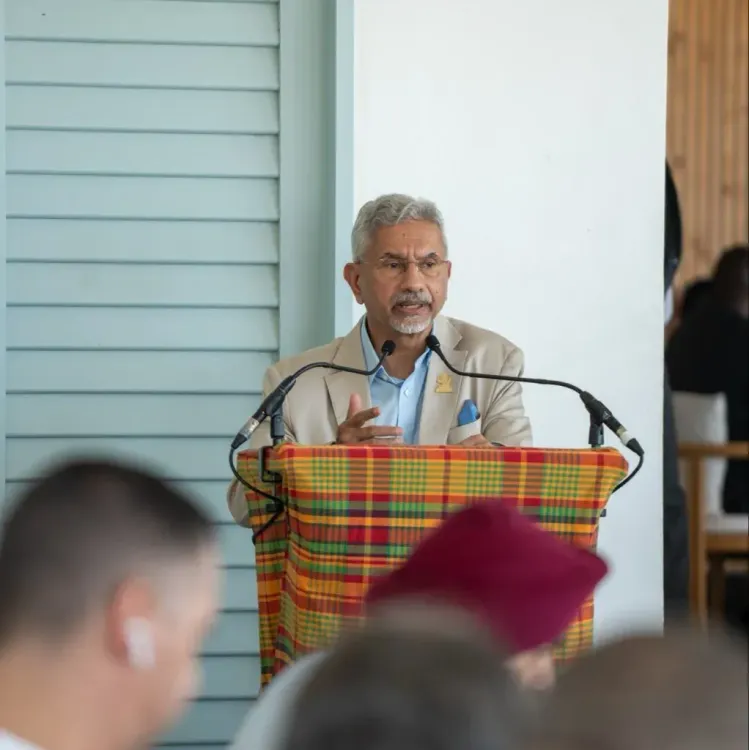
At the CHOGM 2026 Heads of Government and Business Leaders Breakfast, EAM Dr. S. Jaishankar presented a nine-point framework for Commonwealth growth covering supply-chain de-risking, digital transformation, climate tools like ISA and CDRI, diaspora leverage, and skill mobility.
Key Takeaways
De-risk and diversify: Jaishankar called on Commonwealth partners to build shorter, trusted supply chains and strengthen local distribution networks.
Indian diaspora as an asset: He framed the global Indian business community — estimated at over 32 million — as a strategic Commonwealth resource for trade and investment.
Climate levers already exist: The International Solar Alliance (launched 2015 ) and the Coalition for Disaster Resilient Infrastructure (launched 2019 ) were offered as ready-to-use platforms for climate action.
Digital as a game changer: The minister linked digital infrastructure directly to efficiency, good governance, and economic growth across member states.
HADR experience informs local hub model: India's First Responder track record was cited to argue for pre-positioned local hubs within the Commonwealth.
Skill mobility as a priority: Jaishankar proposed making the movement of skilled workers a central Commonwealth policy focus for shared prosperity.
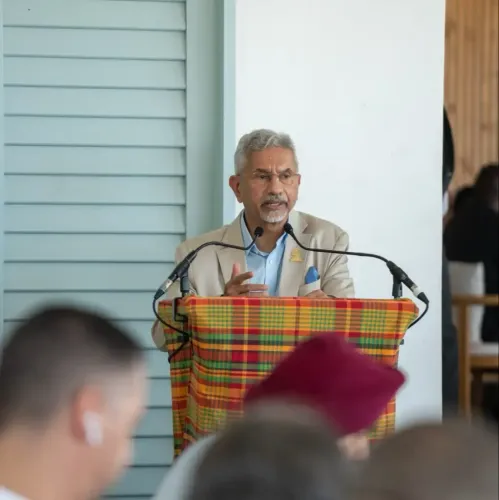
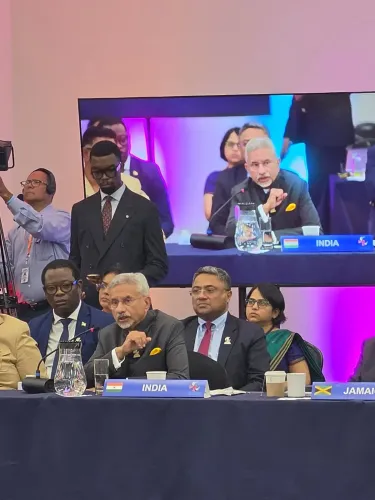
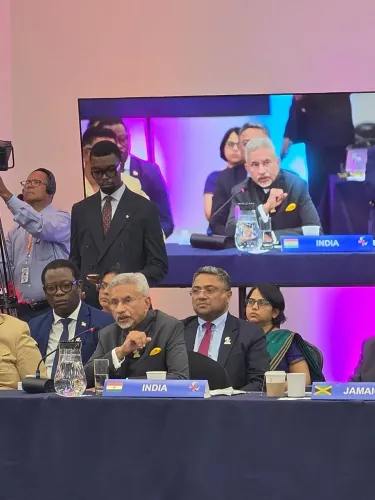
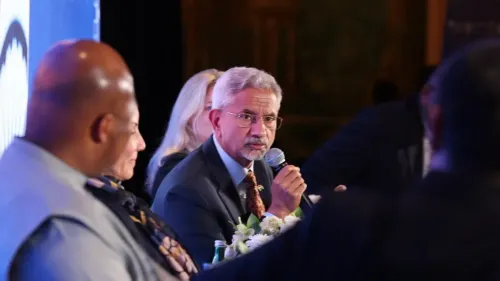
At a breakfast table with Commonwealth heads of government and business leaders, Union External Affairs Minister Dr. S. Jaishankar laid out a nine-point roadmap for how the 56-nation bloc can unlock trade, climate resilience, and digital prosperity — framing India not as a supplicant but as a strategic anchor for the Global South.
De-risking, Diversifying, and Shortening Supply Chains
The minister's opening argument cut straight to the post-pandemic anxiety haunting every trade-dependent Commonwealth economy: over-concentration. Jaishankar urged member states to 'de-risk and diversify,' insisting this demands 'shorter and trusted supply chains' — language that echoes India's own pivot away from single-source dependencies since 2020. More connectivity corridors, he argued, are not just geopolitical signalling — they are hard business infrastructure. Commonwealth partners, he said, must put in greater effort to enhance local distribution, so goods and services actually reach end markets rather than stalling at port.
India's Diaspora as a Commonwealth Asset
One of the sharper framings of the morning: Jaishankar described the Indian business community spread across the world as 'an asset for the Commonwealth.' That is a deliberate recast. The Indian diaspora — estimated at over 32 million people globally, with heavy concentrations in Commonwealth nations such as the United Kingdom, Canada, Australia, South Africa, Malaysia, and across the Caribbean — is typically discussed in terms of remittances or cultural ties. Placing it inside a Commonwealth business framework signals India's intent to channel those networks toward trade facilitation and investment flows, not just sentiment.
Digital, Solar, and Disaster Resilience: India's Multilateral Toolkit
Jaishankar pointed to two India-incubated global institutions as ready levers for climate action. The International Solar Alliance, launched by India and France at COP21 in Paris in 2015, is a treaty-based intergovernmental body built to scale solar deployment across member countries. The Coalition for Disaster Resilient Infrastructure, initiated by India in 2019, provides a platform for financing climate-resilient infrastructure across developing nations. Both, he argued, can be 'leveraged' by Commonwealth states without reinventing the wheel.
On digital, the minister was unambiguous: 'Digital is a game changer as it promotes efficiency, good governance and growth.' India's own experience with large-scale digital public infrastructure — from payments to identity to direct benefit transfers — gives that claim empirical weight inside the room.
Local Hubs, Skill Mobility, and the Lessons of HADR
Perhaps the most operationally specific point concerned disaster response. India's record as a First Responder in the region — including Humanitarian Assistance and Disaster Relief (HADR) missions in Nepal, Sri Lanka, the Maldives, and beyond — points, Jaishankar said, to the need for 'local hubs.' Pre-positioned capacity, not remote coordination, is what saves lives and supply lines when crises hit. Paired with his call for 'mobility of skills' as a core Commonwealth priority, the message was clear: build people, build proximity, build resilience.
The breakfast meeting at the Retreat is one of the more intimate formats at #CHOGM2026, designed for candid, working-level dialogue rather than ceremonial declarations. That Jaishankar used the platform to table a structured, multi-domain agenda — supply chains, connectivity, diaspora, digital, climate, disaster response, skills — signals that India arrived at this summit with a clear brief, not just talking points.
Whether working groups or bilateral commitments follow from these nine pillars will be the real test. For now, India has put its Commonwealth vision on the table — and it is bigger than trade statistics alone.
Point of View
Digital public infrastructure, and climate multilateralism. By spotlighting ISA and CDRI — both India-originated institutions — Jaishankar is effectively positioning New Delhi as the preferred development partner for Commonwealth's Global South majority, an implicit counter to other large-economy narratives. The diaspora framing is particularly notable: converting demographic presence into economic diplomacy is a thread running through India's foreign policy under the current dispensation. Watch whether these nine pillars translate into formal Commonwealth working groups or bilateral MOUs before the summit closes.
NationPress
5 Nov 2026
Frequently Asked Questions
What did Jaishankar say at CHOGM 2026?
EAM Dr. S. Jaishankar spoke at the Commonwealth Heads of Government and Business Leaders Breakfast at CHOGM 2026, outlining nine priorities including supply-chain de-risking, digital transformation, leveraging the Indian diaspora, and using India-led climate initiatives like the International Solar Alliance and CDRI for Commonwealth cooperation.
What is the International Solar Alliance and how does it connect to the Commonwealth?
The International Solar Alliance is a treaty-based intergovernmental body launched by India and France at COP21 in Paris in 2015 to accelerate solar energy deployment globally. Jaishankar urged Commonwealth members to leverage it as an existing tool for collective climate action rather than creating new mechanisms.
What is the Coalition for Disaster Resilient Infrastructure?
The Coalition for Disaster Resilient Infrastructure is a global partnership initiated by India in 2019 to finance and build climate-resilient infrastructure in developing nations. Jaishankar flagged it at CHOGM 2026 as a ready platform for Commonwealth states to access.
Why did Jaishankar call the Indian diaspora an asset for the Commonwealth?
Jaishankar described the Indian business community spread across the world as 'an asset for the Commonwealth,' signalling India's intent to channel diaspora networks — concentrated in Commonwealth nations like the UK, Canada, Australia, and Malaysia — toward trade facilitation and investment rather than limiting the conversation to remittances or cultural links.