Jaishankar at UN Week: Global South Must Shape New World Order
Synopsis
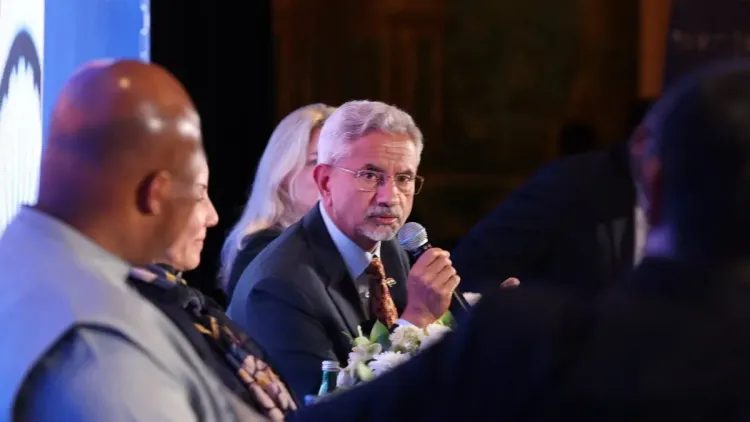
At the UN High-Level Week in New York, EAM Dr. S. Jaishankar joined foreign ministers of Jamaica, Ghana and Suriname to argue for UN reform, reject binary geopolitical alignments, and assert that the Global South's voice will shape a fractured world.
Key Takeaways
Jaishankar participated in the 'Ruptures and Ramparts' panel at UN High-Level Week in New York on 25 September 2026 .
Panellists included foreign ministers of Jamaica , Ghana , and Suriname , alongside EastWest Center President Celeste Connors .
The panel agreed the UN remains indispensable but requires reform to reflect Global South realities.
Jaishankar stated countries will make choices based on interests, values, and trust — not binary bloc alignments.
India has backed UN Security Council expansion as part of the G4 grouping since 2005 and hosted the Voice of the Global South Summit in January 2023.
The event was organised by ORF America , the American chapter of the Observer Research Foundation.
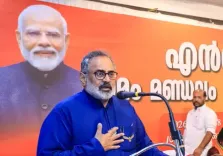
At the United Nations High-Level Week in New York, Union External Affairs Minister Dr. S. Jaishankar stepped into a room with three foreign ministers — from Jamaica, Ghana, and Suriname — and one clear conviction: the world is fracturing, and the Global South cannot afford to be a spectator.
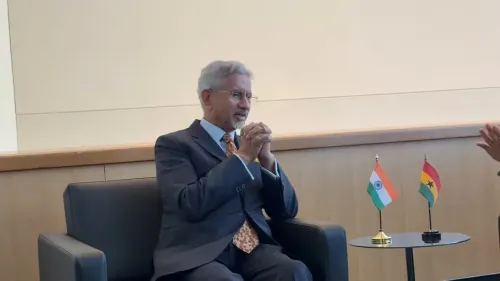
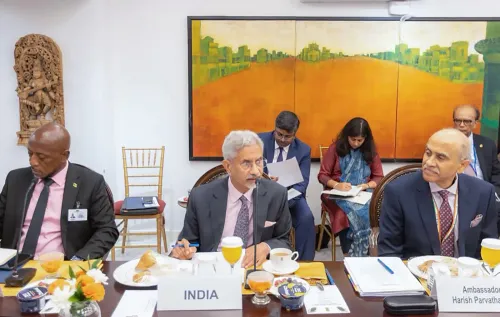
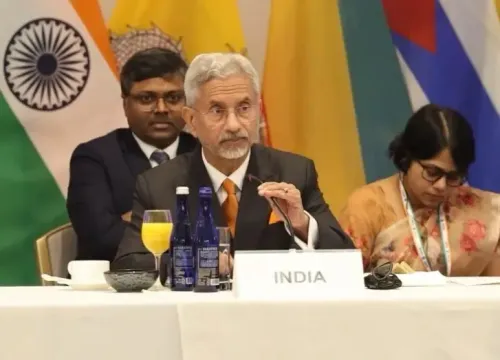
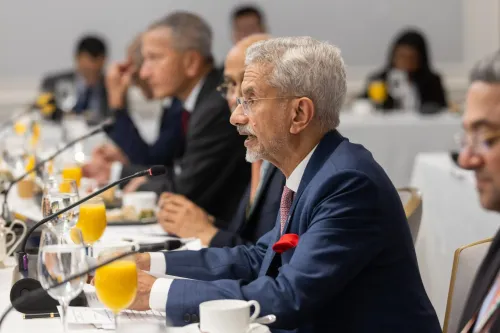
Speaking at a panel titled 'Ruptures and Ramparts: Building Bridges for a Changing World', organised by ORF America, Dr. Jaishankar joined FM Kamina Smith of Jamaica, FM Shirley Ayorkor Botchwey of Ghana, FM Melvin Bouva of Suriname, and EastWest Center President Celeste Connors for what he described as an 'engaging discussion.' The venue: the sidelines of the UN General Assembly, the most concentrated diplomatic marketplace on the planet.
Three Arrows, One Argument
Dr. Jaishankar's post distilled the conversation into three pointed positions. First: the United Nations remains indispensable — but must be reformed to reflect the aspirations and realities of the Global South. Second: the voice of the Global South will continue to matter even as geopolitical fragmentation, conflicts, climate change, economic uncertainty and technological disruption reshape the landscape. Third — and perhaps most pointed — the world will not be defined by binary choices. Countries will make their decisions based on interests, values, and trust. That last line carries diplomatic weight. It is a direct pushback against the pressure that smaller and middle-power nations face to choose sides in an increasingly polarised world.India's Long Campaign for UN Reform
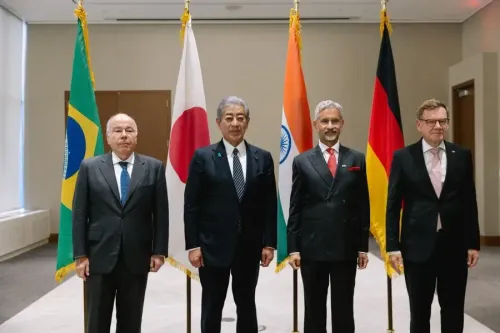
The call for UN reform is not new for India. As part of the G4 grouping alongside Brazil, Germany, and Japan, India has pushed for Security Council expansion since 2005 — arguing that a body designed in 1945 cannot credibly represent a world of 193 member states, the majority of whom are from the Global South. The current five permanent members hold veto power that was shaped by post-World War II geopolitics, not by today's demographic or economic weight. In January 2023, India hosted the inaugural Voice of the Global South Summit, pulling together developing nations to coordinate positions on precisely these issues — debt, climate finance, food security, and institutional reform. The #UNHighLevelWeek panel in New York is a continuation of that agenda, now carried into the multilateral arena's highest-profile week of the year.What the Panel's Geography Says
The composition of the panel itself is a statement. Jamaica and Suriname represent the Caribbean, where small island states face existential pressure from climate change and have little leverage in global financial institutions. Ghana anchors West Africa, a region navigating debt restructuring, democratic turbulence, and great-power competition. India sits at the table as the most populous country on Earth and the largest economy among them. Together, they span three continents — and a shared frustration with institutions that were not built with them in mind. The EastWest Center, a Honolulu-based think tank focused on US-Asia-Pacific policy, and ORF America, the American chapter of India's Observer Research Foundation, co-hosted what Dr. Jaishankar called a 'timely conversation.' In a week when world leaders crowd into Manhattan to deliver speeches that often change little, a focused multilateral dialogue among foreign ministers of the Global South is, at minimum, a signal of where the diplomatic energy is actually flowing. The message from New York is unmistakable: reform or lose relevance — and the Global South is done waiting politely.Point of View
Not merely a participant. The emphasis on rejecting 'binary choices' is a direct signal to both Washington and Beijing that India will not anchor its foreign policy — or encourage smaller nations to anchor theirs — to any single great power. Coming against the backdrop of India's G4 advocacy and its Voice of the Global South initiative, this is consistent messaging dressed up in multilateral clothing. The real test comes when Security Council reform proposals move from panel discussions to draft resolutions on the floor of the General Assembly.
NationPress
25 Sept 2026
Frequently Asked Questions
What is the Global South and why does India champion it?
The Global South broadly refers to developing nations across Asia, Africa, Latin America and the Caribbean. India champions it because these countries share interests in reforming post-1945 institutions like the UN Security Council that currently under-represent them in global decision-making.
What did Jaishankar say at the UN High-Level Week 2026 panel?
Jaishankar said the UN remains indispensable but needs reform, that the Global South's voice will continue to matter amid geopolitical fragmentation and climate change, and that countries will not face binary choices but will act on their own interests, values and trust.
What is India's position on UN Security Council reform?
India has sought a permanent seat on an expanded UN Security Council since at least 2005, as part of the G4 grouping with Brazil, Germany and Japan, arguing the current structure does not reflect modern geopolitical and demographic realities.
What is the Voice of the Global South Summit?
It is a diplomatic initiative launched by India in January 2023 to bring together developing nations and coordinate their positions on issues like debt relief, climate finance and institutional reform ahead of major multilateral forums.
What is ORF America and why did it organise this panel?
ORF America is the United States chapter of India's Observer Research Foundation think tank. It organises policy dialogues on Indo-Pacific and multilateral issues; hosting a cross-regional foreign ministers panel during UN High-Level Week fits its mandate of bridging Global South and Western policy conversations.