Jaishankar at Asia Society: 4F Crisis, Multipolarity Define UNGA Week
Synopsis
At the UN High-Level Week's close, External Affairs Minister Dr. S. Jaishankar addressed the Asia Society in New York, articulating India's five-point world-view: the 4F crisis, the competition-interdependence paradox, and the structural inevitability of multipolarity.
Key Takeaways
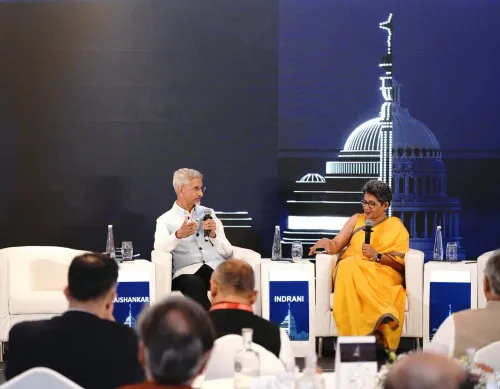
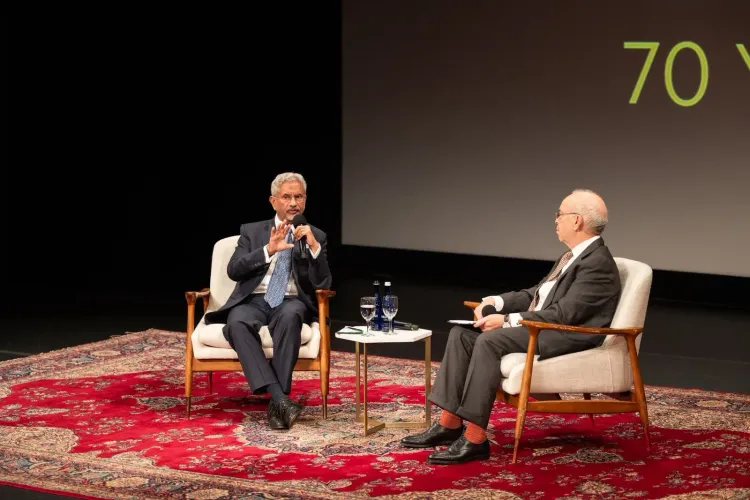
Jaishankar spoke at the Asia Society in New York at the close of UN High-Level Week on 29 September 2026 .
He outlined five themes: multiple global conflicts, the 4F crisis (food, fuel, fertiliser, finance), the paradox of competition and interdependence, the need for a cohesive outlook, and the inevitability of multipolarity .
The conversation was hosted by Danny Russel , Asia Society vice president and former US Assistant Secretary of State for East Asian and Pacific Affairs.
India has used the 4F crisis framing consistently since 2022 to highlight the differentiated impact of great-power conflicts on developing nations.
The multipolarity argument has been a cornerstone of India's multilateral diplomacy since at least 2018 , now framed as structural reality rather than aspiration.
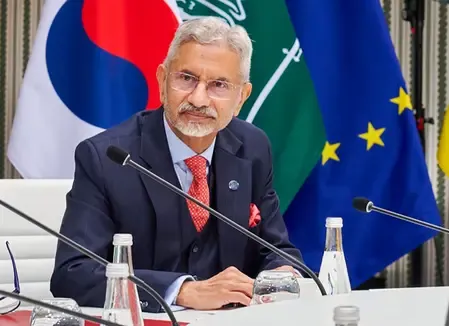
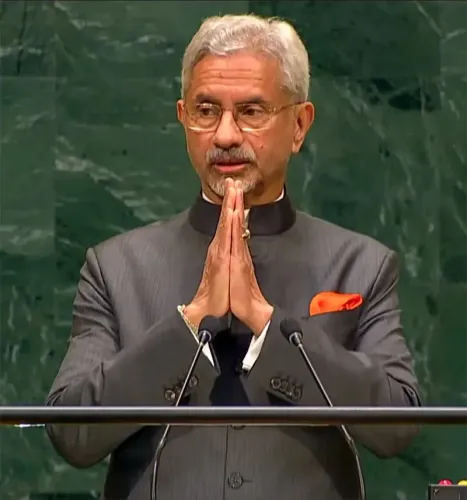
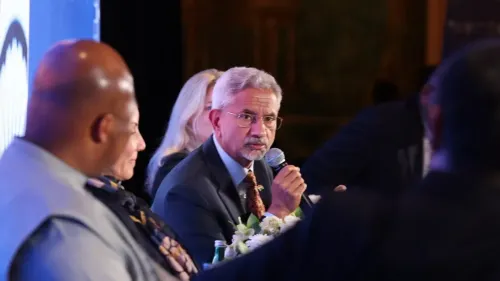
At the close of the UN High-Level Week in New York, Union External Affairs Minister Dr. S. Jaishankar stepped before one of America's most influential foreign-policy forums and laid out India's unflinching read of a world under strain — conflicts multiplying, food and fuel growing scarce, and the old unipolar order quietly giving way.
The 4F Crisis: India's Frame for a Fractured World
Dr. Jaishankar anchored his remarks at the Asia Society — hosted in conversation with Danny Russel, the organisation's vice president and a former US Assistant Secretary of State for East Asian and Pacific Affairs — around five interlocking themes. First among them: the '4F crisis', shorthand India has deployed consistently since 2022 to describe the cascading shocks of food, fuel, fertiliser, and finance that great-power conflicts have inflicted disproportionately on developing nations.
The framing is deliberately Global South-forward. Where Western capitals have tended to frame recent instability in security terms — alliances, deterrence, territorial integrity — India's diplomacy insists the lens must also capture the grocery bill in Nairobi, the power cut in Colombo, and the fertiliser shortage in Dhaka. That argument has grown sharper, and more insistent, with every passing UNGA cycle.
Competition and Interdependence — the Paradox India Won't Let the World Ignore
The minister flagged what he called 'the paradox of obsessive competition and deep interdependence' — a phrase that cuts to the heart of the US-China rivalry and its reverberations across global supply chains. The world's two largest economies are locked in a technology and trade confrontation even as their production networks remain inextricably entangled. Every other country, India included, navigates that contradiction daily.
Dr. Jaishankar's answer was what he termed a 'cohesive outlook' — arguing that the 'indivisibility of the landscape' demands that nations resist the temptation to partition global challenges into rival blocs. It is a position that maps directly onto India's strategic autonomy doctrine: engage everyone, align with no one's camp exclusively, and insist that the rules apply universally.
Why 'Multipolarity' Is No Longer Just a Talking Point
Perhaps the most structurally significant argument was the one Dr. Jaishankar described as 'the inevitability of multipolarity.' India has been making this case — at UNGA, at the Shangri-La Dialogue, and in bilateral corridors — since at least 2018. But the confidence has intensified. Multipolarity is no longer framed as an aspiration or a preference; it is presented as a structural outcome already under way, one that policymakers must design around rather than resist.
The Asia Society, a New York-based institution focused on US-Asia policy dialogue, has served as a recurring platform for Indian ministers to project these positions directly to American and international audiences. Tuesday's session came at the natural inflection point of the UN calendar — the final day of High-Level Week, when delegations are still in the city and the diplomatic temperature is highest.
What India's UNGA Posture Signals Going Forward
The five points Dr. Jaishankar outlined are not isolated observations — they form a coherent architecture. The 4F crisis establishes the human cost. The competition-interdependence paradox names the structural contradiction. The 'cohesive outlook' prescribes the response. The 'multiple causes of turbulence' resists any single-villain narrative. And multipolarity frames the destination. Together, they sketch India's operating theory for a world it increasingly expects to help shape rather than simply react to.
Watch for how these themes travel from New York into India's bilateral engagements with major powers in the weeks ahead — particularly on food and energy security mechanisms where New Delhi has been pressing for concrete multilateral architecture.
Point of View
Signalling that India views the structural shift as too advanced to reverse and is now focused on shaping its architecture. The choice of the Asia Society — a US-leaning forum with deep policy reach — as the venue to deliver this message underlines India's intent to engage Washington directly with a framework Washington did not author.
NationPress
29 Sept 2026
Frequently Asked Questions
What did Jaishankar say at Asia Society during UNGA 2026?
Dr. S. Jaishankar outlined five key points: the difficult state of the world amid multiple conflicts, the 4F crisis (food, fuel, fertiliser and finance), the paradox of obsessive competition alongside deep interdependence, the need for a cohesive global outlook, and the inevitability of multipolarity.
What is India's 4F crisis and why does Jaishankar keep raising it?
The '4F crisis' refers to simultaneous shocks in food, fuel, fertiliser, and finance that India argues have hit developing nations hardest as a result of great-power conflicts. India has used this framing since 2022 in multilateral forums to demand that global policy address the differentiated impact on the Global South.
Who is Danny Russel and why did he host Jaishankar?
Danny Russel is vice president of the Asia Society and a former US Assistant Secretary of State for East Asian and Pacific Affairs. The Asia Society regularly hosts senior Indian ministers during UN High-Level Week as a platform for US-Asia foreign-policy dialogue.
What does India mean when it talks about multipolarity?
India uses 'multipolarity' to describe a world order in which power is distributed across several major centres — not dominated by the US or China alone. Dr. Jaishankar framed it as structurally inevitable in 2026, a shift from earlier formulations that presented it as a desirable future goal.
What is UN High-Level Week and why does India's EAM attend?
UN High-Level Week is the annual gathering of world leaders and foreign ministers at the United Nations General Assembly in New York, typically held in late September. India's External Affairs Minister attends to participate in multilateral sessions, bilateral meetings, and forums like the Asia Society that reach global policy audiences.