Jaishankar at P4M Summit: Like-minded nations must unite against choke point threats
Synopsis
Co-chairing the inaugural P4M Summit at the UN alongside European Council President António Costa, External Affairs Minister Jaishankar issued a direct call for like-minded nations to act together against choke point threats, naming fuel, food, fertiliser, and finance as the four converging crises — and warning that unchecked geopolitical tension risks unravelling the very architecture of international cooperation.
Key Takeaways
Jaishankar co-chaired the inaugural P4M Summit at the United Nations on 22 September alongside European Council President António Costa .
He warned the global order is under stress from ‘extreme competition, geopolitical tensions, and actual conflicts,’ without naming specific regions.
Jaishankar identified the '4F crises' — fuel, food, fertiliser, and finance — as making a strong case for multilateral frameworks and guardrails.
He called for reformed multilateralism with more participative deliberations, transparent decisions, and strict adherence to international law.
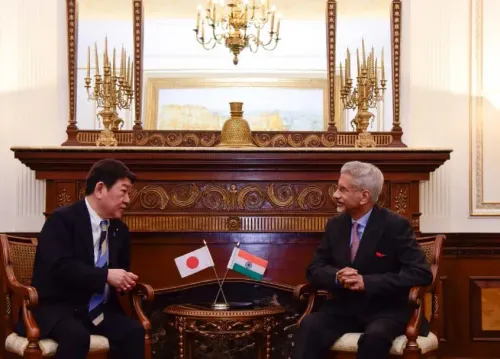
On the sidelines, Jaishankar met EU and Indo-Pacific foreign ministers, including Australia 's Penny Wong and South Korea 's Cho Hyun , to discuss cooperation on international law principles.
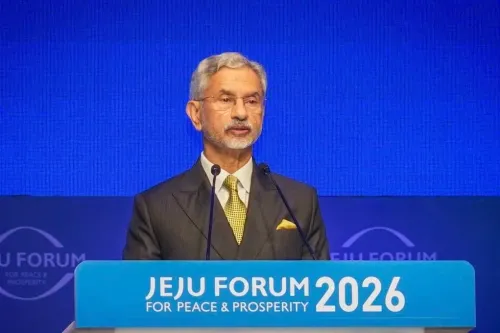
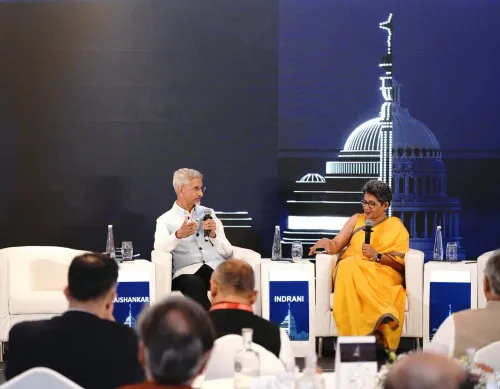
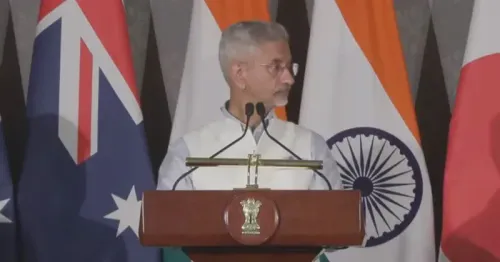
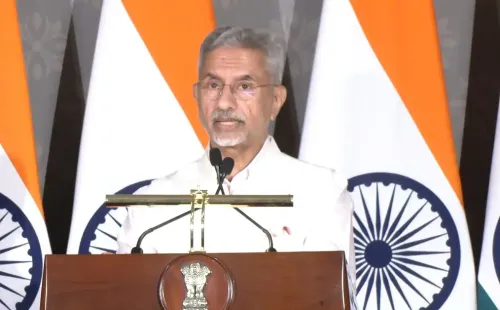
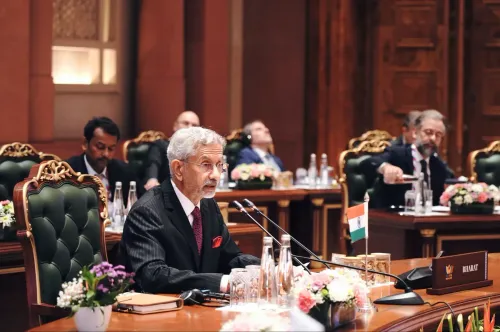
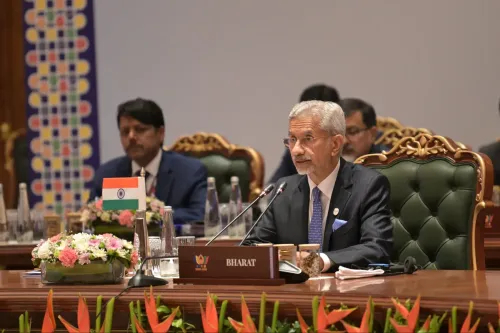
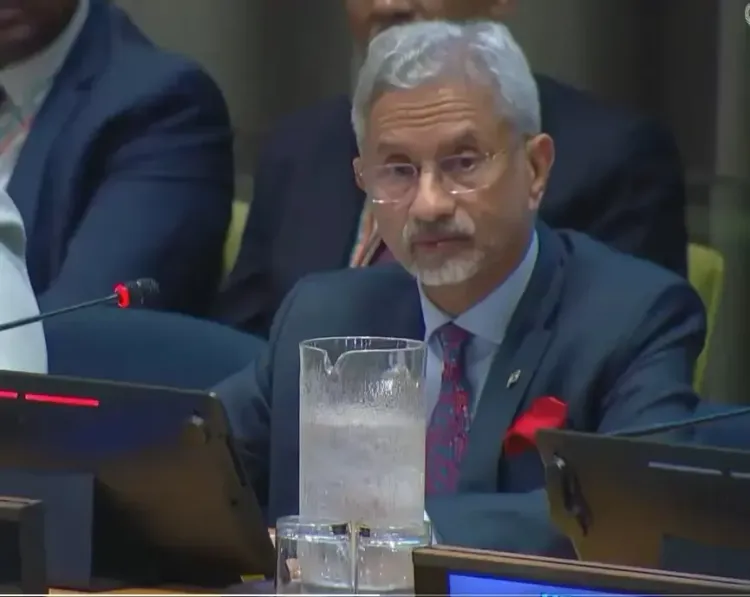
External Affairs Minister S. Jaishankar on Monday, 22 September called on countries with shared international objectives to act collectively against threats to global choke points and supply chain disruptions, delivering a pointed address at the inaugural Partners for Multilateralism, International Law, Peace and Prosperity (P4M) Summit at the United Nations in New York. Jaishankar co-chaired the summit alongside António Costa, President of the European Council.
The Core Message: Multilateralism Under Pressure
Jaishankar said the global order is currently under stress from “extreme competition, geopolitical tensions, and actual conflicts.” He warned that if left unchecked, these pressures “would call into question the very spirit of international cooperation,” making it essential that multilateralism “asserts itself strongly at this juncture.”
Without naming specific regions, the minister's remarks were widely understood as referencing ongoing conflicts in the Gulf and Ukraine — both of which have had significant knock-on effects on global supply chains, energy markets, and food security.
The '4F Crises' and the Case for Guardrails
Jaishankar outlined what he described as the world's '4F crises' — threats to fuel, food, fertiliser, and finance — arguing that this convergence of pressures makes “a very powerful case for frameworks and guardrails.” He stressed that “where there is a compelling cause or a powerful case, the like-minded must have the confidence to come together.”
He also underscored that “de-risking and diversifying” must be actively encouraged wherever choke points, dominance, or disruption loom. This framing reflects India's broader foreign policy posture — of reducing strategic dependencies without formal bloc alignment.
Call for Reformed Multilateralism
Jaishankar argued the moment demands “reformed multilateralism” — one defined by “more participative deliberations and more transparent decisions.” Strict adherence to international law, rules, and norms, he said, is non-negotiable if multilateralism is to remain credible.
He listed the stakes plainly: “the future of peace and international security, of climate action and climate justice, of emerging technologies and development finance, of countering terrorism and strengthening supply chains, and of ensuring disaster resilience and preparing for pandemics.” All, he said, “depend on a will to cooperate.”
India-EU Coordination on the Indo-Pacific and Beyond
On the sidelines of the summit, Jaishankar met with European Union foreign ministers and counterparts from the Indo-Pacific, including Australia's Foreign Minister Penny Wong and South Korea's Foreign Minister Cho Hyun. The discussions covered India-EU cooperation, multilateral governance, and current developments in the Gulf, Ukraine, and the Indo-Pacific.
The minister said on X that he “appreciated meeting my European Union colleagues,” adding that the conversations touched on “multilateral issues and current developments.” This comes amid renewed focus on coordinating democratic and like-minded nations to defend the principles of international law — a theme that has gained urgency across G7, Quad, and EU diplomatic circuits.
What This Signals for India's Global Posture
Notably, co-chairing this summit with the European Council president marks a visible elevation of India's multilateral standing. India has consistently positioned itself as a bridge between the Global South and developed economies — a role it reinforced during its G20 presidency in 2023. The P4M summit appearance extends that identity into a more explicitly rules-based framing. All eyes are now on whether the “like-minded” coalition Jaishankar envisions translates into concrete institutional action, or remains a rhetorical consensus.
Point of View
Yet leaves little ambiguity. The '4F crises' framing and the repeated emphasis on de-risking choke points are a direct echo of India's post-pandemic supply chain doctrine, now being projected multilaterally. Co-chairing with the European Council president is not ceremonial; it signals India's intent to anchor itself within a rules-based coalition without formally joining any bloc — a tightrope walk that has defined New Delhi's foreign policy since the Ukraine war began. The harder question is whether 'like-minded nations acting together' produces binding mechanisms or remains a diplomatic vocabulary exercise.
NationPress
22 Sept 2026
Frequently Asked Questions
What is the P4M Summit and why did Jaishankar attend?
The Partners for Multilateralism, International Law, Peace and Prosperity (P4M) Summit is a multilateral forum focused on reinforcing international law and cooperative governance. Jaishankar co-chaired its inaugural edition on 22 September at the United Nations alongside European Council President António Costa, reflecting India's growing role in shaping multilateral discourse.
What did Jaishankar mean by 'like-minded nations' acting together?
Jaishankar called on countries that share objectives around peace, international law, and open supply chains to collectively counter threats to global choke points and disruptions. While he did not name specific adversaries, the remarks were understood as referencing geopolitical pressures stemming from conflicts in the Gulf and Ukraine.
What are the '4F crises' Jaishankar referred to?
The '4F crises' refer to converging global threats across fuel, food, fertiliser, and finance. Jaishankar used this framework to argue that the scale of current instability makes a compelling case for stronger multilateral frameworks and guardrails to protect global supply chains and development.
Who did Jaishankar meet on the sidelines of the UN summit?
On the sidelines, Jaishankar met European Union foreign ministers and Indo-Pacific counterparts, including Australia's Foreign Minister Penny Wong and South Korea's Foreign Minister Cho Hyun. Discussions covered India-EU cooperation, multilateral issues, and developments in the Gulf, Ukraine, and the Indo-Pacific.
What is India's position on reforming multilateralism?
India, as articulated by Jaishankar, advocates for 'reformed multilateralism' — one that ensures more participative deliberations, transparent decisions, and strict adherence to international law. This position builds on India's G20 presidency platform and reflects its effort to position itself as a bridge between the Global South and developed democracies.