Jaishankar at India-US Forum 2026: Partnership Must Serve Strategic Autonomy
Synopsis
External Affairs Minister Dr. S. Jaishankar, speaking at the Ananta Aspen Centre's India-US Forum 2026 on 19 June, affirmed the deepening bilateral partnership while asserting that a rising India must optimise ties across geographies, preserving strategic autonomy and championing multipolarity in a turbulent world.
Key Takeaways
Jaishankar spoke at the India-US Forum 2026 on 19 June 2026 , hosted by the Ananta Aspen Centre .
He described the India-US partnership as 'deepening across domains' even as both sides navigate its 'issues and complexities.' Jaishankar stated that as India rises , its interests will expand and diversify, requiring optimised relationships across geographies.
He explicitly invoked strategic autonomy and multipolarity as guiding principles of Indian foreign policy alongside the US partnership.
The remarks are consistent with India's long-standing multi-alignment doctrine , which preserves ties with Russia, China and the Global South alongside Washington.
The next India-US 2+2 Ministerial Dialogue and iCET implementation updates are the key milestones to watch.
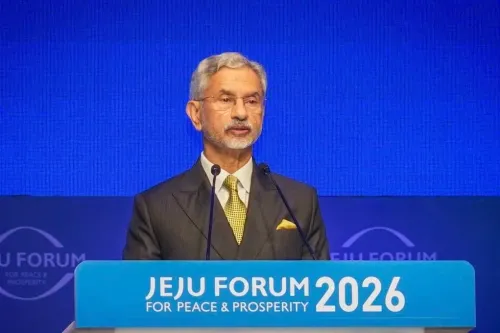
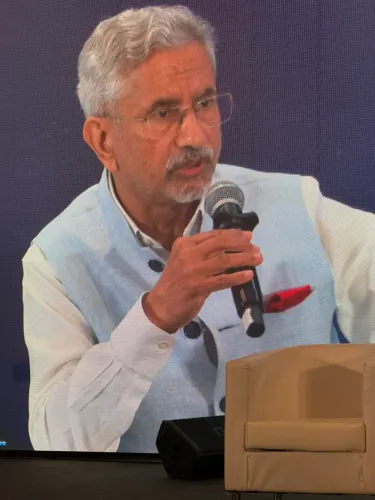
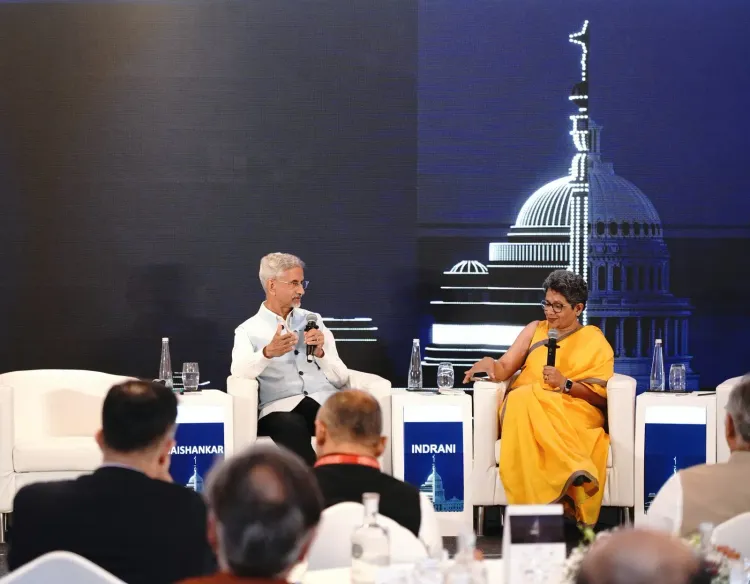
Union External Affairs Minister Dr. S. Jaishankar addressed the India-US Forum 2026 on Friday, 19 June 2026, speaking with senior diplomatic commentator Indrani Bagchi on the evolving contours of the bilateral relationship. The Minister underscored that as India rises as a global power, its interests will expand and diversify, requiring it to optimise relationships across geographies while safeguarding strategic autonomy and multipolarity.
Context
The forum, convened by the Ananta Aspen Centre — a New Delhi-based think tank that organises annual India-US leadership dialogues — provided the setting for Dr. Jaishankar's remarks. Speaking at the event, the Minister described it as 'a good conversation' that ranged across the breadth of the India-US partnership, including its issues and complexities.
Dr. Jaishankar stated that India must 'optimise relationships across geographies while pursuing its national interests, strategic autonomy and multipolarity' — a formulation that places the bilateral relationship within a wider, multi-directional foreign policy framework rather than an exclusive alignment.
Policy Backdrop
The India-US strategic partnership has deepened significantly over the past two decades. The 2008 Civil Nuclear Agreement ended India's decades-long nuclear isolation and opened the door to modern defence and technology cooperation. The 2016 Logistics Exchange Memorandum of Agreement enabled greater defence interoperability between the two militaries.
More recently, the US-India Initiative on Critical and Emerging Technology (iCET), launched in 2022, institutionalised bilateral cooperation in semiconductors, artificial intelligence and space. These milestones form the structural backbone of the relationship that Dr. Jaishankar referenced as 'deepening across domains.'
India has simultaneously maintained calibrated ties with Russia, China and the Global South — a posture successive governments have described as multi-alignment. Dr. Jaishankar's remarks are consistent with this long-standing doctrine, articulated with fresh urgency amid what he called 'a turbulent world.'
Stakeholders and Impact
The Minister's framing carries direct implications for defence manufacturers and technology firms engaged in India-US co-production and supply-chain partnerships. Any signal from the External Affairs Minister on the pace or scope of bilateral engagement shapes expectations across the defence, semiconductor and space sectors.
The foreign policy community will note the explicit invocation of multipolarity alongside the affirmation of a deepening US partnership — a pairing that signals New Delhi's intent to deepen ties with Washington without foreclosing options elsewhere. Indrani Bagchi's role as interlocutor also reflects the growing importance of structured Track 1.5 dialogues in shaping public understanding of India's foreign policy choices.
What's Next
Attention will now turn to the next India-US 2+2 Ministerial Dialogue and any updates on iCET implementation, including defence co-production timelines and technology-transfer commitments. Parliamentary questions on supply-chain resilience and critical technology access are also likely to surface in the weeks ahead.
As India's global footprint expands, Dr. Jaishankar's remarks at the India-US Forum 2026 signal that New Delhi will continue to frame its most consequential bilateral partnerships as instruments of national interest — deepened deliberately, but never at the cost of strategic flexibility.
Point of View
Signalling that New Delhi expects candour, not just celebration, from its most important partner. This positions India as a confident, self-aware rising power rather than a supplicant seeking alignment.
NationPress
19 Sept 2026
Frequently Asked Questions
What did Jaishankar say at the India-US Forum 2026?
Dr. S. Jaishankar said the India-US partnership is deepening across domains even as both sides navigate its issues and complexities, and that India must optimise relationships across geographies while pursuing strategic autonomy and multipolarity.
What is the Ananta Aspen Centre?
The Ananta Aspen Centre is a New Delhi-based think tank that convenes annual India-US leadership dialogues and other high-level foreign policy forums.
What is India's strategic autonomy policy?
Strategic autonomy is India's long-standing foreign policy principle of preserving the freedom to engage with multiple global powers — including the United States, Russia and China — without exclusive alignment with any single bloc.
What is iCET in India-US relations?
iCET, or the US-India Initiative on Critical and Emerging Technology, was launched in 2022 to institutionalise bilateral cooperation in semiconductors, artificial intelligence and space.
Who is Indrani Bagchi?
Indrani Bagchi is a senior Indian journalist and diplomatic commentator who moderated the conversation with Dr. Jaishankar at the India-US Forum 2026.