Jaishankar attends ASEAN, ARF, EAS and QUAD FMMs in Manila
Synopsis
External Affairs Minister Dr. S. Jaishankar attended the ASEAN Post-Ministerial Conference, ARF, EAS Foreign Ministers' Meetings and the QUAD FMM in Manila on 24 July 2026, also holding bilateral talks with multiple counterparts — a signature display of India's multi-alignment diplomacy in the Indo-Pacific.
Key Takeaways
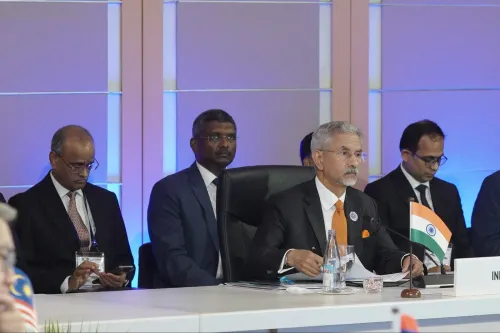
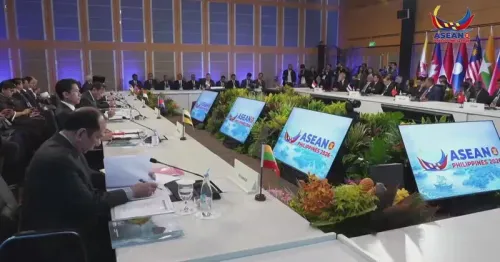
Jaishankar participated in the ASEAN Post-Ministerial Conference with India , the ARF FMM , and the EAS FMM in Manila, Philippines on 24 July 2026 .
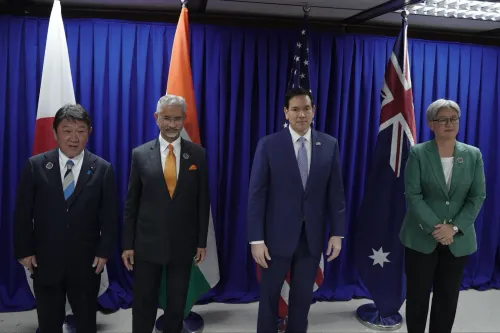
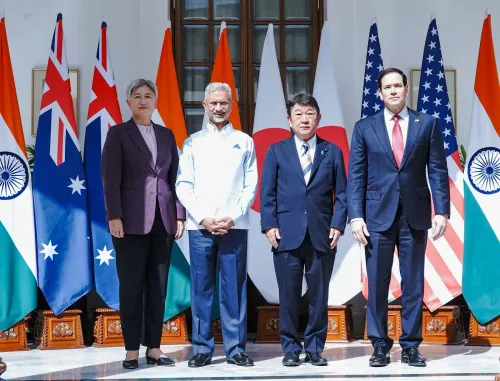
He also attended the QUAD Foreign Ministers' Meeting , bringing together India, Australia, Japan and the United States .
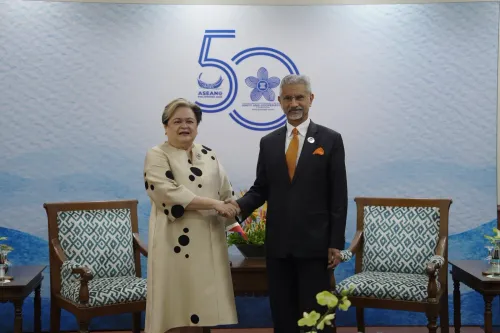
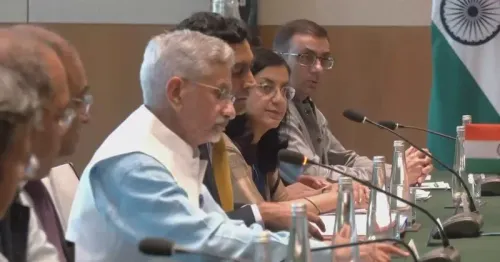
Separate bilateral meetings were conducted with multiple foreign minister counterparts on the sidelines.
India has been an ASEAN Dialogue Partner since 1992 , an ARF member since 1996 , and a founding EAS participant since 2005 .
The Manila engagements reflect India's Act East Policy and its broader multi-alignment approach in the Indo-Pacific.
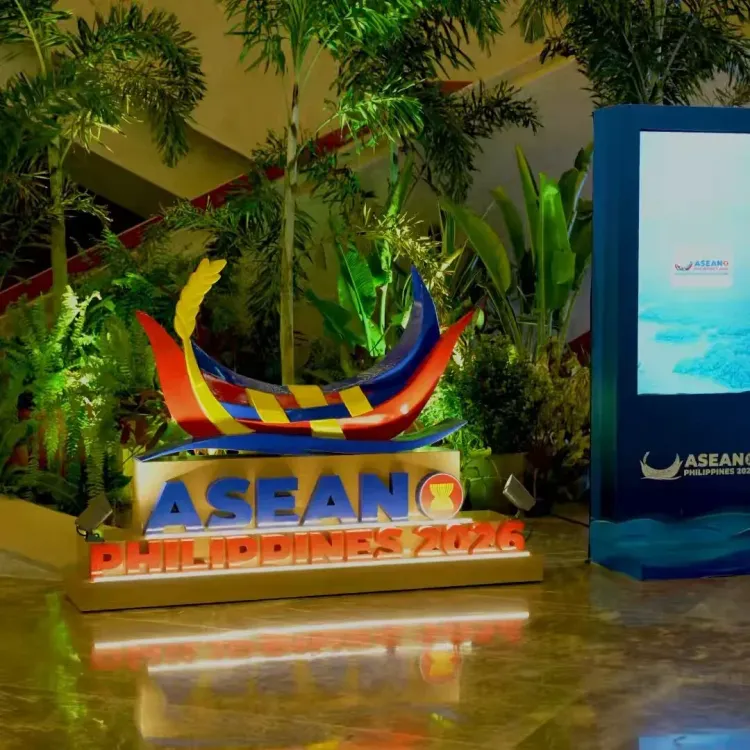
The Philippines holds the 2026 ASEAN Chair , making Manila the centre of this year's regional ministerial calendar.
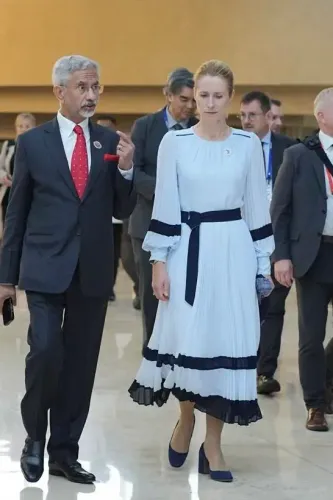
Union External Affairs Minister Dr. S. Jaishankar attended a series of high-level multilateral and bilateral diplomatic engagements in Manila, Philippines, on the sidelines of the ASEAN Post-Ministerial Conference, the ASEAN Regional Forum (ARF), and the East Asia Summit (EAS) Foreign Ministers' Meetings on 24 July 2026. He also participated in the Quadrilateral Security Dialogue (QUAD) Foreign Ministers' Meeting and held separate bilateral talks with several counterparts during the visit.
Context
Sharing a recap on X, Dr. Jaishankar confirmed participation in the ASEAN Post-Ministerial Conference with India, the ARF Foreign Ministers' Meeting, and the EAS Foreign Ministers' Meeting — three distinct multilateral formats that convene annually around the ASEAN Ministerial Meeting cycle hosted in the chair country. This year, the Philippines holds the ASEAN chair, making Manila the hub for the region's most consequential foreign ministers' gatherings.
The ASEAN Post-Ministerial Conference with India is a dedicated dialogue channel that dates to 1992, when India became a full ASEAN Dialogue Partner. India joined the ARF in 1996 and was a founding participant of the East Asia Summit at its inaugural session in 2005, cementing its place in the broader Indo-Pacific institutional architecture.
Policy Backdrop
The QUAD Foreign Ministers' Meeting — comprising India, Australia, Japan and the United States — is a parallel track that India has pursued alongside ASEAN-centric formats since the grouping was revived at the foreign ministers' level in September 2019 in New York. Holding a QUAD FMM on the margins of an ASEAN-week calendar reflects India's deliberate multi-alignment posture: engaging the ASEAN-led multilateral order while deepening the Quad's security and technology cooperation agenda.
India's Act East Policy, articulated since 2014, has consistently elevated Southeast Asia as a strategic and economic priority. Successive visits by Indian external affairs ministers to ASEAN ministerial weeks have been used to advance connectivity initiatives, maritime security dialogues, and trade facilitation measures with the 10-member ASEAN bloc and its wider partner network of 27 ARF members and 18 EAS participants.
Stakeholders and Impact
The meetings directly engage India's most consequential regional partners — the 10 ASEAN member states, along with Quad partners Australia, Japan and the United States. The bilateral meetings conducted by Dr. Jaishankar on the margins, though not individually itemised in the post, typically cover trade, defence, diaspora, and connectivity issues with individual Southeast Asian and Indo-Pacific counterparts.
For the Philippines specifically, the Manila setting carries added significance: India-Philippines ties have grown in recent years across defence, agriculture, and people-to-people domains, and any bilateral deliverables announced during this visit would build on that trajectory. The dense diplomatic calendar also provides an opportunity to signal India's positions on South China Sea stability and broader Indo-Pacific maritime security — issues central to both the ARF and the Quad agenda.
What's Next
Attention will now turn to the outcomes of the EAS Leaders' Meeting, where heads of government are expected to take forward the themes discussed at the foreign ministers' level. Any follow-up QUAD Foreign Ministers' Meeting communiqué or joint statement, as well as bilateral agreements emerging from the Manila engagements, will be closely watched by analysts tracking India's Indo-Pacific strategy.
The Manila engagements reinforce a well-established pattern: India uses the annual ASEAN ministerial cycle not merely for multilateral signalling but as a force-multiplier for bilateral diplomacy, compressing multiple high-value meetings into a single overseas visit — a template that has defined Dr. Jaishankar's tenure as External Affairs Minister since 2019.
Point of View
ARF, EAS, and QUAD — signals that India treats these frameworks as complementary rather than competing, a posture that distinguishes it from powers that view ASEAN centrality and the Quad as being in tension. The bilateral meetings layered on top further illustrate how India's Act East Policy has matured from a declaratory stance into a dense web of operational diplomacy. Collectively, the Manila engagements serve as a mid-year audit of India's Indo-Pacific relationships ahead of the EAS Leaders' Summit later in the year.
NationPress
22 Oct 2026
Frequently Asked Questions
What did Jaishankar do in Manila in July 2026?
Dr. S. Jaishankar attended the ASEAN Post-Ministerial Conference with India, the ARF Foreign Ministers' Meeting, the EAS Foreign Ministers' Meeting, and the QUAD Foreign Ministers' Meeting in Manila on 24 July 2026, and also held bilateral talks with several counterparts.
What is the QUAD Foreign Ministers' Meeting?
The QUAD Foreign Ministers' Meeting brings together the top diplomats of India, Australia, Japan, and the United States. The format was revived in September 2019 and meets periodically to coordinate positions on Indo-Pacific security, technology, and connectivity.
Why is Manila hosting ASEAN meetings in 2026?
The Philippines holds the ASEAN chairmanship in 2026, which means Manila is the designated host for the bloc's major ministerial and summit-level gatherings this year.
What is India's relationship with ASEAN?
India became a full ASEAN Dialogue Partner in 1992, joined the ASEAN Regional Forum in 1996, and was a founding participant of the East Asia Summit in 2005. ASEAN engagement is a cornerstone of India's Act East Policy.
What is the East Asia Summit (EAS)?
The East Asia Summit is an 18-member leaders' forum launched in 2005 that includes ASEAN nations plus India, China, Japan, South Korea, Australia, New Zealand, Russia, and the United States. India was a founding participant and uses the platform to advance its Indo-Pacific priorities.