Jaishankar at Quad Foreign Ministers Meet in Manila
Synopsis
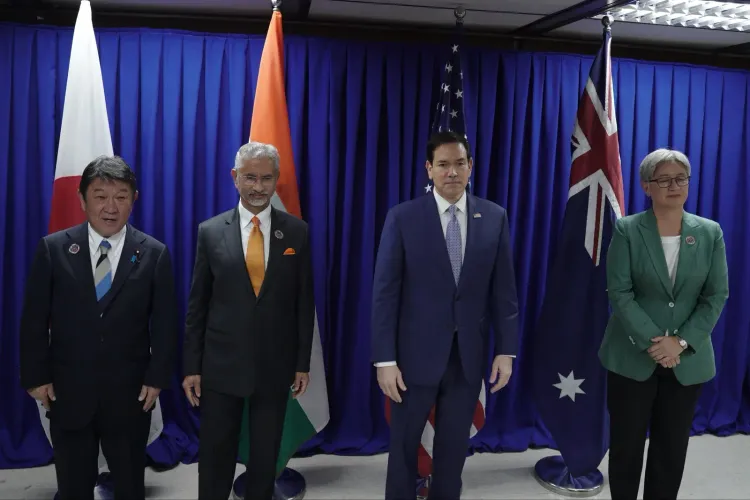
External Affairs Minister Dr. S. Jaishankar joined the Quad Foreign Ministers Meeting in Manila on 22 July 2026, reviewing the Indo-Pacific landscape, following up on New Delhi outcomes, and reaffirming commitment to a free, open Indo-Pacific with ASEAN centrality.
Key Takeaways
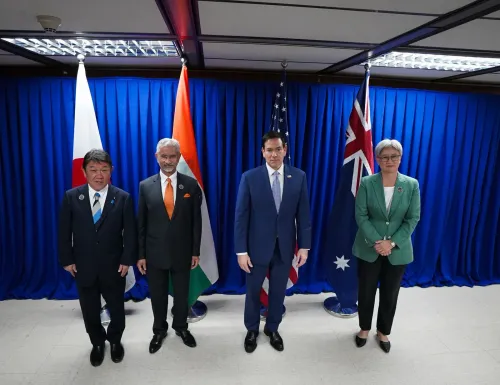
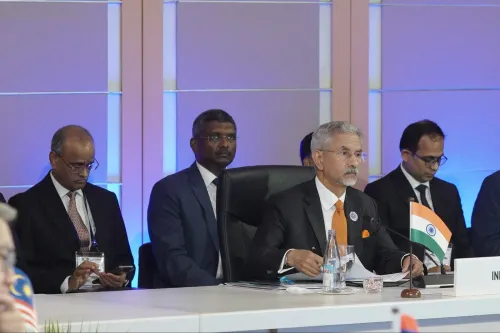
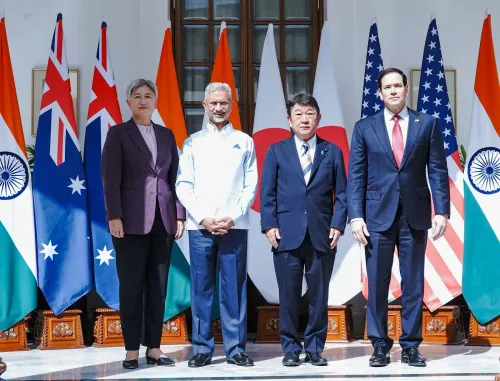
Jaishankar participated in the Quad Foreign Ministers Meeting in Manila on 22 July 2026 .
Ministers reviewed the Indo-Pacific landscape and discussed recent regional developments.
The meeting followed up on outcomes from a prior Quad Foreign Ministers Meeting in New Delhi .
All four Quad members reaffirmed commitment to a free and open Indo-Pacific .
The statement explicitly recognised ASEAN centrality in the regional architecture.
The Manila venue underscores the Quad's intent to engage Southeast Asia directly.
Union External Affairs Minister Dr. S. Jaishankar participated in the Quad Foreign Ministers Meeting in Manila on Wednesday, 22 July 2026, reviewing the Indo-Pacific landscape and following up on outcomes from a prior meeting held in New Delhi. The meeting reaffirmed the grouping's commitment to a free and open Indo-Pacific, with explicit recognition of ASEAN centrality.
Context
Dr. Jaishankar confirmed his participation via a post on X, stating he had 'reviewed the Indo-Pacific landscape and discussed recent developments' before adding that the ministers had 'followed up on the outcomes of the recent New Delhi meeting.' The Manila gathering marks a continuation of regular ministerial-level engagement within the Quad — the Quadrilateral Security Dialogue comprising India, the United States, Japan, and Australia.
The choice of Manila as venue carries symbolic weight, placing the meeting at the heart of Southeast Asia and signalling the grouping's intent to engage the broader region rather than convene solely among its four member states.
Policy Backdrop
The Quad was revitalised through a Foreign Ministers meeting on the margins of ASEAN in 2017, and has since evolved into a structured platform for practical cooperation across the Indo-Pacific. Prime Minister Narendra Modi articulated India's Indo-Pacific vision — with ASEAN centrality at its core — at the Shangri-La Dialogue in 2018, a position India has consistently upheld in every subsequent Quad statement.
The reference to 'a free and open Indo-Pacific' echoes the rules-based order framing that all four Quad members have adopted, while the acknowledgement of ASEAN centrality is designed to reassure the ten-member bloc that the Quad is complementary to, not competitive with, existing regional architecture.
India's participation also aligns with its broader Act East Policy and its multi-alignment strategy, through which New Delhi engages major powers and regional groupings without exclusive alignment to any single bloc.
Stakeholders and Impact
The most immediate stakeholders are the four Quad member states, whose foreign ministers convened to translate leaders'-level commitments into actionable follow-up. The outcomes of the prior New Delhi meeting — referenced by Dr. Jaishankar but not detailed in the post — form the baseline against which progress in Manila will be measured.
ASEAN nations, particularly those with overlapping interests in maritime security and connectivity, stand to be directly affected by any joint Quad initiatives that emerge. The Philippines, as host country, occupies a particularly significant position given its own ongoing maritime disputes in the South China Sea.
For India, sustained Quad engagement reinforces its credentials as a net security provider and responsible stakeholder in the Indo-Pacific, a posture that carries diplomatic dividends across the region.
What's Next
Attention will now turn to the implementation of initiatives discussed in Manila and any joint communiqué or outcome document the four ministers may release. The trajectory of Quad Foreign Ministers meetings has historically fed into leaders' summits, making the Manila deliberations a potential precursor to higher-level engagement.
How the grouping operationalises its commitment to ASEAN centrality — through concrete projects, capacity-building, or institutional linkages — will be the key metric by which regional observers judge the Manila meeting's lasting significance.
Point of View
Structured follow-up — a shift that carries real diplomatic weight. By convening in the Philippines and foregrounding ASEAN centrality, the four ministers are actively countering the narrative that the Quad is an exclusionary security bloc aimed at containing China. For India, this is also a demonstration of its Act East Policy in action: New Delhi is not merely a passive participant but a co-shaper of the Indo-Pacific order. The reference to a prior New Delhi meeting suggests India is increasingly hosting, not just attending, the architecture it helped revive.
NationPress
20 Oct 2026
Frequently Asked Questions
What is the Quad Foreign Ministers Meeting?
The Quad Foreign Ministers Meeting is a ministerial-level gathering of the foreign ministers of India, the United States, Japan, and Australia — the four members of the Quadrilateral Security Dialogue — to coordinate on Indo-Pacific policy and practical cooperation.
Why was the Quad Foreign Ministers Meeting held in Manila?
The meeting was held in Manila , the capital of the Philippines, placing it at the centre of Southeast Asia and reinforcing the Quad's message of engagement with the broader Indo-Pacific region, including ASEAN nations.
What is ASEAN centrality and why do Quad members emphasise it?
ASEAN centrality refers to the principle that the Association of Southeast Asian Nations should remain the primary driver of the regional security and economic architecture in Asia. Quad members emphasise it to reassure Southeast Asian nations that the grouping complements rather than competes with existing regional frameworks.
What was the New Delhi Quad meeting that was followed up in Manila?
Dr. Jaishankar referenced a prior Quad Foreign Ministers Meeting held in New Delhi whose outcomes were reviewed and followed up during the Manila session on 22 July 2026 . Specific details of that meeting's outcomes were not disclosed in his post.
How does the Quad meeting fit into India's foreign policy?
The Quad aligns with India's Act East Policy and its multi-alignment strategy, through which New Delhi engages major powers and regional groupings to advance a rules-based Indo-Pacific order without exclusive alignment to any single bloc.