Assam CM's CMAAA Keeps Betting on Youth Entrepreneurs
Synopsis
The Chief Minister's Office of Assam spotlighted the CMAAA on October 20, 2026, reaffirming the scheme's role in providing financial backing to youth entrepreneurs — a state-level adaptation of India's broader Atmanirbhar Bharat self-reliance push under CM Himanta Biswa Sarma.
Key Takeaways
The Chief Minister's Office of Assam reaffirmed the CMAAA scheme on October 20, 2026 as an active vehicle for youth entrepreneurship support.
The scheme provides direct financial backing and resources to young Assamese building their own enterprises.
CMAAA is Assam's state-level adaptation of the Atmanirbhar Bharat Abhiyan launched by the Government of India in May 2020 .
Chief Minister Himanta Biswa Sarma , in office since May 2021 , has overseen multiple self-reliance and entrepreneurship programmes in the state.
Fund disbursement figures and enterprise survival rates are the key metrics to watch in upcoming Assam budget sessions.
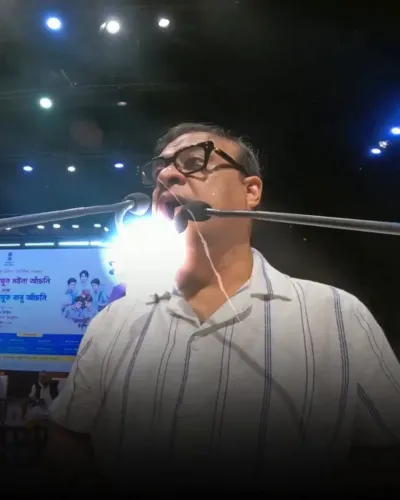
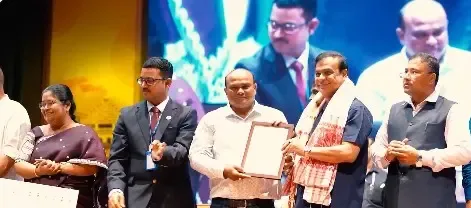
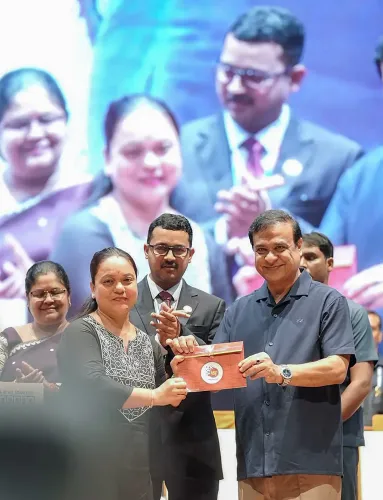
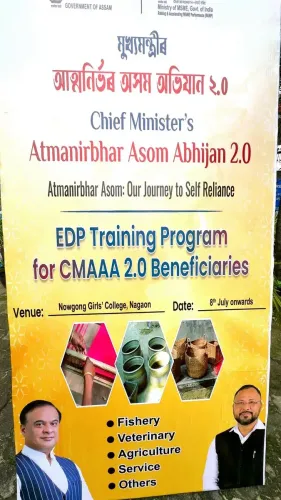
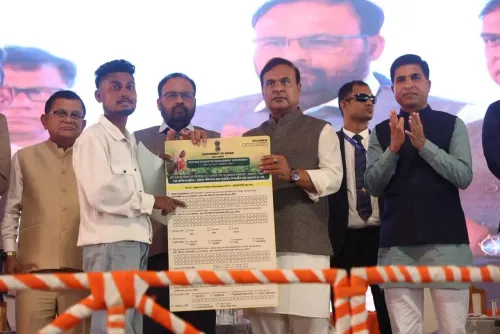
For young Assamese with a business idea and no safety net, the state government has positioned itself as the first backer. The Chief Minister's Office of Assam reaffirmed on Tuesday, October 20, 2026 that the Chief Minister's Atmanirbhar Asom Abhiyan (CMAAA) is actively channelling financial support to youth seeking to build their own enterprises.
What CMAAA sets out to do
The scheme is Assam's state-level answer to a persistent challenge: too many educated young people, too few formal-sector jobs. The CMAAA is designed to close that gap not by waiting for industry to arrive, but by seeding entrepreneurs directly — providing 'the right financial backing and momentum,' as the Chief Minister's Office put it.
The initiative sits within a broader lineage of self-reliance policy. When the Government of India launched the Atmanirbhar Bharat Abhiyan in May 2020, it offered states a policy vocabulary — and an economic rationale — for directing credit and infrastructure support toward micro-enterprises. Assam, under Chief Minister Himanta Biswa Sarma since May 2021, translated that national framework into a state-specific scheme targeting its own northeast demographic.
Assam's northeast entrepreneurship push in context
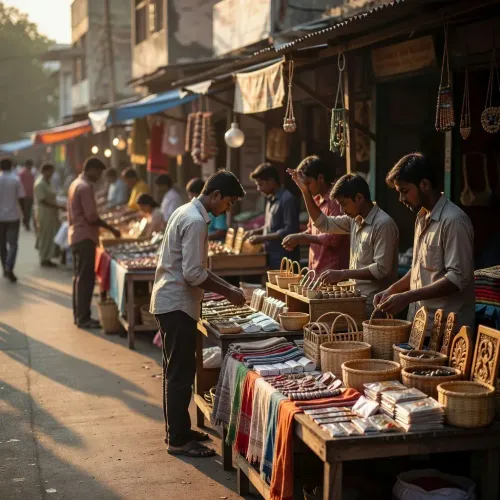
The northeastern states face a structural employment problem that national aggregate numbers routinely obscure: limited industrial bases, difficult terrain, and a young population that has historically had to migrate for work. Schemes like CMAAA attempt to reverse that flow by making it financially viable to stay and build.
Other northeastern and Indian states have launched parallel efforts, but consistent fund disbursement and enterprise survival rates — the two numbers that determine whether a scheme delivers or merely announces — remain the real test. Those figures are expected to surface in upcoming Assam state budget sessions and scheme review meetings.
What the momentum signal means for aspiring founders
The Chief Minister's Office framing — 'turning entrepreneurial dreams into reality' — is deliberate. Governments communicate intent partly to reassure would-be applicants that the pipeline is open. For an aspiring entrepreneur in Guwahati or a smaller district town weighing whether to apply, a public reaffirmation of active disbursement is itself a signal worth acting on.
The harder question is scale: how many beneficiaries has CMAAA reached, and how many of those enterprises are still operating? Those answers will determine whether this scheme becomes a genuine economic pivot for Assam's youth or another well-intentioned programme measured only in launch-day announcements.
Point of View
Then communicate programme momentum publicly to sustain applicant confidence. The scheme is an implicit acknowledgement that formal-sector job creation alone cannot absorb Assam's young workforce at the pace required. Whether CMAAA becomes a structural economic lever or a recurring announcement will hinge on verifiable disbursement and survival-rate data — the kind of accountability test that budget-session scrutiny will eventually force.
NationPress
20 Oct 2026
Frequently Asked Questions
What is the Chief Minister's Atmanirbhar Asom Abhiyan (CMAAA)?
The CMAAA is an Assam government scheme that provides direct financial support and resources to young people in the state who want to start or scale their own businesses, modelled on the national Atmanirbhar Bharat Abhiyan framework.
Who oversees CMAAA in Assam?
The scheme operates under the Assam state government, led by Chief Minister Himanta Biswa Sarma, who has championed several self-reliance and entrepreneurship programmes since taking office in May 2021.
How does CMAAA relate to the national Atmanirbhar Bharat Abhiyan?
The national Atmanirbhar Bharat Abhiyan was announced by the Government of India in May 2020 to promote self-reliant economic growth. CMAAA is Assam's state-level adaptation, targeting local youth with direct financial backing for enterprise creation.
Who can benefit from the CMAAA scheme?
The scheme primarily targets the youth of Assam — aspiring entrepreneurs who need financial support and institutional backing to launch and grow their own enterprises.
Where can I find the latest data on CMAAA fund disbursement and beneficiaries?
Detailed disbursement figures and beneficiary counts are expected to be disclosed during Assam state budget sessions and scheme review meetings; official updates are published by the Chief Minister's Office of Assam.