Mandaviya's 'Identify and Defeat Bharat Mata's Enemies' Call
Synopsis
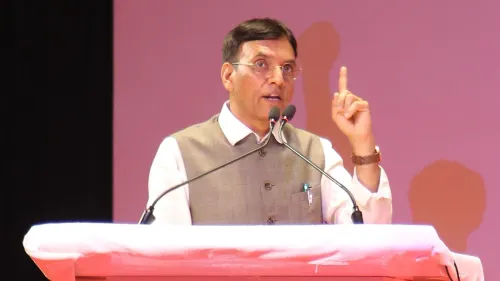
Union Minister Mansukh Mandaviya posted a sharp nationalist call on X on October 20, 2026, urging supporters to 'identify and defeat the enemies of Mother India' — a phrase drawn from the BJP's well-worn political repertoire.
Key Takeaways
Mansukh Mandaviya , Union Minister for Labour and Youth Affairs and Sports, posted a nationalist rallying message on X on October 20, 2026 .
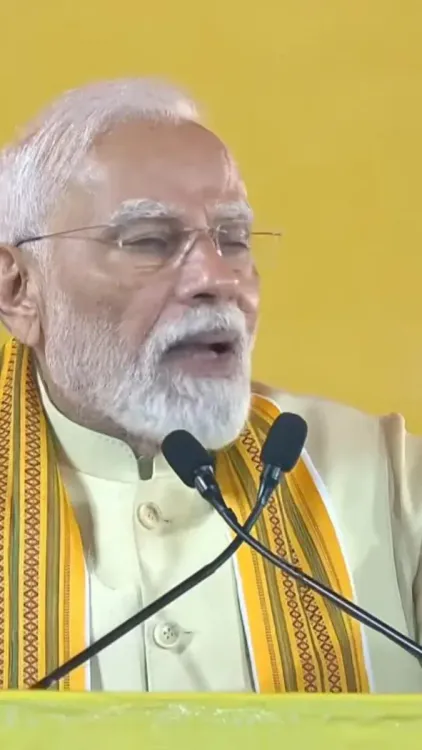
The Hindi post reads: 'Maa Bharati ke shatruon ko pehchanein aur paraast karein' — 'Identify the enemies of Mother India and defeat them.' The post included a video , amplifying the message beyond text alone.
The BJP has deployed 'Bharat Mata' protective rhetoric at key political moments since at least the 2014 election cycle.
The exact occasion or event that prompted the post has not been independently confirmed .
Mandaviya's dual portfolio — including Youth Affairs and Sports — gives him direct access to younger, mobilisable audiences.
A sharp nationalist rallying cry from Union Labour and Sports Minister Mansukh Mandaviya landed on X on Tuesday, October 20, 2026, as the senior BJP leader posted a pointed invocation directed at the party faithful: 'Maa Bharati ke shatruon ko pehchanein aur paraast karein' — 'Identify the enemies of Mother India and defeat them.'
The post, which carried a video, distilled a rhetorical posture the BJP has deployed at key political moments since the 2014 general election cycle — framing political and ideological contests through the imagery of protecting the motherland. Mandaviya's language places the burden squarely on supporters: recognition first, then action.
A Rallying Cry Rooted in BJP's Nationalist Playbook
The invocation of Maa Bharati — Mother India — as a figure to be defended is among the most durable emotional registers in contemporary Indian right-wing politics. It collapses the abstract (national interest, cultural identity, electoral contest) into something visceral and personal: a mother under threat. For the BJP's core base, the phrase carries instant recognition and urgency.
Mandaviya, who holds two cabinet portfolios spanning Labour and Employment and Youth Affairs and Sports, has been a reliable amplifier of the party's central messaging line. His reach to youth-facing constituencies — through the sports ministry — makes this kind of post strategically weighted, even when its occasion remains unspecified.
What the Framing Signals
Political messaging of this tenor rarely emerges in isolation. The BJP has historically deployed 'Bharat Mata' rhetoric in the run-up to state elections, during moments of perceived external or internal threat, or as a consolidation signal to the base ahead of larger party events. The exact trigger for Mandaviya's October 20 post has not been independently confirmed.
What is clear is the architecture of the appeal: it asks the audience not merely to feel patriotic, but to act — to name an adversary and overcome them. That is mobilisation language, not ceremonial language.
Whether a specific event sharpens this message into a sustained campaign, or it stands as a standalone pulse-check of the party faithful, the words are now in the public square — and the response they draw will be telling.
Point of View
It is a directive. At a time when the BJP's political calendar and Mandaviya's own ministerial profile are both in play, mobilisation signals from senior cabinet figures carry weight beyond social media metrics. The next few weeks of follow-up messaging — from Mandaviya or party peers — will indicate whether this is a standalone beat or the opening note of a broader campaign.
NationPress
20 Oct 2026
Frequently Asked Questions
What did Mansukh Mandaviya post on X on October 20 2026?
Mandaviya posted a Hindi message urging followers to 'identify the enemies of Mother India and defeat them,' accompanied by a video.
What does 'Maa Bharati ke shatruon ko pehchanein' mean?
The phrase translates to 'Identify the enemies of Mother India' — a nationalist rallying expression invoking India as a mother figure to be protected.
Why do BJP leaders use 'Bharat Mata' imagery in political messaging?
The BJP has used 'Bharat Mata' rhetoric since at least the 2014 election cycle to emotionally frame political and ideological contests as a defence of the motherland, energising the party's core nationalist base.
What are Mansukh Mandaviya's current ministerial portfolios?
Mandaviya is currently Union Minister of Labour and Employment as well as Minister of Youth Affairs and Sports, making him one of the BJP government's senior cabinet faces.
Was there a specific event that triggered Mandaviya's October 2026 post?
The exact occasion has not been confirmed. The post may be linked to a party event or political development, but no verified trigger has been established.