Mandaviya Hails Indigenous Defence Prowess, 12 Years of Surakshit Bharat
Synopsis
Union Minister Mansukh Mandaviya marked 12 years of the Modi government on June 17, 2026, celebrating India's indigenous defence capability and the Atmanirbhar Bharat mission's progress in reducing import dependence and building home-grown military strength.
Key Takeaways
Union Minister Mansukh Mandaviya posted on June 17, 2026 invoking #12YearsOfSurakshitBharat to mark a decade-plus of the Modi government's defence and self-reliance push.
The post celebrated 'precise strikes on enemies and the roar of indigenous weapons' as the hallmark of Atmanirbhar Bharat under PM Narendra Modi's guidance.
India's first negative import list for defence items was introduced in August 2020 , barring foreign procurement of specified platforms and mandating domestic alternatives.
The defence capital procurement budget earmarked for domestic sources crossed 70 per cent in the years following 2019-20.
DRDO has been central to developing indigenous missile systems, radars, and advanced platforms now in active service with India's armed forces.
India's defence exports have grown substantially over the past decade as domestic manufacturing capacity expanded under revised procurement policies.
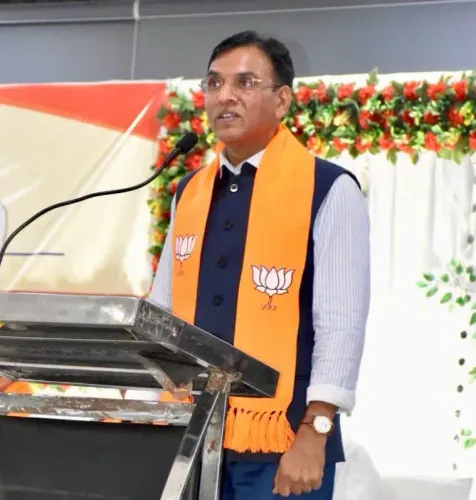
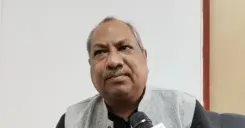
Union Labour and Sports Minister Mansukh Mandaviya on Wednesday, June 17, 2026, took to X to celebrate 12 years of the Narendra Modi-led government's defence and self-reliance journey, invoking the twin themes of precision military capability and indigenous weapons development under the Atmanirbhar Bharat mission.
Context
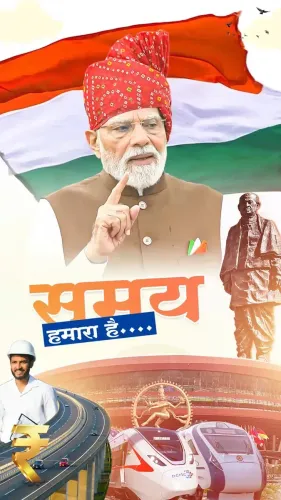
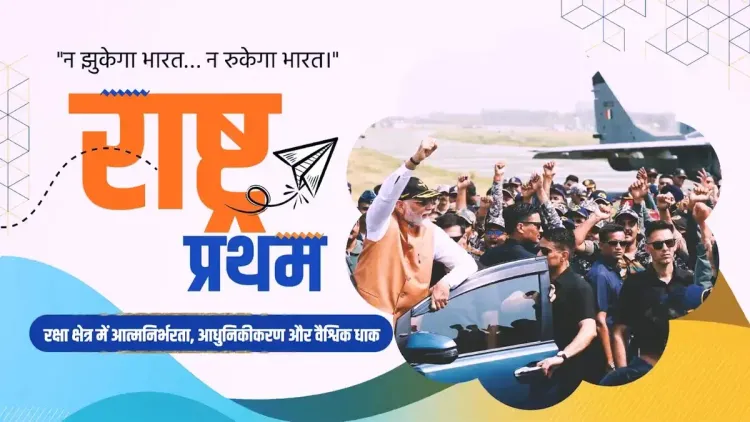
Mandaviya's post, in Hindi, declared: 'Dushmanon par achook prahar aur swadeshi hathiyaron ki hunkar' — 'Precise strikes on enemies and the roar of indigenous weapons' — framing this as the defining identity of a self-reliant India built on courage and self-respect under PM Modi's guidance. The post carried the hashtag #12YearsOfSurakshitBharat (12 Years of a Secure India), marking a milestone in the BJP-led government's tenure. A video was attached to the post, underscoring the visual messaging around defence achievements.
The phrase 'shaurya aur swabhimaan se bhare Atmanirbhar Bharat' — 'an Atmanirbhar Bharat filled with valour and self-respect' — reflects a consistent political vocabulary the ruling dispensation has used to connect defence indigenisation with national pride.
Policy Backdrop
The Atmanirbhar Bharat programme, launched in 2020, placed defence manufacturing at its core. A landmark step was the introduction of the first negative import list for defence items in August 2020, which barred procurement of specified weapons and platforms from foreign sources and mandated domestic substitutes. This was followed by successive expansions of the list covering hundreds of items.
The share of the defence capital procurement budget earmarked for domestic sources has climbed steadily since 2019-20, crossing 70 per cent in subsequent years. The Defence Research and Development Organisation (DRDO) has been central to this push, developing indigenous missile systems, radars, and advanced platforms that have entered service with the armed forces.
Private-sector participation in defence manufacturing has also expanded significantly under revised procurement procedures, with domestic companies now producing everything from ammunition to complex aerospace systems. India's defence exports, negligible a decade ago, have grown substantially as a result of these structural reforms.
Stakeholders and Impact
India's armed forces — the Army, Navy, and Air Force — are the primary beneficiaries of the indigenisation drive, gaining access to home-grown platforms that reduce dependence on foreign supply chains and the vulnerabilities they carry. Domestic defence manufacturers, both public-sector undertakings and private firms, have seen order books grow as procurement policy tilted decisively toward indigenous sourcing.
For the broader economy, the defence manufacturing push has created skilled employment, spurred technology transfer, and catalysed ancillary industries. The political messaging from senior ministers like Mandaviya signals that the government views defence self-reliance not merely as a security imperative but as a core electoral and governance narrative heading into the next phase of its tenure.
What's Next
The #12YearsOfSurakshitBharat campaign is likely to intensify across government platforms in the coming weeks, with ministers and BJP leaders amplifying milestones in defence, infrastructure, and welfare. Upcoming editions of marquee events such as Aero India and DefExpo are expected to showcase the depth of India's indigenous defence industrial base built over this period.
The Union Budget allocation for domestic defence research and procurement will be a key indicator of whether the government plans to deepen its indigenisation targets further. With the DRDO pipeline of next-generation systems advancing, the political and strategic emphasis on 'swadeshi hathiyar' — indigenous weapons — shows no sign of abating.
Point of View
The messaging conflates operational military credibility with the Atmanirbhar Bharat policy architecture, reinforcing the government's claim that self-reliance is now a lived reality, not an aspiration. The use of a senior minister outside the defence portfolio to amplify this narrative signals a whole-of-government approach to the 12-year milestone campaign. Analysts will watch whether the coming weeks see coordinated messaging across ministries that consolidates this security-and-sovereignty frame ahead of future electoral cycles.
NationPress
16 Sept 2026
Frequently Asked Questions
What is #12YearsOfSurakshitBharat?
#12YearsOfSurakshitBharat is a hashtag campaign marking 12 years of the Narendra Modi-led government, highlighting achievements in national security, defence indigenisation, and the Atmanirbhar Bharat mission since 2014.
What is Atmanirbhar Bharat in defence?
Atmanirbhar Bharat in defence is a national self-reliance programme launched in 2020 that aims to reduce India's dependence on foreign weapons imports by promoting domestic research, manufacturing, and procurement through bodies like DRDO and private defence firms.
What is India's negative import list for defence?
India's negative import list for defence, first introduced in August 2020, is a policy instrument that bars the import of specified weapons and military platforms, compelling the armed forces to source those items domestically to boost indigenous manufacturing.
What has DRDO achieved under Atmanirbhar Bharat?
DRDO has developed a range of indigenous platforms under Atmanirbhar Bharat including missile systems, advanced radars, and other military technologies that have entered service with India's Army, Navy, and Air Force, reducing reliance on foreign suppliers.
Why is Mansukh Mandaviya posting about defence if he is the Labour and Sports Minister?
Senior cabinet ministers across portfolios routinely amplify government achievements on social media as part of coordinated political communication, especially during milestone campaigns like #12YearsOfSurakshitBharat that cut across multiple policy domains.