Operation Trident: ED arrests 4 more from Mizoram jail, exposes India-Myanmar hawala web
Synopsis
Operation Trident just cracked open an India-Myanmar drug-money pipeline unlike any seen before from the northeast. Investigators found ledgers recording ₹54.47 lakh in a single hawala day, a Mini-ATM that pushed ₹175 crore into the banking system, and a 'goods for drugs' scheme where methamphetamine profits were hidden inside GST-invoiced flour, oil, and footwear. Ten people are now arrested — and 991 bank accounts frozen.
Key Takeaways
The ED arrested four more accused — Lalrammuana, Thangcintuang, Jabrul Haque , and Abu Saleh Md Saif Uddin — from Aizawl Central Jail on 30 October 2026 under Operation Trident .
The arrests bring the total number of persons held across the three connected cases to ten .
Hawala ledgers seized in Churachandpur, Manipur on 23 October show single-day transactions of up to ₹54.47 lakh and running totals exceeding 43 crore kyat .
Accused Zenngaihniang alias Taniang 's Mini-ATM counter reportedly pushed over ₹175 crore into the banking system; 991 bank accounts linked to the network have been frozen.
Drug money was laundered through purchases of flour, edible oil, fuel, groceries, and clothing supplied to Myanmar via border towns, covered by GST invoices to erase the money trail.
Abu Saleh Md Saif Uddin's account received ₹11.44 crore , including ₹6.67 crore in cash , which fed Champhai hawala accounts.
The Enforcement Directorate (ED) has arrested four more accused from Central Jail, Aizawl and uncovered an extensive international hawala network linking India, Myanmar, and Assam as part of 'Operation Trident', a multi-agency coordinated crackdown across northeastern states. The arrests and revelations, announced on Saturday, 31 October 2026, stem from documents seized during searches in Manipur's Churachandpur district.
The Four Arrested
The Aizawl Sub-Zonal Office of the ED formally arrested the four accused on Friday, 30 October on production warrants. They are: Lalrammuana, a resident of Champhai district, Mizoram; Thangcintuang alias Chintuang alias Tluanga, a resident of Bulfek village, Myanmar; and Jabrul Haque and Abu Saleh Md Saif Uddin, both residents of Sribhumi district (formerly Karimganj), Assam.
All four were already lodged in Aizawl Central Jail in Narcotics Control Bureau (NCB) narcotics cases. The Additional District and Sessions Judge-I, Aizawl, by orders dated 29 October, permitted their formal arrest and granted the ED 48 hours of custody for interrogation. Saif Uddin was arrested in the Krishiv Enterprise case; the remaining three were arrested under Section 19 of the Prevention of Money Laundering Act (PMLA) in the Jabrul Haque case.
According to ED, Thangcintuang was the Myanmar-based supplier of a 49.101 kg methamphetamine consignment seized on 21 August 2025; Lalrammuana was the consignment's main handler in India; Jabrul Haque was the intended receiver at the Damchhera-Kanhmun border in Tripura; and Abu Saleh operated from Karimganj, with his account receiving ₹11.44 crore — including ₹6.67 crore in cash — which subsequently fed the Champhai hawala accounts. With these four arrests, ten persons have now been arrested across the three connected cases.
Hawala Ledgers Uncovered in Churachandpur
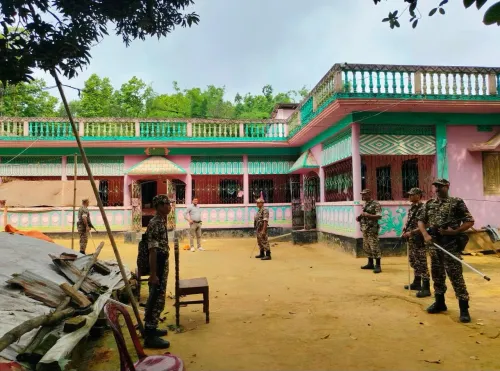
During searches on 23 October at the residence of Zenngaihniang alias Taniang, a resident of New Lamka, Churachandpur, investigators recovered cash books, registers, and handwritten notebooks detailing a systematic hawala operation. The records show Indian rupees were received in cash and bank accounts from across India, then converted into Myanmar kyat at daily rates of approximately 42 to 48 kyat per rupee, and paid out to recipients in Myanmar.
The ED stated that single entries in the ledgers run as high as ₹54.47 lakh in a single day (approximately 26 crore kyat), running totals exceed 43 crore kyat, and ₹1.14 crore was paid to one handler within a single week in April 2025. The books also record transfers through the Myanmar mobile wallet KPay and conversion of US dollars — specifically $10,816 at 4,150 kyat per dollar — between April 2025 and February 2026.
Investigators also seized seven signed ₹10 currency notes, suspected to have served as identification tokens for hawala payment recipients, along with documents for an immovable property purchased for ₹60 lakh in the name of Zenngaihniang. Additionally, 991 bank accounts linked to the Churachandpur network have been frozen.
'Goods for Drugs': How the Money Was Laundered
One of the more sophisticated aspects of the network, according to the ED, involves converting drug money into ordinary goods to obscure the financial trail entirely. Ledgers of M/s Go Alpha Trip and a Mini-ATM counter operated by accused Zenngaihniang — through which over ₹175 crore was reportedly pushed into the banking system — show that drug proceeds were used to pay legitimate-looking suppliers.
These included a flour mill in West Bengal, an edible oil trader in Assam, filling stations in Mizoram (approximately ₹2.61 crore), grocery and medicine wholesalers, and footwear and cloth traders in Delhi. Invoices were raised on third parties in Aizawl and border towns such as Champhai, Zorinpui, and Tlabung, from where the goods moved into Myanmar. This mechanism meant drug suppliers across the border were effectively paid in kind, the cross-border payment wore the cover of a GST invoice, and no money trail crossed the international boundary.
What Investigators Are Doing Next
The ED stated that investigation is actively continuing to identify cross-border operatives named in seized records across India and Myanmar, track border-town consignees, and expose suppliers who were compensated through identical illicit channels. The agency is also taking steps to trace and provisionally attach additional proceeds of crime. Notably, the multi-agency 'Operation Trident' spans multiple northeastern states, suggesting further arrests and asset attachments are likely as investigators work through the seized records.
Point of View
Complete with GST invoices, are far harder to flag than simple cash transfers. The fact that 991 bank accounts have been frozen and a single Mini-ATM pushed ₹175 crore into the system signals that the financial underbelly of northeast India's drug trade is far larger and more institutionalised than previous enforcement actions have suggested. Yet with only ten arrests across three cases so far, and the ED flagging dozens of named cross-border operatives still at large, the crackdown is nowhere near its end. The deeper question is whether the GST and banking compliance systems — which these networks clearly exploited — can be hardened against such invoice-laundering before the next network simply replicates the model.
NationPress
31 Oct 2026
Frequently Asked Questions
What is Operation Trident and why is it significant?
Operation Trident is a multi-agency coordinated enforcement operation targeting drug trafficking and money laundering networks across India's northeastern states. It is significant because it has uncovered an elaborate India-Myanmar hawala and 'goods for drugs' laundering web, resulting in ten arrests so far and the freezing of 991 bank accounts.
Who are the four accused arrested by the ED from Aizawl jail?
The four are Lalrammuana (Champhai, Mizoram), Thangcintuang alias Chintuang alias Tluanga (Bulfek village, Myanmar), Jabrul Haque, and Abu Saleh Md Saif Uddin (both from Sribhumi district, Assam). They were already in Aizawl Central Jail on NCB narcotics charges and were taken into ED custody for 48 hours under PMLA on 30 October 2026.
How did the drug money laundering network operate?
Drug proceeds were collected in Indian rupees, converted into Myanmar kyat through hawala operators at rates of 42–48 kyat per rupee, and also used to purchase everyday goods — flour, edible oil, fuel, groceries, footwear — from suppliers across India. These goods were then shipped to Myanmar via border towns, with GST invoices raised on third parties to disguise the transactions and leave no cross-border money trail.
How much money is linked to the Churachandpur hawala network?
Seized ledgers show single-day hawala entries of up to ₹54.47 lakh, running totals exceeding 43 crore kyat, and US dollar conversions of $10,816. A Mini-ATM counter operated by accused Zenngaihniang alias Taniang reportedly channelled over ₹175 crore into the banking system. Abu Saleh Md Saif Uddin's account alone received ₹11.44 crore, including ₹6.67 crore in cash.
What is the ED doing next in the investigation?
The ED says it is actively working to identify cross-border operatives named in seized records in both India and Myanmar, trace and provisionally attach additional proceeds of crime, and track border-town consignees. Further arrests and asset attachments are expected as investigators process the seized documents.