Operation Trident: Shah exposes ₹100 crore hawala network, 1,424 accounts frozen
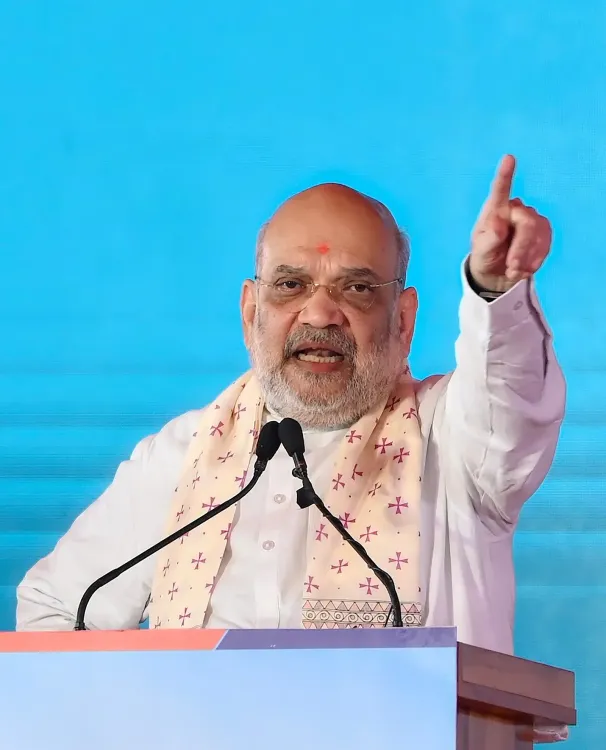
Synopsis
Operation Trident wasn't just a drug bust — it was a financial strike. By freezing 1,424 bank accounts and exposing ₹100 crore in hawala flows, Home Minister Amit Shah's agencies have moved beyond contraband seizure to dismantling the money architecture of an international narco-cartel running through the 'Death Triangle Corridor' of India, Myanmar and Bangladesh.
Key Takeaways
Operation Trident was conducted on 23 October across 38 locations in Assam , Mizoram and Manipur . ₹100 crore in hawala transactions were exposed and 1,424 bank accounts were frozen.
Properties worth ₹17.82 crore were attached; 500 detonators and ₹12 lakh in cash were seized.
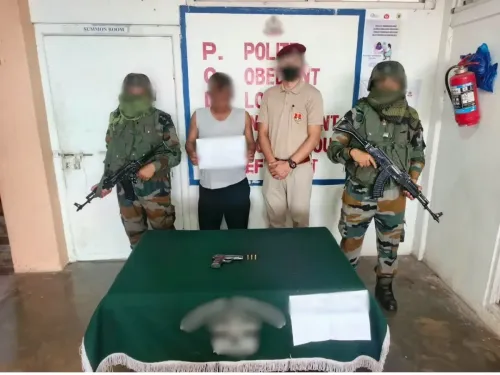
18 people were arrested; an international narco-cartel operating the 'Death Triangle Corridor' was dismantled.
Home Minister Amit Shah set a national target of a drug-free India by 31 December 2029 .
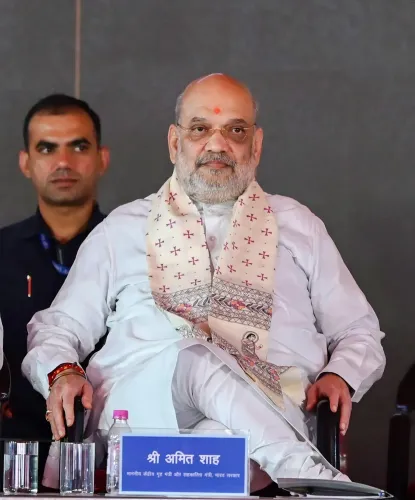
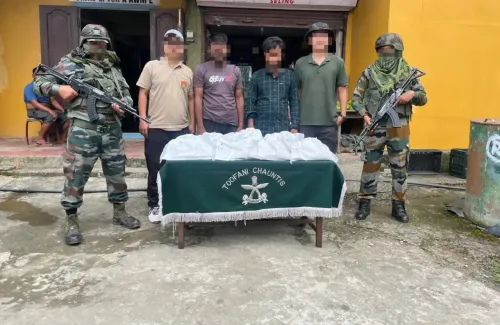
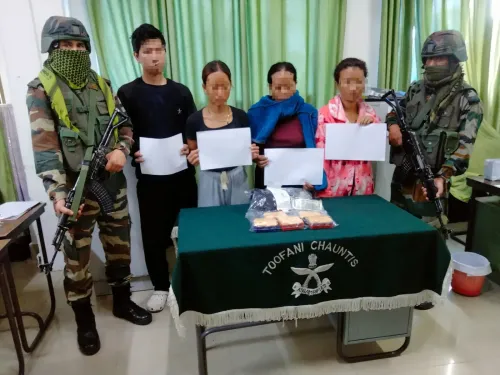
Union Home Minister Amit Shah on Sunday, 25 October announced the success of Operation Trident, a coordinated anti-narcotics sweep across Assam, Mizoram and Manipur that exposed ₹100 crore worth of hawala transactions, froze 1,424 bank accounts, and led to the arrest of 18 individuals. The operation, carried out simultaneously across 38 locations on 23 October, dismantled what officials described as an international narco-cartel operating through the 'Death Triangle Corridor' spanning India, Myanmar and Bangladesh.
Scale of the Operation
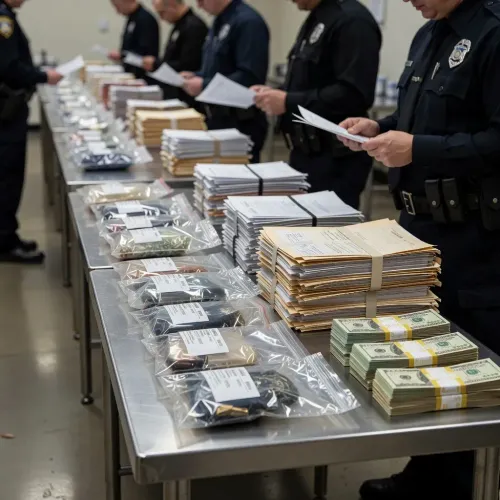
Central anti-narcotics agencies, working in conjunction with the police forces of the three northeastern states, executed a sweeping crackdown that attached properties worth ₹17.82 crore, seized 500 detonators and ₹12 lakh in cash, in addition to freezing the 1,424 bank accounts linked to hawala flows. The simultaneous nature of the raids across 38 locations was intended to prevent suspects from alerting each other or dispersing assets, according to the Home Minister's statement.
The 'Death Triangle Corridor' Dismantled
Shah described the cartel as one that trafficked narcotics across the porous tri-border zone connecting India, Myanmar and Bangladesh — a route long identified by security agencies as a primary conduit for drugs entering the Northeast. The region has historically been a flashpoint for drug trafficking, with its complex terrain and cross-border networks making enforcement difficult. Operation Trident is, notably, the latest in a series of escalating crackdowns the Home Ministry has signalled for the Northeast corridor.
What the Home Minister Said
Announcing the operation's success in a post on X, Shah said: 'Modi Govt deals another lethal blow against drugs with Operation Trident.' He elaborated that agencies launched 'a barrage of simultaneous crackdowns across 38 locations in Assam, Mizoram and Manipur on 23 October, smashing an international narco-cartel.' Shah also extended congratulations to the anti-narcotics team, saying: 'Heartiest congratulations to the anti-narcotics team comprising central agencies and police forces of the three states.'
Broader Anti-Drug Mission by 2029
Operation Trident sits within a larger declared mission. On 21 October, speaking at Police Commemoration Day in New Delhi, Shah had announced that the Union Home Ministry would wage a united anti-drug campaign through the remainder of 2026 and continuing through 2027, 2028 and 2029, with the stated goal of making India drug-free by 31 December 2029. 'The drug problem hollows out our future generations, places an undue burden on our economy and provides financial support to organisations engaged in anti-national activities,' he said. The Home Minister cited Prime Minister Narendra Modi's directive as the political mandate underpinning the roadmap, calling on police forces nationwide to align with the stated target.
What Comes Next
With the 2029 deadline now formally on record, enforcement agencies across the Northeast are expected to sustain the operational tempo established by Operation Trident. The freezing of 1,424 accounts will likely trigger parallel financial investigations, with enforcement agencies tracking hawala networks that fed the cartel's cross-border logistics. Observers note that dismantling the financial infrastructure — rather than just seizing contraband — signals a shift toward long-term disruption of drug networks rather than headline-driven interdiction alone.
Point of View
The enforcement action targeted the financial plumbing — hawala flows and bank accounts — that sustains cross-border drug networks. The ₹100 crore hawala exposure and 1,424 frozen accounts, if prosecuted rigorously, could choke cartel logistics far more effectively than drug seizures alone. However, the 2029 'drug-free India' deadline is an ambitious political commitment in a region where geography, insurgency overhang, and cross-border porosity have frustrated enforcement for decades. The real measure of success will be conviction rates and sustained account prosecution — not the number of simultaneous raid locations.
NationPress
25 Oct 2026
Frequently Asked Questions
What is Operation Trident?
Operation Trident is a coordinated anti-narcotics sweep conducted on 23 October across 38 locations in Assam, Mizoram and Manipur by central agencies and state police forces. It dismantled an international narco-cartel and exposed ₹100 crore in hawala transactions, resulting in 18 arrests and the freezing of 1,424 bank accounts.
What is the 'Death Triangle Corridor' mentioned in the operation?
The 'Death Triangle Corridor' refers to the cross-border drug trafficking route connecting India, Myanmar and Bangladesh through the Northeast. It has long been identified by security agencies as a primary conduit for narcotics entering India from Myanmar's Golden Triangle region.
How many bank accounts were frozen and what assets were seized?
A total of 1,424 bank accounts were frozen, properties worth ₹17.82 crore were attached, 500 detonators and ₹12 lakh in cash were seized. Additionally, ₹100 crore in hawala transactions were exposed as part of the financial investigation.
What is India's target for becoming drug-free?
Home Minister Amit Shah announced on 21 October that India aims to be drug-free by 31 December 2029. The Home Ministry has committed to a sustained three-and-a-half-year anti-drug campaign through 2026, 2027, 2028 and 2029 to achieve this goal.
Who conducted Operation Trident?
The operation was carried out by central anti-narcotics agencies working in coordination with the police forces of Assam, Mizoram and Manipur. Home Minister Amit Shah announced its success and praised the joint team for executing simultaneous crackdowns across 38 locations.