Amit Shah: Operation Trident smashes narco-cartel across Northeast
Synopsis
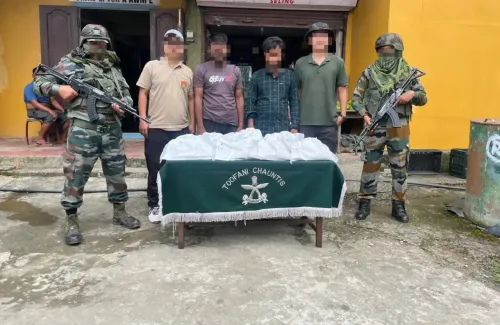
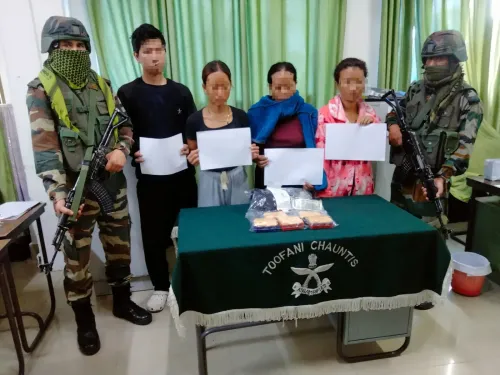
Operation Trident, a simultaneous 38-location raid across Assam, Mizoram and Manipur on 23 October, smashed an international narco-cartel trafficking through the India-Myanmar-Bangladesh 'Death Triangle Corridor', freezing 1,424 bank accounts, attaching ₹17.82 crore in properties, and arresting 18 people.
Key Takeaways
Operation Trident executed simultaneous raids on 38 locations across Assam, Mizoram and Manipur on 23 October 2026 .
Investigators uncovered ₹100 crore worth of hawala transactions and froze 1,424 bank accounts linked to the cartel.
Properties worth ₹17.82 crore were attached; ₹12 lakh in cash and 500 detonators were seized.
18 people were arrested across the three northeastern states.
The cartel operated through the 'Death Triangle Corridor' spanning India, Myanmar and Bangladesh.
Home Minister Shah reaffirmed the government's target of eliminating all drug networks by 31 December 2029 .
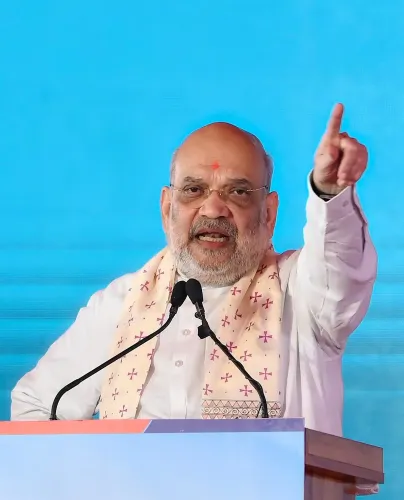
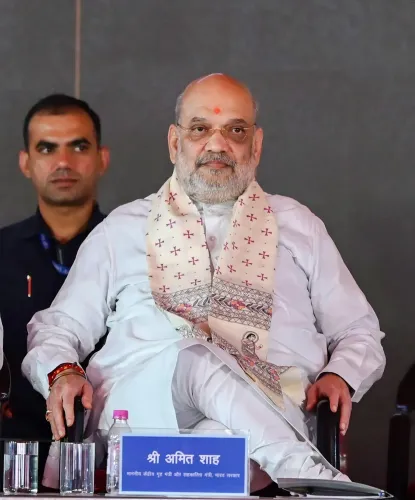
Thirty-eight locations. Three states. One coordinated strike — and a cross-border drug network spanning India, Myanmar and Bangladesh now lies in ruins. Union Home Minister Amit Shah announced on Sunday, 25 October 2026 that Operation Trident, executed on 23 October, dealt what he called 'another lethal blow' against organised narcotics trafficking in India's Northeast.
What Operation Trident uncovered across 38 locations
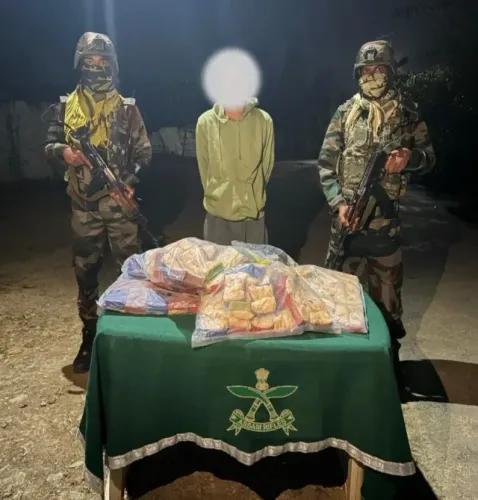
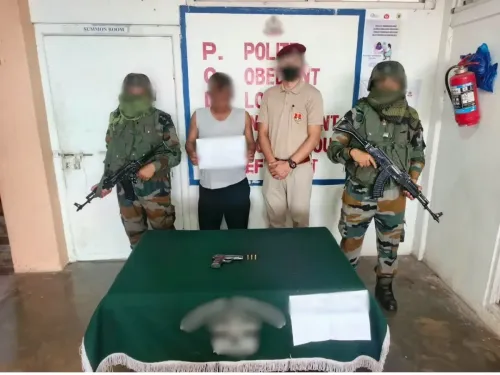
The numbers from the operation are staggering in their specificity. Central agencies alongside police forces of Assam, Mizoram and Manipur simultaneously descended on 38 locations, exposing a financial and logistical web that investigators say ran deep. The raids revealed ₹100 crore worth of hawala transactions, froze 1,424 bank accounts, and led to the attachment of properties valued at ₹17.82 crore. Investigators also seized 500 detonators — a detail that signals the cartel's capacity for violence, not just commerce — along with ₹12 lakh in cash. 18 people were arrested.
The scale of the financial freeze is particularly striking. Locking 1,424 bank accounts in a single operation suggests a sophisticated, layered money-laundering structure — one that had apparently been operating across three sovereign borders. The detonators add a dimension that goes beyond narcotics into organised criminal infrastructure.
The 'Death Triangle Corridor' — how the network moved its product
Shah's post names the trafficking route as the 'Death Triangle Corridor' — the cross-border channel linking India, Myanmar and Bangladesh. The Northeast has long been the pressure point where India's internal security meets the consequences of instability across its eastern borders. Manipur, which shares a frontier with Myanmar, and Mizoram, which borders both Myanmar and Bangladesh, sit at the geographic heart of this corridor.
Successive governments have linked drug flows from the Myanmar side to insurgent financing in the region. Multi-agency raids that combine narcotics seizures with hawala busts and property attachments have become a deliberate enforcement template under the Ministry of Home Affairs — targeting not just the drugs but the money architecture that keeps cartels alive. The Narcotic Drugs and Psychotropic Substances Act, amended in 2014 to sharpen asset forfeiture powers, provides the legal spine for exactly this kind of coordinated financial takedown.
The 31 December 2029 deadline — and what it demands
Shah framed Operation Trident within a larger, time-bound mission: dismantling every drug network in India by 31 December 2029. 'India will hammer until the last nail is driven into the coffin of drug cartels,' he wrote — language that signals this is not a one-off headline operation but a sustained campaign with a declared finish line.
That deadline compresses accountability. With under four years remaining, the pace and scale of operations like Trident will be the measure of whether the target is credible. The Narcotics Control Bureau's quarterly seizure data from the Northeast will, over coming months, tell that story in hard numbers. Any follow-up legislation tightening hawala controls and precursor chemical tracking would be the next structural signal to watch.
For now, 18 arrests, 1,424 frozen accounts, and a shattered corridor later — the government's anti-narcotics machinery has served notice that the Northeast's drug networks are in the crosshairs of a coordinated, multi-state offensive that is only accelerating.
Point of View
Not just their supply chains. The simultaneous freezing of over 1,400 bank accounts signals a shift toward economic attrition — starving cartels of capital rather than merely seizing product. Framing this within a hard 2029 deadline turns an operational success into a political contract with a measurable KPI, raising the stakes for every quarterly NCB report that follows. The recovery of 500 detonators also quietly underscores the established link between narco-trafficking and insurgent infrastructure in the Northeast — a dimension that elevates this beyond a drug story into one of border security and internal stability.
NationPress
25 Oct 2026
Frequently Asked Questions
What is Operation Trident launched by the Indian government?
Operation Trident is a coordinated anti-narcotics operation conducted on 23 October 2026 across 38 locations in Assam, Mizoram and Manipur. It targeted an international drug-trafficking cartel operating through the India-Myanmar-Bangladesh corridor, resulting in 18 arrests and the freezing of 1,424 bank accounts.
What is the 'Death Triangle Corridor' in India?
The 'Death Triangle Corridor' refers to the cross-border drug-trafficking route connecting India, Myanmar and Bangladesh through the northeastern states. Cartels use this corridor to move narcotics across three sovereign borders, often linked to insurgent financing in the region.
How many bank accounts were frozen in Operation Trident?
Agencies froze 1,424 bank accounts during Operation Trident, as part of a broader financial crackdown that also revealed ₹100 crore in hawala transactions and led to the attachment of properties worth ₹17.82 crore.
What is India's 2029 deadline to eradicate drug networks?
The Indian government has set a target of dismantling every organised drug network in the country by 31 December 2029. Home Minister Amit Shah invoked this deadline while announcing Operation Trident, framing it as part of a sustained national campaign.
Why were detonators seized in a narcotics operation in the Northeast?
The seizure of 500 detonators during Operation Trident points to the well-documented link between drug cartels in India's Northeast and armed insurgent groups, which have historically used narcotics revenues to fund weapons procurement and operations along the Myanmar border.