CM Vishnu Deo Sai to Join Mann Ki Baat from Abhanpur
Synopsis
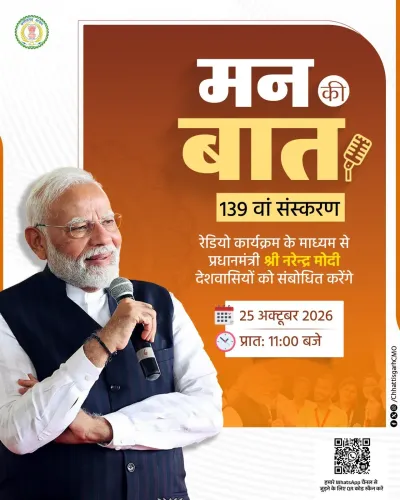
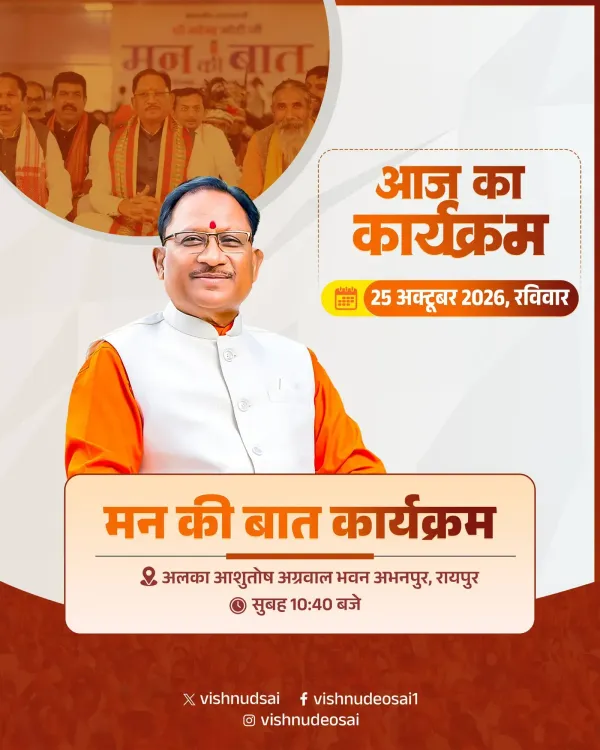
Chhattisgarh Chief Minister Vishnu Deo Sai will attend a public listening session of PM Narendra Modi's Mann Ki Baat radio programme at Abhanpur in Raipur district on 25 October 2026, calling it a people's movement of nation-building.
Key Takeaways
CM Vishnu Deo Sai announced he will listen to Mann Ki Baat from Abhanpur, Raipur on 25 October 2026 .
Mann Ki Baat was launched by PM Narendra Modi in October 2014 and has run continuously for over a decade.
The programme broadcasts on All India Radio as a direct outreach mechanism between the Prime Minister and citizens.
BJP state leaders routinely host public listening sessions to extend the programme's grassroots reach.
Abhanpur is a town in Raipur district, Chhattisgarh , on the outskirts of the state capital.
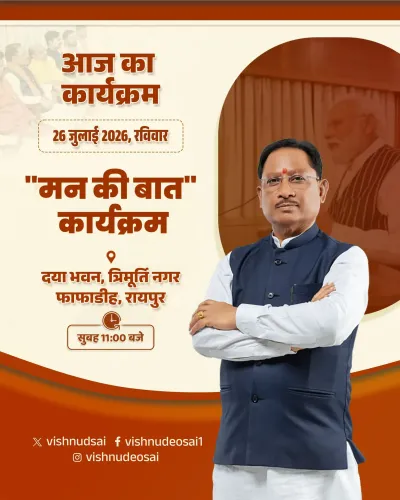
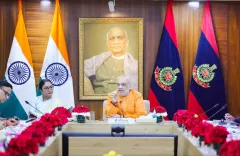
On the morning of Sunday, 25 October 2026, Chhattisgarh Chief Minister Vishnu Deo Sai announced he would tune in to Prime Minister Narendra Modi's monthly radio address Mann Ki Baat from Abhanpur in Raipur district — joining millions across the country in what has become a recurring national ritual of citizen outreach.
Posting in Hindi, CM Sai wrote: 'Aaj Raipur ke Abhanpur mein aadarniya Pradhanmantri Shri Narendra Modi ji ke lokpriya radio karyakram Mann Ki Baat ka shravan karunga' — ('Today in Abhanpur, Raipur, I will listen to respected Prime Minister Shri Narendra Modi ji's popular radio programme Mann Ki Baat'). He invited citizens to join in and become part of what he called 'this people's movement of nation-building.'
What is Mann Ki Baat — and why do state leaders show up
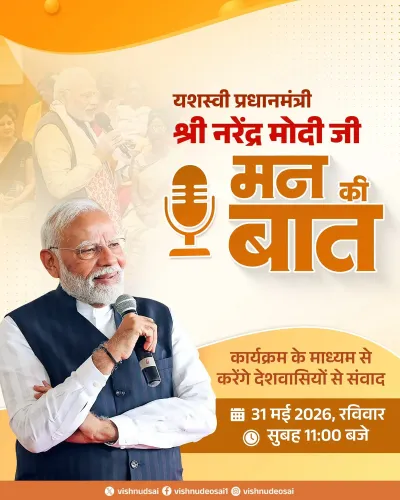
Mann Ki Baat was launched by Prime Minister Modi in October 2014 as a direct, unmediated radio channel between the head of government and the public — broadcast on All India Radio and streamed widely across platforms. Over more than a decade of continuous broadcasts, it has addressed everything from governance milestones to grassroots social movements, consistently framing citizen participation as the engine of national progress.
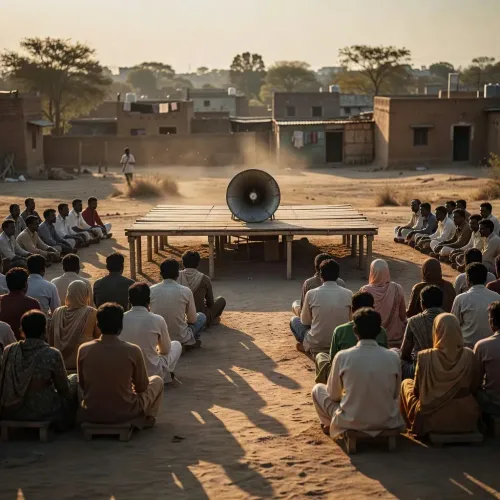
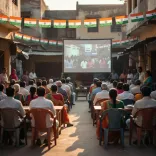
State-level BJP leaders regularly host or attend public listening sessions for the programme, amplifying its reach beyond individual radio sets. The gesture is both symbolic and logistical: it signals alignment between state and central government priorities, and it draws local communities into a shared moment of national messaging.
Abhanpur as the day's anchor point
Abhanpur is a town in Raipur district, situated on the outskirts of the state capital. CM Sai's choice to attend the broadcast from here — rather than from his official residence in Raipur — follows a pattern seen across BJP-governed states, where leaders bring the programme to semi-urban and rural settings to extend its grassroots visibility.
The programme's longevity — running without interruption for over twelve years — has made it one of the most consistent direct-communication mechanisms in Indian political history. Each episode renews a standing invitation to citizens: not just to listen, but to submit stories, questions, and ideas that shape future broadcasts.
Whether Sunday's episode sparks a follow-up state-level initiative in Chhattisgarh is now the question worth watching.
Point of View
The programme has evolved from a novelty into a structural pillar of the party's grassroots communication architecture. Sai's choice of Abhanpur, a semi-urban node outside Raipur, suggests an intent to push that reach beyond the state capital's political core. The real test will be whether the session seeds any state-level follow-up — a welfare announcement, a campaign tie-in — that converts listening into governing momentum.
NationPress
25 Oct 2026
Frequently Asked Questions
What is Mann Ki Baat?
Mann Ki Baat is a monthly radio programme hosted by Prime Minister Narendra Modi on All India Radio, launched in October 2014, in which he speaks directly to citizens on themes of governance, social issues, and national progress.
Where did CM Vishnu Deo Sai listen to Mann Ki Baat on 25 October 2026?
Chief Minister Vishnu Deo Sai announced he would attend the Mann Ki Baat broadcast from Abhanpur, a town in Raipur district, Chhattisgarh.
How long has Mann Ki Baat been running?
Mann Ki Baat has been running continuously since October 2014, making it a more-than-twelve-year-old public outreach programme as of 2026.
Why do BJP state leaders attend Mann Ki Baat sessions publicly?
BJP state leaders regularly host or attend public listening sessions to align local audiences with central government messaging and to amplify the programme's community reach in their states.
Who is Vishnu Deo Sai?
Vishnu Deo Sai is the Chief Minister of Chhattisgarh and a senior BJP leader.