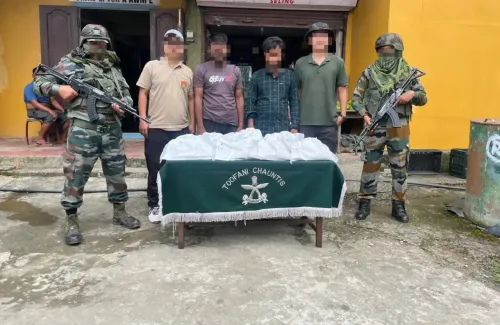
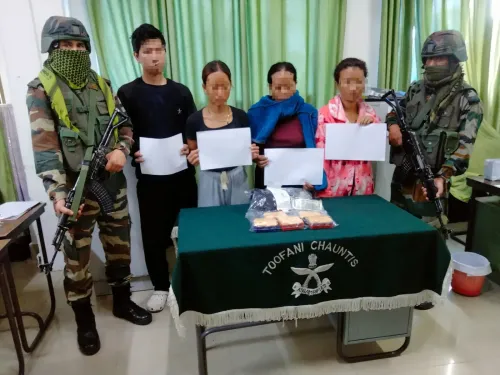
Operation Trident busts Northeast narco-cartel; 18 held, ₹100 crore hawala exposed
Synopsis
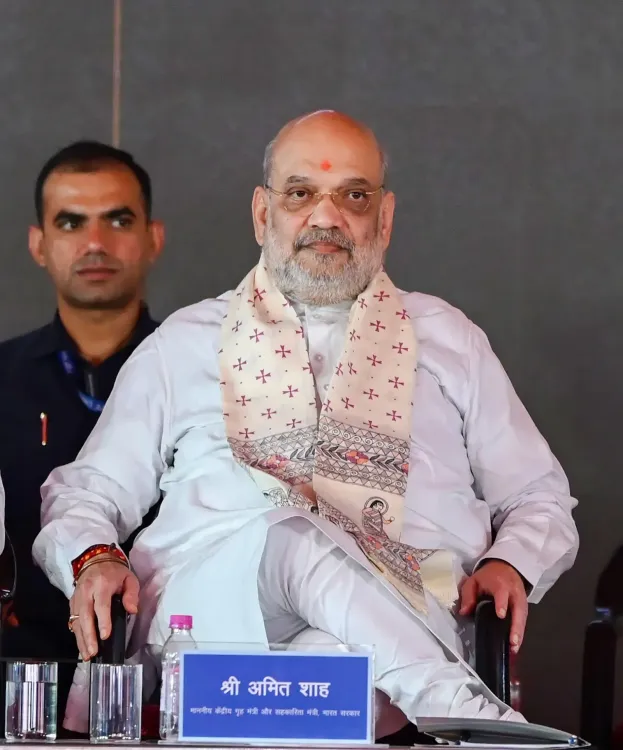
In a single day, central agencies and three state police forces hit 38 locations across India's most drug-vulnerable corridor, freezing 1,424 bank accounts, exposing ₹100 crore in hawala flows, and dismantling a cartel that smuggled narcotics through India, Myanmar and Bangladesh. Home Minister Amit Shah has framed Operation Trident as proof of India's commitment to a drug-free nation by 31 December 2029.
Key Takeaways
Operation Trident was conducted on 23 October 2026 across 38 locations in Assam , Mizoram , and Manipur .
18 people were arrested and an international narco-cartel operating through the Death Triangle Corridor (India–Myanmar–Bangladesh) was dismantled.
Hawala transactions worth ₹100 crore were exposed and 1,424 bank accounts were frozen.
Authorities attached properties worth ₹17.82 crore and seized 500 detonators and ₹12 lakh in cash.
Home Minister Amit Shah reiterated the government's target of a drug-free India by 31 December 2029 .
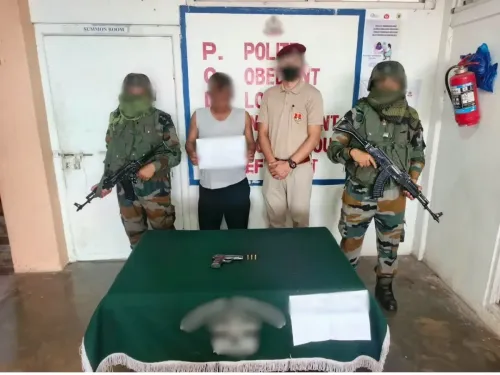
Anti-narcotics agencies dismantled an international narco-cartel operating across Assam, Mizoram, and Manipur under Operation Trident, arresting 18 people and exposing hawala transactions worth ₹100 crore, the Centre announced on Sunday, 25 October 2026. The coordinated strike — executed on 23 October — targeted 38 locations simultaneously across the three northeastern states and marks one of the largest multi-agency anti-drug operations in the region in recent years.
Scale of the Operation
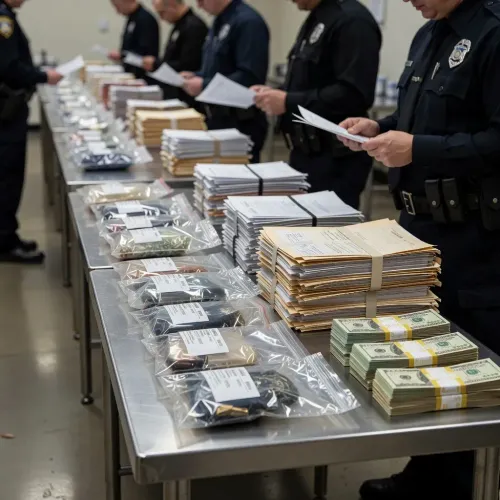
Authorities froze 1,424 bank accounts and attached properties valued at ₹17.82 crore in connection with the cartel's financial network. Agencies also seized 500 detonators and ₹12 lakh in cash during the raids. The sweep was carried out jointly by central agencies and the police forces of all three states, underscoring the multi-tiered coordination involved.
The Death Triangle Corridor
According to Union Home Minister Amit Shah, the dismantled network trafficked narcotics across the borders of India, Myanmar, and Bangladesh through what he described as the 'Death Triangle Corridor' — a cross-border drug-smuggling route long identified as a key artery for narcotics flowing into India's northeast. The cartel's simultaneous financial and logistical footprint across three states signals a sophisticated operation with deep regional roots. This comes amid the Centre's intensifying crackdown on drug networks linked to insurgent financing and cross-border crime.
What the Home Minister Said
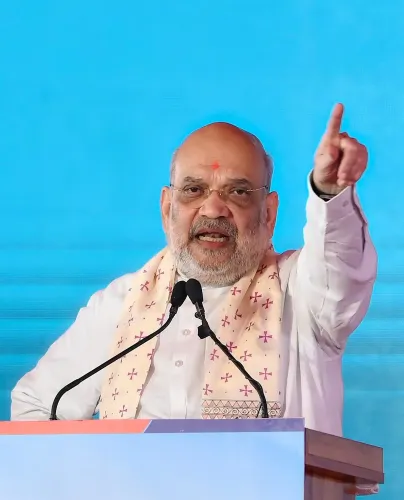
Shah announced the operation's success in a post on X, framing it as part of a broader national mission. 'Modi Govt deals another lethal blow against drugs with Operation Trident,' he wrote. He further stated: 'The offensive attests to India's Himalayan resolve to realise the mission of eradicating every drug network by 31 December 2029. India will hammer until the last nail is driven into the coffin of drug cartels.' He also congratulated the anti-narcotics personnel from central agencies and state police forces involved in the operation.
The 2029 Drug-Free India Target
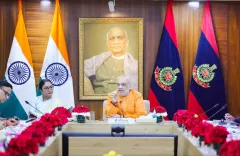
Operation Trident is the latest action under a wider counter-narcotics roadmap announced by the Home Ministry. Speaking at the Police Commemoration Day in New Delhi on 21 October 2026, Shah had declared that the Centre would wage a sustained, united fight against drugs through 2027, 2028, and 2029, with a target of making India drug-free by 31 December 2029. He described the drug problem as hollowing out future generations, burdening the economy, and financially supporting anti-national organisations — placing it above even tackling what he called the 'three hotspots' in terms of national priority.
Significance and What Comes Next
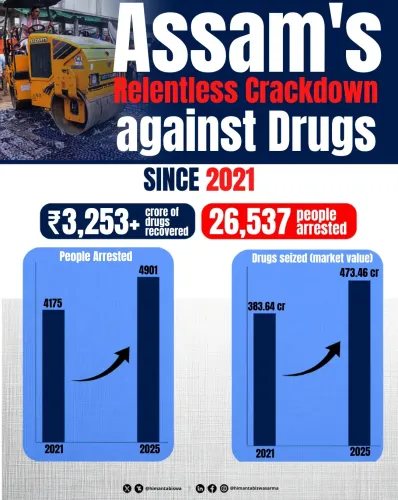
Notably, the Northeast has historically been one of India's most drug-vulnerable corridors due to its porous international borders with Myanmar and Bangladesh. The financial scale of the seizures — particularly the hawala network and the volume of frozen accounts — suggests investigators may be tracking further nodes in the cartel's supply chain. Experts and law enforcement observers will be watching whether the arrests lead to prosecutions that hold, given past challenges in converting large-scale busts into lasting disruptions of trafficking networks. The Centre is expected to intensify operations in the region through the remainder of 2026.
Point of View
1,424 frozen accounts — is striking and suggests the cartel was more bank than bazaar, routing drug money through formal financial channels. The bigger question is whether these arrests will hold up through prosecution; India's northeast has seen several high-profile drug busts that did not translate into durable disruptions of trafficking networks. Shah's 31 December 2029 deadline is a bold political stake in the ground, but the Death Triangle Corridor has proved resilient to even sustained military pressure along the Myanmar border. The detonator seizure also deserves scrutiny — it points to possible links between the narco-network and insurgent or criminal outfits, a dimension that official statements have not fully addressed.
NationPress
25 Oct 2026
Frequently Asked Questions
What is Operation Trident and what did it achieve?
Operation Trident was a coordinated anti-narcotics operation conducted on 23 October 2026 across 38 locations in Assam, Mizoram, and Manipur, resulting in the dismantling of an international narco-cartel, 18 arrests, the exposure of ₹100 crore in hawala transactions, and the freezing of 1,424 bank accounts. It was jointly executed by central agencies and the police forces of all three northeastern states.
What is the Death Triangle Corridor mentioned by Amit Shah?
The Death Triangle Corridor refers to the cross-border drug-trafficking route spanning India, Myanmar, and Bangladesh through which the dismantled cartel reportedly smuggled narcotics. The northeastern states of Assam, Mizoram, and Manipur, which share porous international borders with Myanmar and Bangladesh, are central to this corridor.
What assets were seized or frozen in Operation Trident?
Authorities froze 1,424 bank accounts, attached properties worth ₹17.82 crore, seized 500 detonators and ₹12 lakh in cash, and exposed hawala transactions worth ₹100 crore as part of the operation.
What is the government's 2029 drug-free India target?
Home Minister Amit Shah announced on 21 October 2026 that the Union Home Ministry has set a target of making India drug-free by 31 December 2029. The plan involves sustained coordinated action through 2027, 2028, and 2029 by police forces across the country, following a roadmap set by Prime Minister Narendra Modi.
Who conducted Operation Trident?
The operation was carried out jointly by central anti-narcotics agencies and the state police forces of Assam, Mizoram, and Manipur. Home Minister Amit Shah publicly congratulated the anti-narcotics personnel involved in the coordinated crackdown.