CM Himanta Reports ₹3,253 Cr Drug Seizures Under Assam Anti-Drug Mission
Synopsis
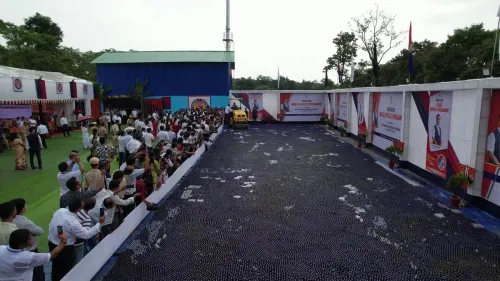
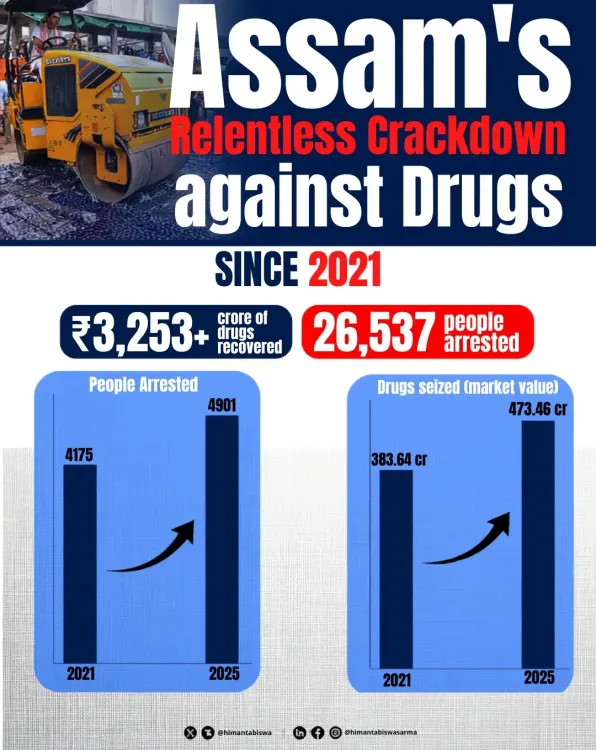
Assam Chief Minister Himanta Biswa Sarma on 7 July 2026 reported that Mission AssamAgainstDrugs has resulted in narcotics seizures worth over ₹3,253 crore and more than 26,500 arrests since 2021, vowing to continue until trafficking networks are fully dismantled.
Key Takeaways
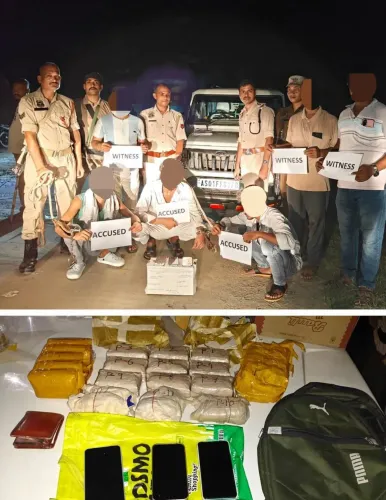
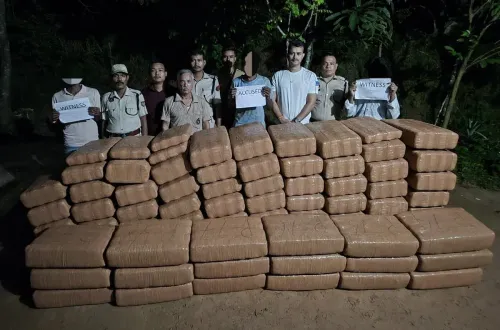
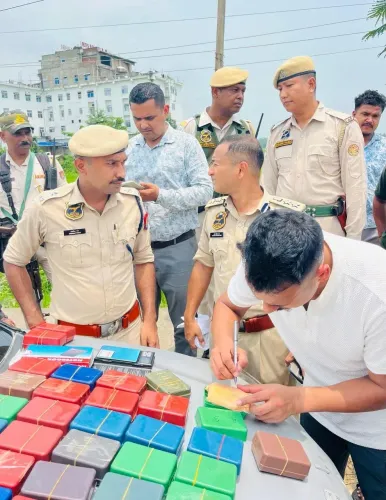
Narcotics worth over ₹3,253 crore have been seized under Mission AssamAgainstDrugs since 2021 .
More than 26,500 offenders have been arrested over the same period.
The mission was launched by CM Himanta Biswa Sarma 's government shortly after it took office in May 2021 .
Assam borders Myanmar, a key narcotics corridor linked to the Golden Triangle drug-producing region.
Similar anti-narcotics drives are underway in Manipur and Mizoram under the North-East Democratic Alliance (NEDA) framework.
The Chief Minister has pledged to continue the crackdown until the entire drug network is dismantled.
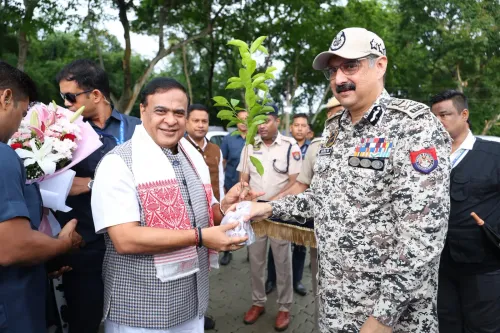
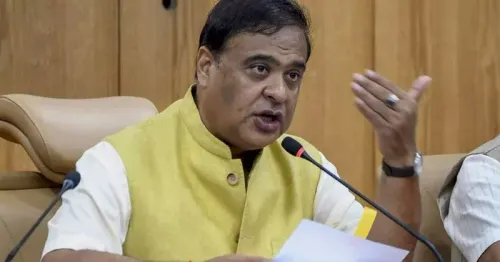
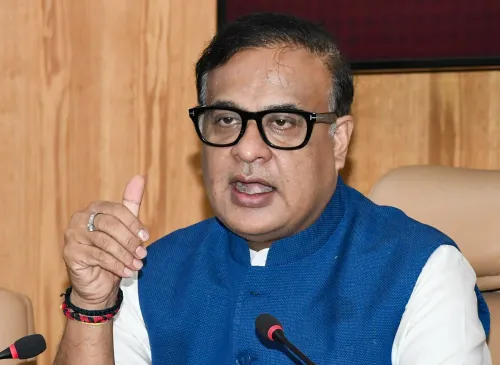
Assam Chief Minister Himanta Biswa Sarma on Tuesday, 7 July 2026, declared that the state's sustained anti-narcotics campaign has yielded its most significant results yet, with narcotics worth over ₹3,253 crore seized and more than 26,500 offenders arrested since the drive began in 2021. The announcement, made via his official social media account, reaffirmed the government's commitment to dismantling drug trafficking networks across the state.
Context
Mission AssamAgainstDrugs was launched by the Sarma-led BJP government shortly after it assumed office in May 2021, with a stated goal of dismantling narcotics supply chains operating through the state. In his post, the Chief Minister said: 'Our relentless war against drugs is delivering decisive results... We will pursue this crackdown till we dismantle the drug network.' The mission has since become one of the administration's most prominently publicised governance initiatives.
Assam occupies a strategically sensitive position in India's northeast, sharing proximity to Myanmar, a primary source country within the Golden Triangle — one of the world's largest opium-producing regions. Narcotics including heroin, methamphetamine tablets (locally known as 'yaba'), and synthetic drugs flow through northeastern corridors into the broader Indian market, making enforcement in the region a national security concern.
Policy Backdrop
The state drive operates within the framework of the Narcotic Drugs and Psychotropic Substances (NDPS) Act, which empowers both state police and central agencies to conduct searches, seizures, and prosecutions. At the national level, the Nasha Mukt Bharat Abhiyan, launched by the Ministry of Social Justice and Empowerment in August 2020, had already set the tone for a whole-of-government approach to drug abuse, combining enforcement with awareness and de-addiction outreach.
Assam's enforcement-heavy model — prioritising seizure volumes and arrest numbers as key performance indicators — reflects a broader pattern seen across BJP-governed northeastern states. Similar operations have been conducted in Manipur and Mizoram, both members of the North-East Democratic Alliance (NEDA) convened by Sarma himself, suggesting a degree of regional policy alignment on counter-narcotics strategy.
Stakeholders and Impact
The most direct beneficiaries of a successful crackdown are Assam's youth, who have been identified by successive state governments as the demographic most vulnerable to drug dependency. Civil society groups and health advocates have long flagged the northeast's disproportionate exposure to intravenous drug use, which carries secondary risks including the spread of blood-borne infections.
For drug trafficking networks, the cumulative pressure of over 26,500 arrests over roughly four years represents a significant disruption, though analysts note that supply chains in the region tend to adapt quickly to enforcement pressure by rerouting through less-monitored corridors. The Narcotics Control Bureau (NCB) and state police coordination remains central to sustaining operational momentum.
What's Next
With the Chief Minister explicitly vowing to continue until the 'drug network' is dismantled, observers will watch for the next phase of the mission — potentially including enhanced coordination between Assam Police, the NCB, and authorities in Myanmar. Announcements regarding new rehabilitation and de-addiction infrastructure in border districts are also anticipated as the campaign matures beyond pure enforcement metrics.
The political stakes remain high: anti-drug enforcement has become a signature plank of the Sarma administration heading into future electoral cycles, and sustained, verifiable results will be critical to maintaining public confidence in the mission's long-term impact.
Point of View
The post signals that Assam intends to anchor its regional security identity around counter-narcotics, potentially deepening coordination mechanisms within NEDA. The missing piece — rehabilitation outcomes and recidivism data — will determine whether the mission is ultimately judged as transformative or merely punitive.
NationPress
6 Oct 2026
Frequently Asked Questions
What is Mission AssamAgainstDrugs?
Mission AssamAgainstDrugs is an anti-narcotics campaign launched by the Assam state government under Chief Minister Himanta Biswa Sarma after 2021, aimed at seizing drugs, arresting offenders, and dismantling trafficking networks operating through the state.
How much drugs have been seized in Assam since 2021?
According to CM Himanta Biswa Sarma's statement on 7 July 2026, narcotics worth over ₹3,253 crore have been seized under Mission AssamAgainstDrugs since 2021.
How many drug offenders have been arrested in Assam?
More than 26,500 offenders have been arrested under Mission AssamAgainstDrugs since its launch in 2021, as stated by Chief Minister Himanta Biswa Sarma.
Why is Assam a major drug trafficking route in India?
Assam shares proximity with Myanmar, a major opium-producing country and part of the Golden Triangle region. This geographic position makes it a key transit corridor for heroin, methamphetamine, and other narcotics entering the Indian market.
What is the NDPS Act and how does it apply to Assam's drug crackdown?
The Narcotic Drugs and Psychotropic Substances (NDPS) Act is the central Indian law governing drug offences. Assam Police and the Narcotics Control Bureau use its provisions to conduct searches, seizures, and prosecutions as part of Mission AssamAgainstDrugs.