Mandaviya Marks 12 Years of Make in India
Synopsis
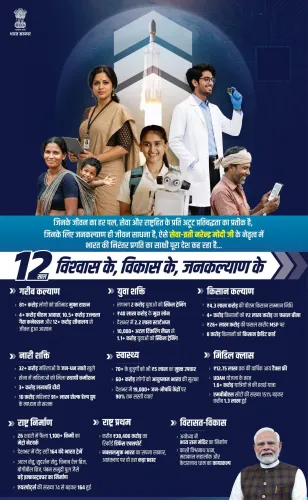
Union Minister Mansukh Mandaviya marked 12 years of Make in India on 25 September 2026 with a Hindi couplet celebrating the initiative's role in building India's global manufacturing identity and fuelling the Atmanirbhar Bharat vision launched by PM Modi in 2014.
Key Takeaways
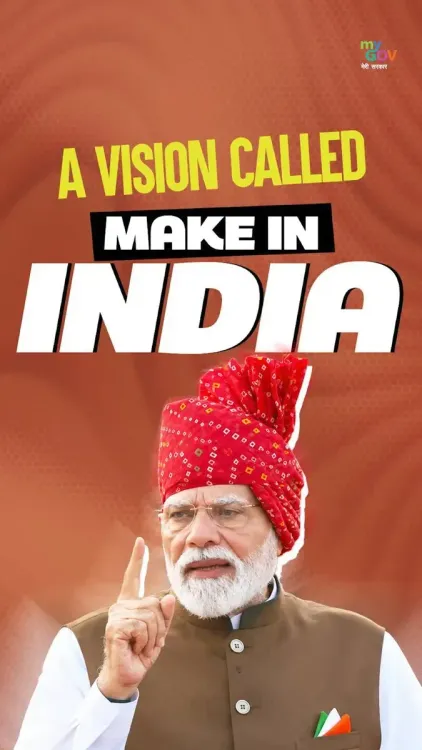
Make in India was launched by PM Narendra Modi on 25 September 2014 , completing its 12th anniversary today.
Union Minister Mansukh Mandaviya marked the occasion with a Hindi couplet linking the initiative to India's rising global manufacturing identity.
The post explicitly ties Make in India to the Atmanirbhar Bharat (Self-Reliant India) framework, framing them as a single continuous policy arc.
The initiative originally targeted 25 sectors and has since been reinforced by Production-Linked Incentive (PLI) schemes across industries.
Key metrics to watch include updated FDI figures and manufacturing output data that would validate the anniversary messaging.
Twelve years after Prime Minister Narendra Modi unfurled a lion-emblazoned banner and told the world India was open for business, Union Labour and Sports Minister Mansukh Mandaviya marked the anniversary with a pointed couplet: India's new identity is echoing across the world, and Make in India has given the Atmanirbhar dream its wings.
Posting on Friday, 25 September 2026 with the tag #12YearsOfMakeInIndia, Mandaviya wrote in Hindi: 'Vishwa mein goonj rahi Bharat ki nayi pehchaan, Modi ji ke Make in India ne bhari Atmanirbhar udaan' — 'India's new identity is resonating across the world; Modi's Make in India has fuelled the Atmanirbhar flight.' The verse is compact, but the policy story behind it spans a decade-plus of industrial ambition.
From a 2014 Launch Pad to a Global Manufacturing Conversation
Make in India was unveiled by Prime Minister Modi on 25 September 2014 with a single overarching goal: transform India from a largely import-dependent economy into a globally competitive manufacturing hub. The initiative targeted 25 sectors — from defence and electronics to automobiles and pharmaceuticals — and was designed to attract both domestic investment and foreign direct investment by easing regulations and building infrastructure.
Over the following years, the programme became the scaffolding for allied policy pushes: the Production-Linked Incentive (PLI) schemes rolled out across sectors, the push for semiconductor fabrication, and the broader Atmanirbhar Bharat (Self-Reliant India) framework announced in 2020. Mandaviya's couplet explicitly fuses the two — Make in India as the runway, Atmanirbhar Bharat as the flight.
Why the 12th Anniversary Message Lands the Way It Does
Anniversary messaging from senior ministers is rarely accidental. By framing Make in India as the source of India's 'new global identity,' the government is signalling continuity and confidence — that the manufacturing pivot begun in 2014 has matured into something the world now recognises. The manufacturing sector and investor community, the two primary stakeholders the initiative was always designed to court, remain the intended audience.
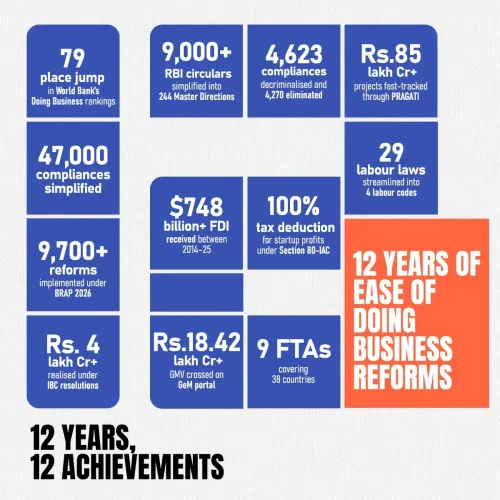
What to watch next: updated FDI inflow figures, fresh manufacturing-sector output data, and any announcements around expanded PLI scheme coverage that may accompany the anniversary — each of which would put hard numbers behind the poetic framing Mandaviya chose today.
A couplet is a promise compressed to two lines. Whether the data delivers the crescendo is the question the next quarterly numbers will answer.
Point of View
It reinforces the BJP's consistent messaging that economic self-reliance is a cumulative, 12-year project — not a reactive response to any single crisis. The poetic register is deliberate, designed for social-media virality among Hindi-speaking audiences without requiring a policy document to back it up. It also positions a senior cabinet minister squarely within the Modi economic legacy at a moment when manufacturing-sector data and FDI numbers will either confirm or complicate that framing. The real test of the messaging will come when the government releases updated economic indicators alongside the anniversary.
NationPress
25 Sept 2026
Frequently Asked Questions
When was Make in India launched?
Make in India was launched by Prime Minister Narendra Modi on 25 September 2014 , making 2026 its 12th anniversary.
What is the goal of Make in India?
Make in India aims to position India as a global manufacturing hub by attracting domestic and foreign investment across 25 key sectors , reducing import dependence, and generating employment.
What is the connection between Make in India and Atmanirbhar Bharat?
Atmanirbhar Bharat (Self-Reliant India), announced in 2020 , built on the Make in India foundation by adding production-linked incentives and a sharper focus on supply-chain independence.
Why did Mandaviya post about Make in India on 25 September 2026?
25 September is the exact anniversary date of the initiative's 2014 launch. Senior ministers routinely mark the occasion as part of the government's ongoing narrative around economic self-reliance.
What are PLI schemes and how do they relate to Make in India?
Production-Linked Incentive (PLI) schemes are sector-specific financial incentive programmes introduced as a key implementation tool under the Make in India and Atmanirbhar Bharat framework to boost domestic manufacturing output.