Giriraj Singh credits Modi's policies for India's poverty exit
Synopsis
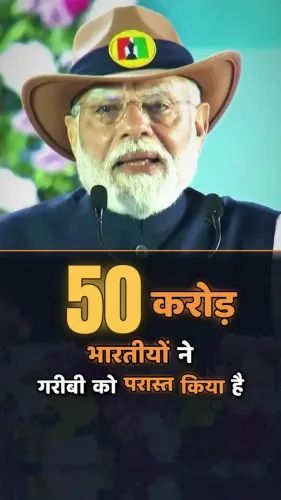
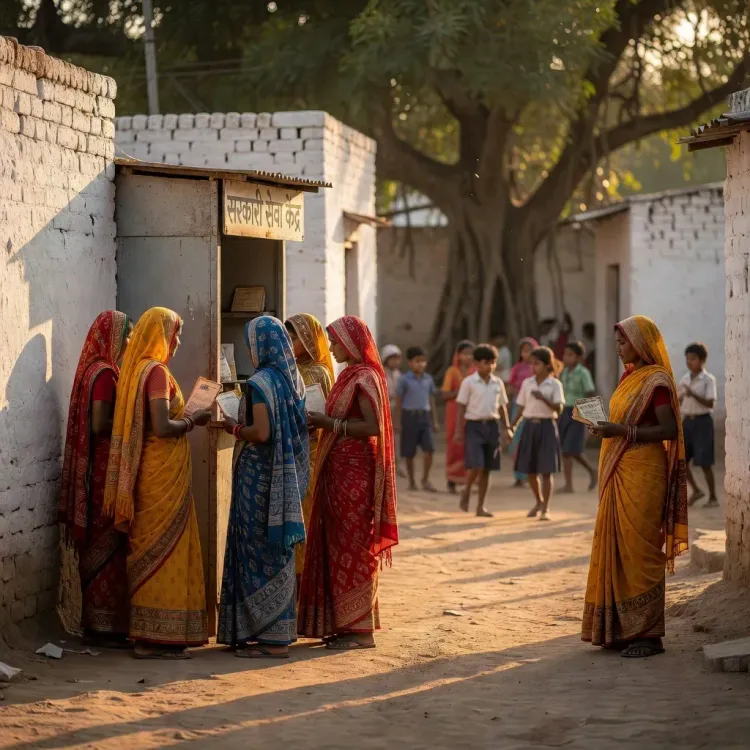
Union Textiles Minister Giriraj Singh praised PM Modi's inclusive development and welfare policies on 9 November 2026, calling India's rapid poverty reduction proof of the Atmanirbhar Bharat vision and asserting that every section of society is joining the development mainstream.
Key Takeaways
Giriraj Singh , Union Textiles Minister and Begusarai MP, credited PM Modi's welfare policies for India's accelerating poverty reduction on 9 November 2026 .
His post invokes Atmanirbhar Bharat — the self-reliance programme launched in May 2020 — as the governing framework for inclusive growth.
Singh argued that every section of Indian society is now joining the development mainstream and participating in nation-building.
The messaging aligns with the BJP's consistent post-2014 strategy of linking welfare outcomes directly to PM Modi's leadership.
NITI Aayog's forthcoming multidimensional poverty index update and Union Budget welfare outlays are the next key data points to watch.
India's march out of poverty is not just a statistic — it is, according to Union Textiles Minister Giriraj Singh, the living proof of a governance philosophy. On Monday, 9 November 2026, the senior BJP leader and Lok Sabha MP from Begusarai, Bihar, took to X to argue that the country's accelerating poverty reduction is inseparable from Prime Minister Narendra Modi's model of inclusive development.
Posting in Hindi, Singh wrote: 'गरीबी से मुक्ति की दिशा में भारत की तेज प्रगति, आदरणीय प्रधानमंत्री श्री @narendramodi जी के नेतृत्व में हो रहे समावेशी विकास और जनकल्याणकारी नीतियों का प्रमाण है।' — translating as: 'India's rapid progress towards freedom from poverty is proof of the inclusive development and welfare-oriented policies being implemented under the leadership of respected Prime Minister Shri Narendra Modi.' He added that every section of the country is now joining the mainstream of development and becoming a participant in building an Atmanirbhar Bharat — a self-reliant India.
Atmanirbhar Bharat's roots and reach
The Atmanirbhar Bharat Abhiyan was first announced in May 2020, initially framed as an economic stimulus response during the COVID-19 pandemic. It has since evolved into a broader umbrella brand for self-reliance policies spanning manufacturing, agriculture, and social welfare. Singh's post situates poverty reduction squarely within this framework — positioning welfare spending not as charity but as a structural pathway into the economic mainstream.
Since 2014, the central government has consistently anchored its messaging around direct-benefit transfers, financial inclusion, and multidimensional poverty metrics. The argument is straightforward: bring the last household into the formal economy, and the aggregate poverty numbers move. Singh's framing follows exactly that logic — every 'varg' (section of society) joining the 'mukhydhara' (mainstream) of development.
Why the poverty narrative matters politically
Poverty reduction claims are among the most contested in Indian public discourse — and among the most powerful. When a senior minister amplifies them, the message travels well beyond X. For BJP, connecting welfare outcomes directly to Modi's leadership is a deliberate political architecture: policy credit flows upward, and citizen beneficiaries are reminded of the source. With NITI Aayog's next multidimensional poverty index update anticipated — and Union Budget welfare outlays under scrutiny — the political stakes around these numbers are only rising.
Singh, a vocal and combative voice for the BJP's social welfare agenda, represents Begusarai — a constituency in Bihar where poverty reduction data has direct electoral resonance. His post, while broadly worded, is a signal that the government intends to keep inclusive growth at the front of its communication ahead of whatever policy announcements lie ahead.
Point of View
Reinforcing brand loyalty among beneficiary constituencies ahead of budget season. The invocation of Atmanirbhar Bharat signals that the government intends to keep the self-reliance narrative alive well beyond its 2020 pandemic origins. With NITI Aayog's poverty index update looming, the timing of such ministerial messaging is unlikely to be coincidental. For the opposition, the absence of specific data points in Singh's claim leaves room for a counter-narrative — but the BJP is betting that the lived experience of welfare recipients will speak louder than contested statistics.
NationPress
9 Nov 2026
Frequently Asked Questions
What did Giriraj Singh say about poverty reduction in India?
On 9 November 2026, Union Textiles Minister Giriraj Singh posted that India's rapid progress in reducing poverty is proof of PM Modi's inclusive development and welfare-oriented policies, and that every section of society is now part of building an Atmanirbhar Bharat.
What is Atmanirbhar Bharat and when was it launched?
Atmanirbhar Bharat — meaning 'self-reliant India' — is an economic and social programme announced by PM Modi in May 2020 as a response to the COVID-19 pandemic. It has since expanded into a broad policy umbrella covering manufacturing, agriculture, and welfare.
What is India's multidimensional poverty index?
India's Multidimensional Poverty Index, published by NITI Aayog, measures poverty across health, education, and living standards beyond just income. An updated report is anticipated and will be a key measure of the government's welfare claims.
Who is Giriraj Singh and which constituency does he represent?
Giriraj Singh is a senior BJP leader, Union Minister of Textiles, and Lok Sabha MP from Begusarai in Bihar. He is known as a vocal advocate for the government's welfare and development agenda.
How has the BJP framed poverty reduction in its political messaging?
Since 2014, the BJP has consistently linked poverty reduction to PM Modi's direct-benefit transfer schemes, financial inclusion drives, and the Atmanirbhar Bharat programme, crediting welfare outcomes directly to the Prime Minister's leadership.