Dr. Jitendra Singh Reviews India's First Medical Cannabis Project at CSIR-IIIM Jammu
Synopsis
Union Minister Dr. Jitendra Singh reviewed India's first Cannabis Medicinal Research Project at CSIR-IIIM Jammu on November 9, 2026. The PPP project — involving a French partner — targets export-quality painkillers and therapies for cancer, epilepsy, neuropathy, and ARDS, with pre-clinical trials planned at Tata Memorial Centre, Mumbai.
Key Takeaways
Union Science and Technology Minister Dr.
Jitendra Singh reviewed India's first Cannabis Medicinal Research Project at CSIR-IIIM, Jammu on November 9, 2026 .
The project aims to develop export-quality cannabis-based painkiller drugs and therapies for neuropathies, cancer, epilepsy , and ARDS .
Pre-clinical trials are planned at Tata Memorial Centre (TMC), Mumbai , India's premier cancer research institution.
The initiative is structured as a Public-Private Partnership (PPP) involving the Government of India, the Government of Jammu and Kashmir , and a French private-sector company .
The legal basis for the project is the NDPS Act, 1985 , which permits regulated cannabis research for medical and scientific purposes.
Singh described the project as reflecting PM Modi 's 'Whole-of-Government and Whole-of-Society approach' to innovation.
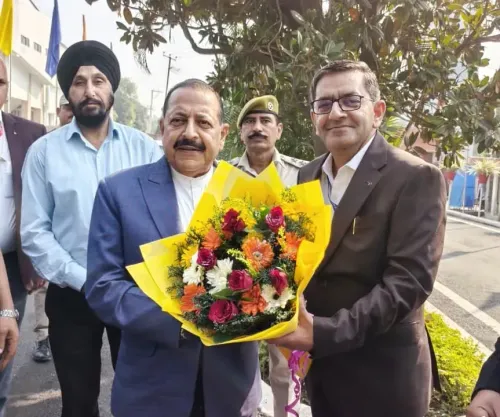
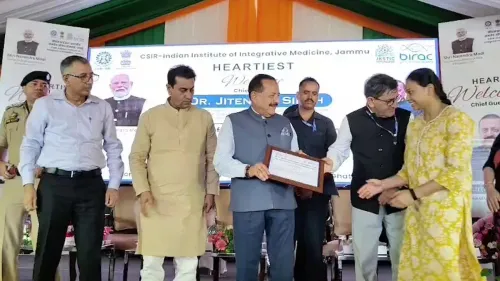
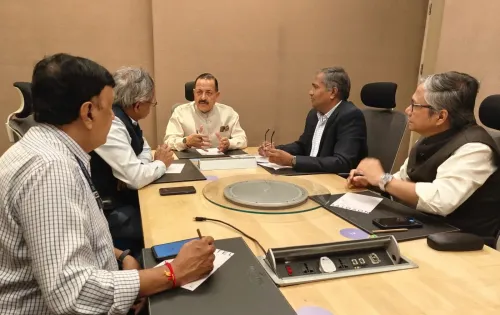
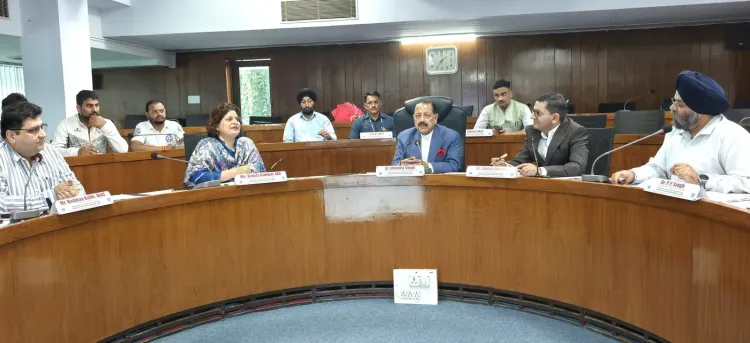
A substance long synonymous with addiction is being quietly reimagined as a life-saving medicine — and India is leading that transformation from a laboratory in Jammu. Union Science and Technology Minister Dr. Jitendra Singh on Monday, November 9, 2026, reviewed the progress of India's first-of-its-kind Cannabis Medicinal Research Project at CSIR-Indian Institute of Integrative Medicine (CSIR-IIIM), Jammu, underscoring its potential to produce export-quality painkiller drugs and therapies for some of humanity's most difficult-to-treat conditions.
From Stigma to Science: What the CSIR-IIIM Project Is Actually Doing
The project's ambition is precisely stated: take a compound notorious for recreational abuse and engineer it into a regulated pharmaceutical asset. Dr. Singh noted that cannabis is being developed as an export-quality painkiller drug — a signal, he said, 'that a substance infamous for drug addiction could also bring relief to mankind.' The diseases in the cross-hairs are serious: diabetic and other neuropathies, cancer, epilepsy, and Acute Respiratory Distress Syndrome (ARDS).
CSIR-IIIM is the Council of Scientific and Industrial Research's nodal body for natural-products drug development, making it the logical home for a programme that must navigate both botanical complexity and stringent narcotics regulations. India's Narcotic Drugs and Psychotropic Substances (NDPS) Act, 1985 permits limited cannabis research for medical and scientific purposes under government oversight — the statutory foundation on which this entire project rests.
Tata Memorial Centre Mumbai to Run Pre-Clinical Trials
The next critical milestone is pre-clinical testing. Dr. Singh confirmed that pre-clinical trials are planned at Tata Memorial Centre (TMC), Mumbai — the country's premier cancer research institution, operating under the Department of Atomic Energy. Routing trials through TMC signals the project's oncology focus and its intent to meet rigorous scientific and regulatory standards before any clinical-stage application is pursued.
Positive pre-clinical results at TMC would open the pathway to formal regulatory filings — a process that will closely involve India's drug regulator and potentially set precedents for how medical cannabis is classified and commercialised domestically.
A French Partner, PPP Architecture, and J&K's Place in National Science
The project is structured as a Public-Private Partnership (PPP) that assembles three distinct layers of governance and capital: the Government of India, the Government of Jammu and Kashmir, and a French private-sector company whose identity has not been officially disclosed. The international partnership adds European pharmaceutical expertise and potentially eases the path to export certification — consistent with the project's stated goal of producing drugs for global markets.
The Jammu location is itself a policy statement. Including CSIR-IIIM — headquartered in a region the Centre has actively worked to integrate into national science and technology programmes since the reorganisation of Jammu and Kashmir as a Union Territory — reflects a deliberate push to anchor high-value research infrastructure in the region. Dr. Singh framed the entire initiative as an embodiment of Prime Minister Narendra Modi's 'Whole-of-Government and Whole-of-Society approach': a coordinated convergence of central government, territorial administration, and private sector around a shared innovation goal.
What Comes Next for India's Medical Cannabis Ambition
The immediate watch-point is the outcome of the TMC pre-clinical trials. A green light there would trigger applications for regulatory approval and potentially reshape India's pharmaceutical export portfolio in a niche that global markets — particularly in pain management and oncology — are actively developing. India's established strength in generic drug manufacturing gives it a structural advantage if the science clears the bar.
India has the botanical heritage, the research infrastructure, and now the political will. The question is whether the clinical data, when it comes, will match the ambition.
Point of View
Reinforcing the government's post-370 development narrative for the region. If pre-clinical results hold, India could position itself as an early-mover in the regulated medical cannabis pharmaceuticals space — a market that developed economies are already opening up.
NationPress
9 Nov 2026
Frequently Asked Questions
What is the CSIR-IIIM Cannabis Medicinal Research Project?
It is India's first dedicated cannabis medicinal research programme, based at the CSIR-Indian Institute of Integrative Medicine in Jammu, aimed at developing export-quality painkiller drugs and therapies for conditions including cancer, epilepsy, neuropathy, and ARDS from cannabis compounds.
Is medical cannabis legal in India?
India's Narcotic Drugs and Psychotropic Substances (NDPS) Act, 1985 permits limited cannabis research strictly for medical and scientific purposes under government oversight; recreational use remains prohibited.
Where will the cannabis drug pre-clinical trials be conducted?
Pre-clinical trials are planned at Tata Memorial Centre (TMC) in Mumbai, the country's premier oncology research and treatment institution operating under the Department of Atomic Energy.
Which diseases could India's cannabis research help treat?
The project targets diabetic and other neuropathies, cancer, epilepsy, and Acute Respiratory Distress Syndrome (ARDS), in addition to developing export-quality painkiller drugs.
Who are the partners in the cannabis medicinal research PPP?
The Public-Private Partnership brings together the Government of India, the Government of Jammu and Kashmir, and a French private-sector company, though the French firm has not been officially named in public disclosures.