Giriraj Singh hails India's shift from arms importer to defence exporter
Synopsis
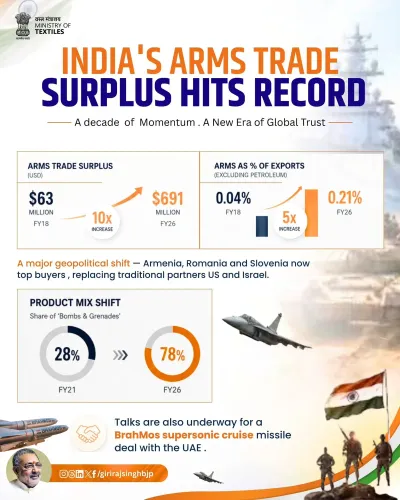
Senior BJP leader and Union Textiles Minister Giriraj Singh hailed India's transformation from a major arms importer to a rising defence exporter on 29 October 2026, attributing the shift to PM Modi's push for indigenous manufacturing, modern technology, and innovation under the Atmanirbhar Bharat framework.
Key Takeaways
Giriraj Singh posted on 29 October 2026 highlighting India's shift from defence import dependence to rising export capability.
He credited PM Narendra Modi's leadership and the push for indigenous manufacturing, modern technology, and innovation.
The policy shift traces back to the Make in India launch in 2014 and was deepened by the Atmanirbhar Bharat Abhiyan in 2020 , which introduced a negative import list for defence items.
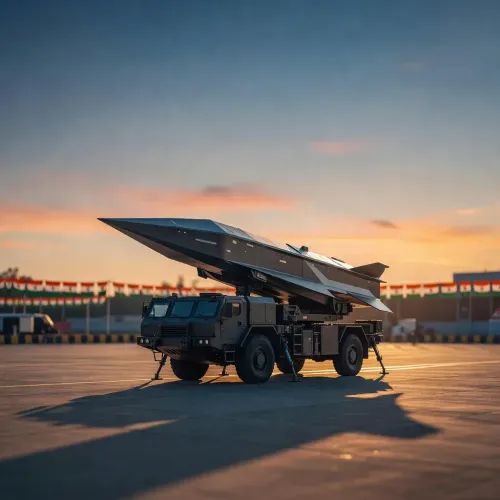
DRDO has been the technical backbone of India's indigenisation drive, developing missiles, radar, and aerospace systems domestically.
Defence corridors in Uttar Pradesh and Tamil Nadu and private-sector entry have broadened the domestic production base.
Upcoming Union Budget defence targets and international air show participation will be key markers of how far the export ambition has translated into concrete results.
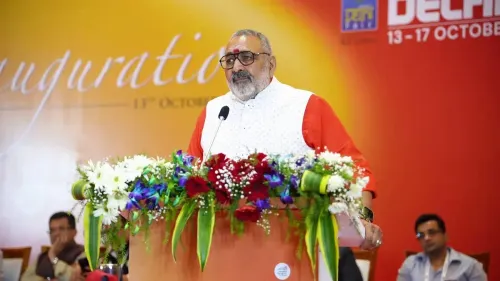
From a nation that once depended heavily on foreign arsenals to one that is steadily building its own and shipping them abroad — Union Textiles Minister Giriraj Singh captured that arc in a pointed post on X on Thursday, 29 October 2026, crediting Prime Minister Narendra Modi's leadership for what he called a historic journey in Indian defence.
Writing in Hindi, Singh stated: 'रक्षा क्षेत्र में आयात पर निर्भरता से निर्यात की बढ़ती ताकत तक, भारत ने एक ऐतिहासिक सफर तय किया है' — 'From dependence on imports in the defence sector to the growing strength of exports, India has completed a historic journey.' He went on to credit indigenous defence manufacturing, modern technology, and innovation with giving India 'a new identity on the global defence stage.'
The policy shift Singh is pointing to
The arc Singh describes did not happen overnight. When the Make in India initiative launched in 2014, defence was designated a priority sector — the ambition being to absorb technology, build domestic supply chains, and wean the armed forces off chronic import dependence. By 2020, the Atmanirbhar Bharat Abhiyan hardened that ambition into policy: a negative import list for defence items was notified, ring-fencing a growing catalogue of weapons and systems for domestic production only.
Successive Union Budgets from 2019 onward raised indigenisation targets and layered in export promotion incentives, nudging public-sector defence giants and private players alike toward global competitiveness. The Defence Research and Development Organisation (DRDO) has been central to this effort, driving indigenous programmes in missiles, radar systems, and aerospace platforms.
Why a Textiles Minister is talking defence
Giriraj Singh holds the Textiles portfolio, yet his post is entirely about defence — a reminder that senior BJP leaders routinely amplify the government's broader economic-nationalism narrative across sectoral lines. The message aligns squarely with the party's Atmanirbhar Bharat communication frame, which positions India's strategic self-reliance not as one ministry's story but as a civilisational pivot. For a Lok Sabha MP from Begusarai, Bihar, championing national manufacturing also carries domestic resonance: Bihar's MSME base is among those that benefit from defence supply-chain deepening.
Import dependence to export ambition — the bigger picture
India spent decades ranked among the world's top arms importers. The policy architecture built since 2014 — private-sector entry, foreign direct investment liberalisation, defence corridors in Uttar Pradesh and Tamil Nadu, and technology transfer mandates — has begun to shift that calculus. The direction of travel is toward export competitiveness, with Indian platforms drawing interest from partner nations in Southeast Asia, Africa, and beyond.
Upcoming Union Budget announcements on defence production targets, India's participation in international air shows, and any new bilateral manufacturing agreements will be the next real tests of how far that journey has actually gone.
Point of View
When defence indigenisation targets typically come under scrutiny. That a Textiles Minister is amplifying a defence message underscores how the party treats self-reliance as a cross-sectoral brand rather than a departmental brief. The framing of 'import dependence to export strength' is deliberate: it places the Modi era as a rupture point in India's strategic history, a claim the opposition is certain to interrogate with specifics on actual export volumes and pending procurement timelines.
NationPress
29 Oct 2026
Frequently Asked Questions
What did Giriraj Singh say about India's defence sector?
Giriraj Singh posted on X on 29 October 2026 that India has completed a historic journey from dependence on defence imports to growing export strength, crediting PM Modi's push for indigenous manufacturing, modern technology, and innovation.
What is India's Atmanirbhar Bharat policy for defence?
Launched in 2020, Atmanirbhar Bharat Abhiyan introduced a negative import list for defence items, mandating domestic production of an expanding catalogue of weapons and systems to reduce India's reliance on foreign suppliers.
How has Make in India changed Indian defence manufacturing?
The Make in India initiative, launched in 2014, opened the defence sector to private players, liberalised foreign direct investment, and set indigenisation targets — laying the groundwork for India's gradual shift from arms importer to domestic producer and exporter.
What role does DRDO play in India's defence indigenisation?
The Defence Research and Development Organisation (DRDO) is India's primary body for developing indigenous defence technology, working on missiles, radar systems, aircraft, and other platforms that reduce dependence on foreign procurement.
Why is Giriraj Singh, a Textiles Minister, commenting on defence?
Senior BJP leaders routinely amplify the government's Atmanirbhar Bharat narrative across portfolios. Singh's post reflects the party's broader messaging strategy that frames strategic self-reliance as a whole-of-government achievement rather than a single ministry's mandate.