CM Sawant Vows to Push Centre for SC Relief on Goa ST Reservation
Synopsis
Goa Chief Minister Pramod Sawant has publicly committed to pressing the Government of India to approach the Supreme Court to resolve court-imposed hurdles blocking Scheduled Tribe reservations in the Goa Legislative Assembly, reaffirming the state's commitment to tribal political representation.
Key Takeaways
Goa CM Pramod Sawant announced on 29 October 2026 that the state will urge the Centre to move the Supreme Court of India on ST reservation in the Goa assembly.
The Goa government states that legislation in favour of the Scheduled Tribe community has already been enacted, but court cases have created 'legal impediments.' Article 332 of the Constitution guarantees ST reservation in state assemblies proportional to population — its application in Goa has faced judicial challenges.
The Goa assembly has 40 seats ; ST communities have long sought reserved constituencies commensurate with their population share.
The next critical milestone is a formal request from the Government of India to the Supreme Court and the scheduling of hearings on the Goa ST reservation framework.
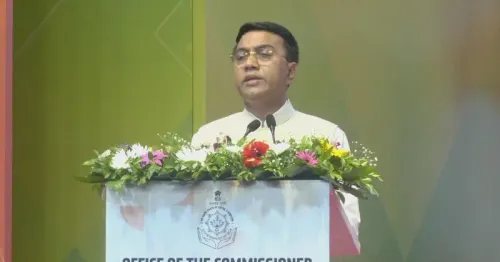
A fight for political representation in Goa's 40-seat legislative assembly has hit a courtroom wall — and Goa Chief Minister Pramod Sawant is now asking New Delhi to help bring it down. On Thursday, 29 October 2026, Sawant went public with a firm commitment: the Goa government will press the Government of India to approach the Supreme Court of India directly to protect the reservation rights of Scheduled Tribe communities in the state.
The Promise and the Obstacle
Sawant's post lays out the sequence plainly. The Goa government has, over time, pursued the matter before the Centre and 'the law is made in favour of the Scheduled Tribe community.' In other words, legislative progress has already been made. But court cases have thrown up 'legal impediments' — and those obstacles, Sawant says, 'will be seriously pursued' before the Union government. The ask is specific: urge the Centre to move the Supreme Court itself to protect ST interests in Goa.
This is not a routine political assurance. It is a public road map — one that names an institution, describes a mechanism, and sets a direction. That matters in a debate where Scheduled Tribe communities have long demanded a voice in the state's legislature commensurate with their population.
Why Goa's ST Seat Reservation Has Been So Contested
Article 332 of the Indian Constitution mandates reservation of seats for Scheduled Tribes in state legislative assemblies in proportion to their population. In theory, the provision is clear. In practice, its application in Goa has been tangled in litigation — with questions around population thresholds, delimitation exercises, and the constitutional validity of specific laws periodically triggering judicial review. When courts intervene, the political machinery stalls, leaving communities waiting.
Goa's situation fits a broader national pattern: state governments that push hard for ST and SC quota laws often find themselves in a triangle of state legislation, central coordination, and apex court oversight. The fastest way to cut through that triangle, as Sawant signals, is to get the Centre itself to argue the case before the Supreme Court — lending the full weight of constitutional authority to what is otherwise a state-level demand.
What Sawant's Intervention Signals for Goa's Tribal Communities
For Goa's Scheduled Tribe voters, the stakes are direct: seats in the legislature translate into budget allocations, policy attention, and political leverage. A reservation that exists on paper but is frozen by court orders delivers none of those benefits. Sawant's framing — 'will not leave any stone unturned' — is a pledge that the state government does not consider this a closed chapter just because a law was passed.
The critical next step is whether the Centre formally moves the Supreme Court, and what timeline that triggers. Any hearing at the apex level on Goa's ST reservation framework will be closely watched by tribal groups, opposition parties in the state, and constitutional law observers tracking how India's reservation jurisprudence evolves in smaller states with distinct demographic profiles.
Point of View
A BJP-governed entity, making any further delay a shared political liability rather than a purely state-level failure. This reflects a broader pattern in Indian federal politics where state BJP governments use public pressure on the Union to advance constituency-critical causes while maintaining party unity. The move also pre-empts opposition criticism ahead of any electoral cycle by demonstrating proactive intent. Whether the Centre acts swiftly or the matter gets mired in bureaucratic timelines will define how much political capital this statement actually earns.
NationPress
29 Oct 2026
Frequently Asked Questions
What is Pramod Sawant saying about Scheduled Tribe reservation in Goa?
CM Pramod Sawant has stated that while a law favouring ST reservation in the Goa assembly exists, court cases have created legal hurdles. He has committed to urging the Government of India to approach the Supreme Court to protect Scheduled Tribe interests in the state.
Does Goa have Scheduled Tribe reservation in its legislative assembly?
Goa's legislative assembly has 40 seats. Article 332 of the Constitution mandates ST seat reservation proportional to population, but the implementation in Goa has faced legal challenges in court, which the state government is now seeking to resolve through central government intervention at the Supreme Court level.
What is Article 332 of the Indian Constitution?
Article 332 mandates reservation of seats for Scheduled Tribes (and Scheduled Castes) in state legislative assemblies in proportion to their population, ensuring political representation for historically marginalised communities.
Why would the Central Government need to approach the Supreme Court for Goa ST reservation?
When court cases create legal impediments to state-level reservation laws, the central government can intervene at the Supreme Court as a constitutional authority, lending greater legal weight to the argument for protecting ST reservation rights than the state alone could exercise.
What is the current status of ST reservation in the Goa assembly?
According to CM Sawant's statement, a law has been enacted in favour of ST reservation in Goa, but judicial proceedings have blocked its implementation. The Goa government is now pursuing the matter with the Centre to seek Supreme Court intervention.