Kishan Reddy meets CSIRO, pushes critical minerals tie-up

Synopsis
Union Coal and Mines Minister G. Kishan Reddy met CSIRO in Australia on 29 October 2026, urging expanded research cooperation on critical minerals and reaffirming India's commitment to the National Critical Mineral Mission under PM Modi's vision.
Key Takeaways
Kishan Reddy met CSIRO (Commonwealth Scientific and Industrial Research Organisation) during a visit to Australia on 29 October 2026 .
The interaction focused on CSIRO's existing collaboration with India's mining PSUs and research institutions .
Reddy encouraged greater cooperation in critical minerals , linking the push to India's National Critical Mineral Mission .
The Mines and Minerals (Development and Regulation) Amendment Act, 2023 had already added critical and strategic minerals to expedited exploration provisions.
Australia is a key bilateral partner for India on critical minerals, with CSIRO serving as the scientific anchor for joint research efforts.
The Ministries of Mines, Coal, External Affairs and the High Commission of India in Canberra were all formally engaged in the visit.
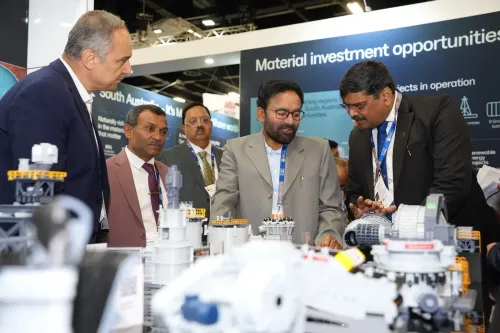
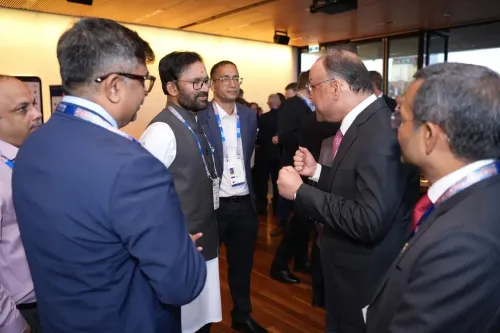
India's push to secure critical minerals got a diplomatic boost on Thursday, 29 October 2026, as Union Coal and Mines Minister G. Kishan Reddy met with officials of CSIRO — Australia's Commonwealth Scientific and Industrial Research Organisation — to deepen research cooperation between the two countries' mining sectors.
What was on the table at CSIRO
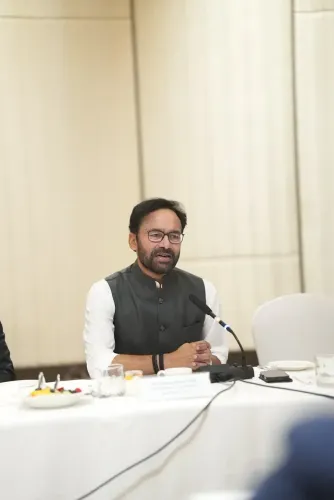
Reddy shared glimpses of the interaction on X, describing a focused conversation on CSIRO's 'longstanding collaboration with India's mining PSUs and research institutions.' The minister encouraged 'greater cooperation in critical minerals,' framing the engagement as an expression of India's commitment under the National Critical Mineral Mission — the flagship programme that coordinates public-sector miners, research bodies and foreign partners to build out domestic supply chains.
The meeting drew in multiple arms of the Indian government: the Ministry of Mines, the Ministry of Coal, the Ministry of External Affairs and the High Commission of India in Canberra were all tagged, signalling that the visit carried formal diplomatic weight rather than being a routine study tour.
Why Australia, why now
Australia is one of the world's most mineral-rich nations — and one of India's most consequential partners in the clean-energy transition. CSIRO, as Australia's national science agency, already has established research ties with Indian public-sector undertakings in mining, making it a natural anchor for any expanded collaboration. Reddy's visit builds on that foundation with a sharper focus on the specific minerals — lithium, cobalt, nickel, rare earths — that India needs to reduce import dependence and power its electric-mobility and defence manufacturing ambitions.
The policy architecture underpinning the push is not new. The Mines and Minerals (Development and Regulation) Amendment Act, 2023 added critical and strategic minerals to the list with expedited exploration provisions, clearing regulatory headroom for faster action. The National Critical Mineral Mission operationalises that legal framework by linking domestic reforms to international research partnerships — exactly the kind of tie-up Reddy was advancing in Canberra.
Modi's supply-chain vision goes global
Reddy explicitly anchored the engagement to Prime Minister Narendra Modi's policy direction, describing the mission as 'driven by the vision of Hon'ble PM.' That framing is deliberate: India's critical-minerals strategy is increasingly presented not just as an industrial policy but as a national-security and self-reliance priority, resonant with the broader Aatmanirbhar Bharat (self-reliant India) agenda.
The broader pattern is clear — India has been systematically converting bilateral scientific relationships into supply-chain security arrangements, with Australia emerging as a preferred partner given its geological wealth, shared democratic values and alignment on strategic competition in the Indo-Pacific.
The next test is whether this interaction produces concrete joint projects or formal agreements under the National Critical Mineral Mission — and whether CSIRO's expertise translates into faster exploration timelines for Indian PSUs on the ground.
Point of View
The minister signals whole-of-government buy-in, raising the political stakes for follow-through. The engagement fits a broader arc: India has been converting bilateral goodwill with resource-rich democracies into structured industrial arrangements, and Australia is a linchpin of that strategy. The real measure of success will be whether CSIRO-India joint projects move from ministerial endorsement to operational milestones under the National Critical Mineral Mission.
NationPress
29 Oct 2026
Frequently Asked Questions
What is the National Critical Mineral Mission?
The National Critical Mineral Mission is a Government of India initiative that coordinates public-sector mining companies, research institutions and foreign partners to accelerate domestic exploration, processing and supply-chain development of critical minerals essential for clean energy and defence manufacturing.
What is CSIRO and what is its connection to India?
CSIRO is Australia's national science agency — the Commonwealth Scientific and Industrial Research Organisation. It has established research ties with Indian mining public-sector undertakings and institutions, making it a key partner for technology and knowledge exchange in the mining sector.
Why is India focusing on critical minerals with Australia?
Australia is among the world's most mineral-rich nations and a strategic partner for India. Cooperation with CSIRO helps India reduce import dependence on critical minerals like lithium, cobalt and rare earths, which are essential for electric vehicles, batteries and defence applications.
What law underpins India's critical minerals push?
The Mines and Minerals (Development and Regulation) Amendment Act, 2023 added critical and strategic minerals to the list of minerals with expedited exploration provisions, giving regulatory momentum to the National Critical Mineral Mission.
What did Kishan Reddy discuss with CSIRO in Australia?
Union Mines Minister G. Kishan Reddy discussed CSIRO's longstanding collaboration with India's mining PSUs and research institutions, and encouraged greater cooperation specifically on critical minerals, framing the talks within India's National Critical Mineral Mission.