Kishan Reddy Eyes Deeper India-Australia Mining Ties at Conference
Synopsis
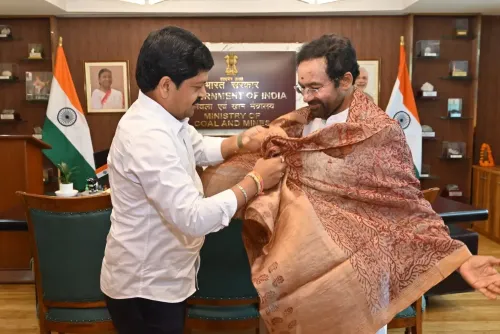
Union Coal and Mines Minister G. Kishan Reddy has flagged his anticipation for an upcoming conference focused on advancing India-Australia resource cooperation, looping in mines, coal, external affairs and both Indian diplomatic missions in Australia.
Key Takeaways
Union Coal and Mines Minister G.
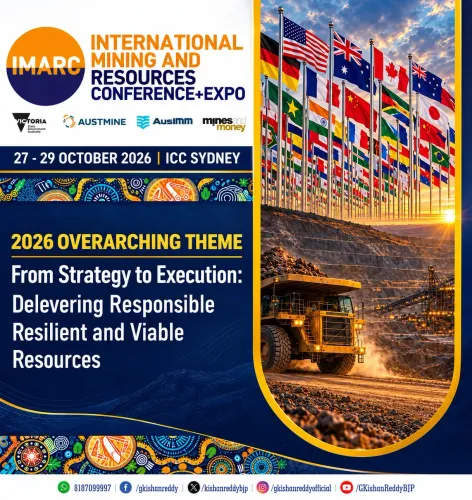
Kishan Reddy publicly expressed enthusiasm for an upcoming conference on international mining and resources cooperation on 26 October 2026 .
The minister's post tagged five government handles: Ministry of Mines , Ministry of Coal , Ministry of External Affairs , High Commission of India in Canberra , and the Consulate General of India in Sydney .
India and Australia elevated their relationship to a Comprehensive Strategic Partnership in 2020 , with critical minerals cooperation as a core component.
Australia is a major supplier of both coking coal and critical minerals that India needs for its manufacturing and energy-transition ambitions.
The simultaneous engagement of diplomatic missions in Canberra and Sydney suggests bilateral deliverables are expected from the conference.
A mining conference on the horizon is drawing India's top resources minister into fresh diplomatic orbit with Australia — and Union Coal and Mines Minister G. Kishan Reddy is signalling intent before the doors even open.
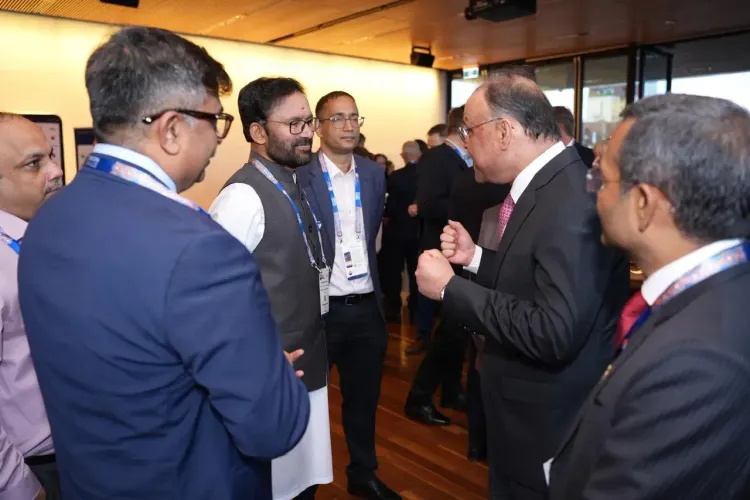
Responding to an outreach on Monday, 26 October 2026, the minister posted his anticipation for the upcoming conference, writing: 'Looking forward to the conference and to furthering international cooperation and partnerships.' The reply looped in the Ministry of Mines, the Ministry of Coal, the Ministry of External Affairs, the High Commission of India in Canberra, and the Consulate General of India in Sydney — a five-way tag that maps precisely the institutional machinery India deploys for resource diplomacy with Australia.
Why Australia and Why Now
Australia is not a casual conversation partner for India's mining establishment. The two countries elevated their bilateral relationship to a Comprehensive Strategic Partnership in 2020, with critical minerals and resources cooperation embedded as a core pillar. For India — running a manufacturing expansion that needs everything from coking coal to lithium — Australia's position as a leading global producer of several key minerals makes it irreplaceable on the supply map.
The simultaneous tagging of both the coal and mines ministries alongside external affairs is deliberate architecture. It signals that whatever is on the conference agenda spans the full breadth of India's extractives interests: thermal and coking coal imports on one side, critical minerals for the energy transition on the other.
The Diplomatic Chain Behind the Reply
The inclusion of @HCICanberra and @cgisydney in a minister's reply is more than courtesy. It activates India's diplomatic missions in Australia as active participants, not bystanders — standard operating procedure when bilateral deliverables are expected to follow a multilateral or bilateral conference. The presence of MEA in the thread further grounds the exchange in formal foreign-policy machinery, not merely sectoral coordination.
India has systematically pursued bilateral resource partnerships to reduce supply-chain concentration risk — a strategy that gained sharper urgency after global commodity disruptions in recent years. Australia fits that strategy at multiple points: it is a stable democracy, a Quad partner, and a producer of minerals that India's solar, battery, and defence manufacturing sectors increasingly depend on.
The specific conference and its outcomes remain to be detailed publicly. But when a Union minister pre-emptively flags his eagerness to advance 'international cooperation and partnerships' while aligning five government handles, the ground is being laid — not just greeted.
Point of View
Not just the ministry, suggests the conference is intended to produce something bilateral and concrete, not just a photo opportunity. Watch for joint statements or MoUs on critical minerals sourcing in the weeks ahead.
NationPress
26 Oct 2026
Frequently Asked Questions
What conference is G. Kishan Reddy attending related to Australia?
The specific conference has not been publicly identified yet, but Minister Kishan Reddy's post indicates it focuses on international mining and resources cooperation involving India and Australia.
Why is India partnering with Australia on mining and critical minerals?
Australia is a leading global producer of coking coal and critical minerals such as lithium that India needs for its manufacturing and clean-energy transition. The two countries formalised a Comprehensive Strategic Partnership in 2020 that includes resources cooperation.
What is G. Kishan Reddy's role in the Indian government?
G. Kishan Reddy is India's Union Minister of Coal and Mines, responsible for overseeing coal production policy and the regulation of the broader mining sector.
Which Indian government bodies are involved in India-Australia resources diplomacy?
The Ministry of Coal, Ministry of Mines, Ministry of External Affairs, the High Commission of India in Canberra, and the Consulate General of India in Sydney are all engaged, as reflected in Kishan Reddy's post.
What is India's broader strategy on critical minerals supply chains?
India has pursued bilateral resource partnerships with stable producer nations to diversify supply chains and reduce concentration risk — a strategy that makes Australia a high-priority partner given its mineral wealth and alignment on democratic values.