Kishan Reddy heads to Australia for IMARC 2026 mining talks
Synopsis
Union Coal and Mines Minister G. Kishan Reddy will travel to Australia from October 25-30 to address IMARC 2026, hold bilateral ministerial meetings, and pursue deeper cooperation on critical minerals, mining technology, and exploration — a key pillar of India's diversified supply-chain diplomacy.
Key Takeaways
Kishan Reddy will visit Australia from October 25 to 30, 2026 to attend IMARC 2026 .
He will deliver an address at the conference and hold bilateral meetings with ministerial counterparts from multiple countries.
The visit covers cooperation on critical minerals, mining technology, exploration, processing, and research .
India published a list of 30 critical minerals in 2023 to guide domestic policy and international sourcing, with Australia a key partner.
The minister will also engage with the Telugu community and Indian diaspora in Australia.
The visit is coordinated with the Ministry of Mines, Ministry of External Affairs , and the High Commission of India in Canberra .
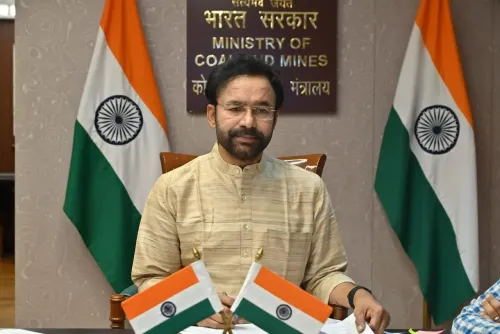
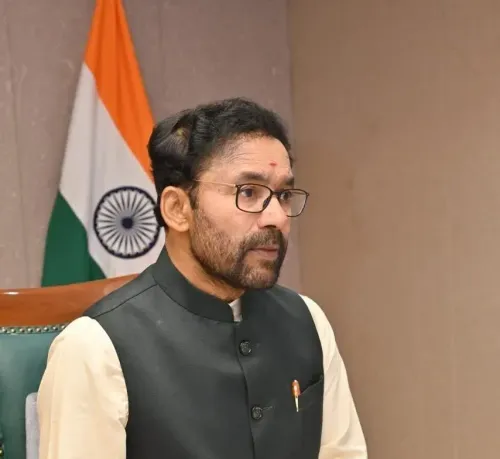
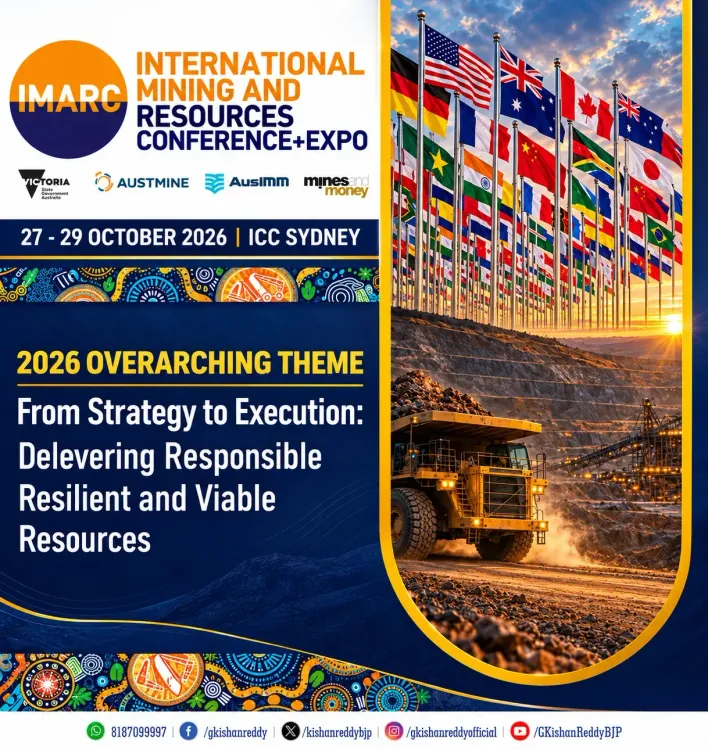
India's critical minerals diplomacy is heading to the Southern Hemisphere. Union Coal and Mines Minister G. Kishan Reddy announced on Friday, October 23 that he will travel to Australia from October 25 to 30 to attend the International Mining and Resources Conference (IMARC) 2026, where he will deliver a keynote address and hold a series of bilateral meetings with ministerial counterparts from multiple countries.
What Kishan Reddy will do at IMARC 2026
The minister's agenda is packed and purposeful. Beyond the main conference address, Reddy said he will meet industry leaders and research institutions to deepen cooperation across critical minerals, mining technology, exploration, processing, and research. The visit is coordinated through the Ministry of Mines, the Ministry of External Affairs, and the High Commission of India in Canberra — a signal of how seriously New Delhi treats this engagement.
He also flagged plans to interact with members of the Telugu community and the broader Indian diaspora in Australia — a customary but politically meaningful element of overseas ministerial visits for a leader who also serves as BJP Telangana state president.
Why Australia, and why now
IMARC is one of the world's premier annual gatherings on mining and natural resources, drawing ministers, CEOs, and scientists from across the globe. Australia's centrality to the event reflects its stature as a geological powerhouse — a country sitting on vast reserves of lithium, rare earths, and other minerals that the clean-energy transition is making indispensable.
India's interest is direct and urgent. In 2023, India released a list of 30 critical minerals to anchor domestic policy and guide international sourcing partnerships. Australia has emerged as one of the most strategically important partners in that framework: politically stable, geologically endowed, and already embedded in the same democratic supply-chain architecture that India and its partners are building to reduce dependence on single-source suppliers.
India's critical minerals push finds a natural partner
Ministerial-level participation at sector conferences like IMARC is not ceremonial — it is economic diplomacy at working altitude. Previous Indian engagements in this space have laid the groundwork for joint exploration agreements and technology-sharing frameworks. What emerges from Reddy's bilateral meetings — any new MoUs, joint project commitments, or research partnerships — will be the real measure of this visit.
The visit also underscores a broader Indian pattern: diversifying critical mineral supply chains through partnerships with resource-rich democracies to fuel the country's energy transition, electronics manufacturing, and defence production ambitions simultaneously. Australia fits that template almost perfectly.
The minister departs in two days. By the time he returns on October 30, India's critical minerals map may look just a little different.
Point of View
Where ministerial presence signals seriousness and accelerates deal-making. Australia is not a random destination — it sits at the intersection of India's 30 critical minerals list and the broader quad-aligned supply-chain architecture New Delhi is constructing. The diaspora engagement layer adds a soft-power dimension that also plays domestically, particularly given Reddy's role as BJP Telangana president. Watch for any MoU announcements on lithium or rare-earth exploration, which would mark a tangible outcome rather than a photo-op.
NationPress
23 Oct 2026
Frequently Asked Questions
Why is Kishan Reddy visiting Australia in October 2026?
He is attending the International Mining and Resources Conference (IMARC) 2026 from October 25-30, where he will deliver an address, hold bilateral meetings with ministerial counterparts, and engage with industry and research institutions on critical minerals and mining technology cooperation.
What is India's interest in Australia for critical minerals?
Australia holds significant reserves of lithium, rare earths, and other minerals on India's list of 30 critical minerals published in 2023. India has been building partnerships with resource-rich, politically stable democracies to diversify supply chains for its energy transition, electronics, and defence sectors.
What outcomes could come from Kishan Reddy's Australia visit?
Potential outcomes include new memorandums of understanding (MoUs), joint exploration agreements, or technology-sharing partnerships on critical minerals. Any such announcements from his bilateral meetings would be the concrete deliverables of the trip.
Will Kishan Reddy meet the Indian community in Australia?
Yes. The minister stated he is looking forward to interacting with members of the Telugu community and the broader Indian diaspora during the visit, a standard component of overseas ministerial engagements.