CM Bhupendra Patel Hails India's 100th Medal at Asian Para Games 2026

Synopsis
Gujarat Chief Minister Bhupendra Patel celebrated India's 100th medal at the Asian Para Games 2026, honouring debutant Sandeep's World-Record Gold and Ajay Kumar's Bronze in the Men's 400m T64 as proof that India's para sporting ecosystem is scaling new heights.
Key Takeaways
Debutant Sandeep won Gold with a new World Record , securing India's 100th medal at the Asian Para Games 2026.
Ajay Kumar claimed Bronze in the Men's 400m T64 at the same Games.
Gujarat CM Bhupendra Patel posted congratulations on October 23, 2026 , framing the milestone as a national achievement.
India's para sports medal hauls have risen steadily since the mid-2010s, supported by the Khelo India programme launched in 2017 .
The milestone reflects growing investment in specialised coaching, equipment, and international exposure for para athletes.
India's para athletes wrote history at the Asian Para Games 2026 on Friday, October 23, and Gujarat Chief Minister Bhupendra Patel was among the first to mark the moment — celebrating a century of medals as a milestone that belongs to every Indian.
Sandeep's World-Record Gold Seals the 100th
The landmark medal came from debutant Sandeep, who did not just win Gold — he shattered a World Record in the process, making his Asian Para Games debut one for the history books. That single performance handed India its 100th medal at the Games, a number that carries its own weight.
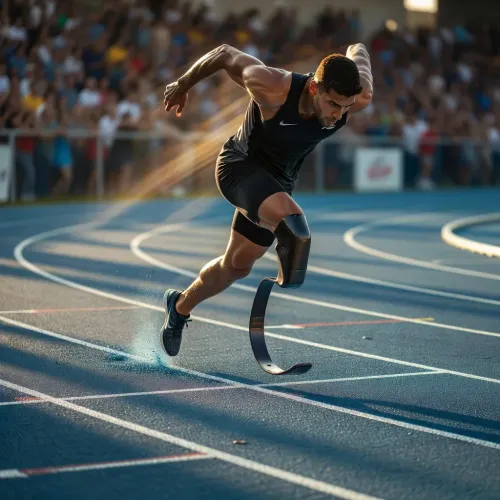
Ajay Kumar added to the celebration with a Bronze in the Men's 400m T64, a discipline contested by athletes with lower-limb impairments who compete with prosthetic blades. Two performances, one unforgettable session on the track.
A Rising Curve India Has Been Building Toward
India's medal tallies at successive Asian Para Games editions have climbed steadily since the mid-2010s — a trajectory shaped by expanded training infrastructure, equipment grants, and greater international exposure for para athletes. The Khelo India programme, launched in 2017, embedded para disciplines into grassroots sports development for the first time at scale, widening the pipeline from which champions like Sandeep and Ajay Kumar now emerge.
CM Patel's post pointed directly to Prime Minister Narendra Modi's leadership as the driving force behind India's evolving sporting ecosystem — a framing consistent with the broader BJP narrative of centralised sports investment yielding elite results. Whatever the political colour of the credit, the medals on the board are real.
What a Century of Medals Actually Means
One hundred medals at a single multi-sport Games is not just arithmetic — it signals a depth of talent across multiple events and classifications. Para athletics, in particular, demands not only physical conditioning but access to specialised coaching, prosthetics, and competition exposure that were scarce in India a decade ago.
For crores of young Indians with disabilities watching these performances, a debutant winning Gold with a World Record on the biggest stage in Asian para sport is the kind of signal that reshapes what feels possible. That is the compounding return on sports infrastructure investment that no single scheme announcement can quite capture.
India now turns its attention to how many more medals the contingent can add — and whether the momentum translates into deeper state-level investment, the next visible test of whether the rhetoric of a new sporting India is being matched on the ground.
Point of View
Not merely a feel-good milestone. The achievement reflects a decade of policy scaffolding — from Khelo India's grassroots reach to dedicated para training centres — finally producing elite depth rather than isolated individual brilliance. CM Patel's post follows the established BJP playbook of tying sporting victories to PM Modi's leadership, a politically effective frame that also happens to acknowledge real infrastructure investment. The more consequential question is whether state governments, including Gujarat, now accelerate matching central schemes with local delivery — because the next hundred medals will be won in districts, not just on national tracks.
NationPress
23 Oct 2026
Frequently Asked Questions
Who won India's 100th medal at the Asian Para Games 2026?
Debutant Sandeep won India's 100th medal at the Asian Para Games 2026, claiming Gold while simultaneously setting a new World Record.
What event did Ajay Kumar win a Bronze in at the Asian Para Games 2026?
Ajay Kumar won a Bronze medal in the Men's 400m T64 at the Asian Para Games 2026. The T64 classification is for athletes with lower-limb impairments who compete using prosthetic running blades.
What is India's medal tally at the Asian Para Games 2026?
India reached at least 100 medals at the Asian Para Games 2026, with the 100th coming from debutant Sandeep's World-Record Gold performance.
What is the Khelo India programme and how does it support para athletes?
Khelo India is a central government scheme launched in 2017 to develop grassroots sports infrastructure across India. It includes support for para disciplines through training centres, equipment grants, and international competition exposure.
Why did Gujarat CM Bhupendra Patel congratulate India's para athletes?
CM Patel posted congratulations to mark India's historic 100th medal at the Asian Para Games 2026, celebrating Sandeep's World-Record Gold and Ajay Kumar's Bronze as a proud national achievement.