CM Yogi Redefines Success for UP's Public Servants
Synopsis
Chief Minister Yogi Adityanath of Uttar Pradesh has declared that a public servant's real success lies not in clearing files but in ensuring timely resolution of problems for citizens — elderly, youth, women, and farmers — leaving them visibly satisfied.
Key Takeaways
CM Yogi Adityanath stated that a public servant's success goes beyond file disposal to measurable citizen satisfaction.
The statement specifically names the elderly, youth, women, and farmers as citizens whose problems must be resolved on time.
The emphasis on 'samayabaddh samaadhaan' (timely resolution) signals scrutiny of speed, not just the fact of resolution.
The message is consistent with Uttar Pradesh's ongoing push to reorient bureaucratic performance metrics toward outcomes.
The statement was shared by the Chief Minister's Office of Uttar Pradesh on October 23, 2026 .
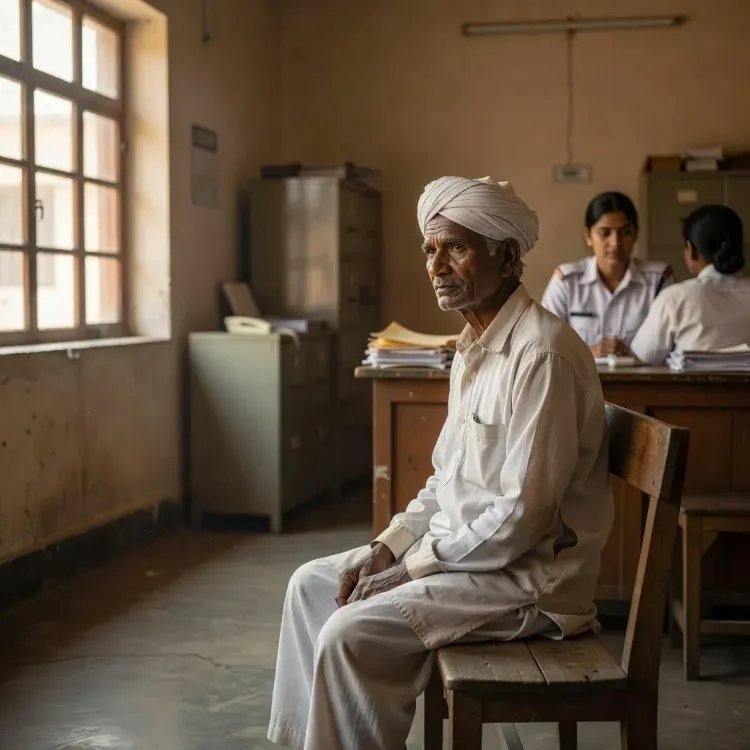
A citizen leaving a government office with relief on their face — that, Chief Minister Yogi Adityanath says, is the only true measure of a public servant's success. The Chief Minister's Office of Uttar Pradesh shared the CM's governance philosophy on Friday, October 23, 2026, in a statement that cuts straight to the heart of what responsive administration should look like.
In Hindi, the statement reads: 'एक लोक सेवक की सफलता केवल फाइलों के निस्तारण तक सीमित नहीं है।' — 'A public servant's success is not confined merely to the disposal of files.' The CM goes further: real success arrives only when an elderly person, a young citizen, a woman, a farmer, or any person in need walks away with their problem resolved on time — and satisfaction visible on their face. 'Only then does the purpose of public service become meaningful,' the statement concludes.
From File-Pushing to Citizen Satisfaction
Yogi Adityanath, who has led Uttar Pradesh since 2017, has returned to this theme repeatedly across official communications. The framing is deliberate: it signals a shift in how the administration wants its bureaucracy to be evaluated — not by the volume of paperwork cleared, but by whether the person who walked in with a problem walked out with a solution. The emphasis on specific groups — the elderly, women, youth, and annadata farmers — signals that the message is directed squarely at frontline district officials who interact with these citizens daily. This philosophy fits a broader pattern visible across several Indian states, where grievance redressal timelines and citizen satisfaction are increasingly being positioned as core governance metrics, moving beyond older, process-heavy benchmarks of administrative performance.What the Yardstick Means on the Ground
For district collectors, tehsil officers, and department heads across Uttar Pradesh's 75 districts, statements like this from the CM's office carry operational weight. They often precede or accompany directives on grievance portal timelines, public hearing schedules, or departmental reporting requirements. The specific mention of 'timely resolution' — samayabaddh samaadhaan — is a signal that speed of redressal, not just its occurrence, is under scrutiny. For ordinary citizens — especially rural farmers and elderly residents who frequently cite distance, delay, and indifference as barriers at government offices — the articulation of this standard at the highest level of the state government sets a publicly stated expectation that can itself become a tool of accountability. The real test, as always, is whether the sentiment travels down the administrative chain — and whether it shows up in the data on unresolved grievances, pending applications, and public satisfaction scores across UP's sprawling state machinery.Point of View
Particularly ahead of political cycles where public perception of government delivery becomes a key variable. By naming specific vulnerable groups — farmers, the elderly, women — the CM is also signalling which demographics the administration considers its core constituency for service delivery optics. Whether the philosophy translates into measurable reform depends on whether follow-up directives with hard timelines reach district offices.
NationPress
23 Oct 2026
Frequently Asked Questions
What did CM Yogi Adityanath say about public servants?
CM Yogi Adityanath said that a public servant's success is not limited to clearing files — it is truly achieved only when the problems of citizens, including the elderly, youth, women, and farmers, are resolved on time and those citizens leave satisfied.
What is the governance philosophy of the Uttar Pradesh government?
The Uttar Pradesh government under Yogi Adityanath has consistently emphasised shifting bureaucratic focus from process-based metrics like file disposal to outcome-based metrics like timely grievance resolution and citizen satisfaction.
What does 'samayabaddh samaadhaan' mean in the UP government context?
Samayabaddh samaadhaan means 'timely resolution' — it refers to the Uttar Pradesh administration's stated expectation that citizen problems must be addressed within defined time limits, not left pending indefinitely.
How long has Yogi Adityanath been Chief Minister of Uttar Pradesh?
Yogi Adityanath has been Chief Minister of Uttar Pradesh since 2017 , making him one of the longest-serving current chief ministers in India.
Which citizens does CM Yogi's public service statement focus on?
The statement specifically highlights the elderly, youth, women, farmers (annadata) , and any other person in need as the citizens whose timely problem resolution defines true public service success.