CM Mohan Yadav Launches Fisheries Conclave, Vows to Double MP's Fish Output
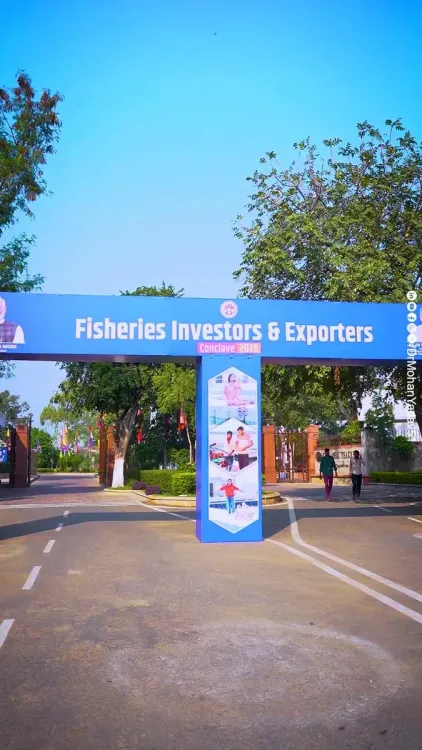
Synopsis
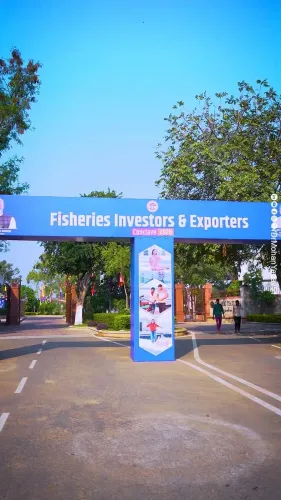
Chief Minister Dr. Mohan Yadav inaugurated the national Fisheries Investors & Exporters Conclave-2026 in Bhopal, announcing plans to double Madhya Pradesh's fish production, launch an export portal, release a new investment guide, and kick off 500 cage-culture units at Barna Reservoir in Raisen district.
Key Takeaways
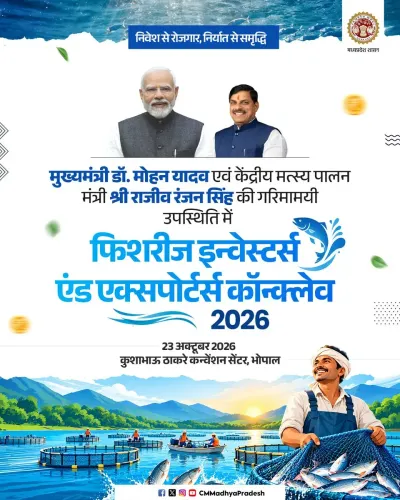
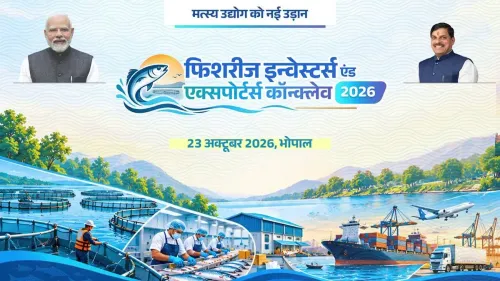
Fisheries Investors & Exporters Conclave-2026 inaugurated in Bhopal on October 23, 2026 by CM Dr.
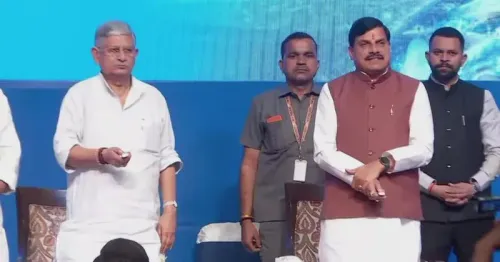
Mohan Yadav in the presence of Union Ministers Rajiv Ranjan Singh and Prof.
The state government aims to double fish production in Madhya Pradesh to raise incomes for farmers, traders, and transporters across the value chain.
Madhya Pradesh Fisheries Investment and Export Guide-2026 and the SOP for a new fisheries export portal were released at the conclave.
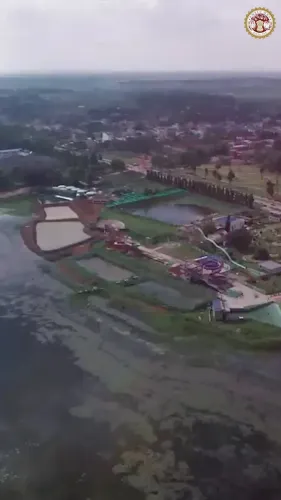
500 cage-culture units at Barna Reservoir, Raisen district , established through private investment, were formally launched.
Administrative approval granted for integrated development of state reservoirs and Amrit Sarovar water bodies.
Fisheries sector to be linked with food processing industry and MSMEs , with benefits including land allocation and financial incentives.
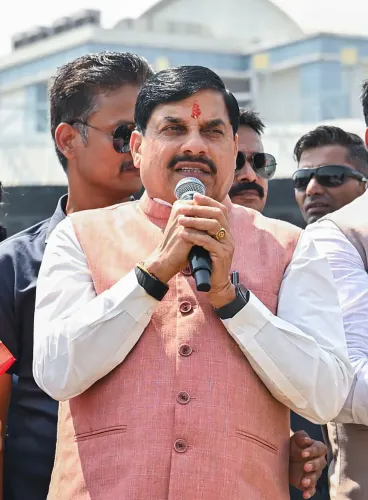
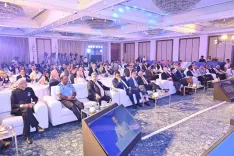
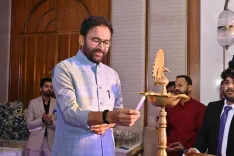
A new chapter opened for Madhya Pradesh's inland waters on Friday, October 23, 2026, as Madhya Pradesh Chief Minister Dr. Mohan Yadav inaugurated the national 'Fisheries Investors & Exporters Conclave-2026' in Bhopal — pledging to bring a 'New Blue Revolution' to a landlocked state that is quietly reimagining its rivers and reservoirs as engines of rural prosperity.
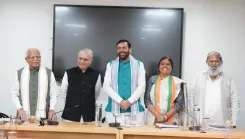
The conclave, held in the presence of Union Minister for Fisheries Rajiv Ranjan Singh and Minister of State Prof. S.P. Singh Baghel, drew fish entrepreneurs, investors, exporters, and producers from across India and abroad. Dr. Yadav's message was direct: Madhya Pradesh intends to matsya utpadan ko duguna karna — double fish production — so that farmers, traders, transporters, and fish-farm operators all see their incomes rise.
What was launched at the conclave
Three concrete deliverables emerged from the event. The state government released the Madhya Pradesh Fisheries Investment and Export Guide-2026, a policy document intended to channel domestic and foreign investment into the sector. Alongside it, the Standard Operating Procedure (SOP) for a new fisheries export portal was unveiled — a digital gateway designed to streamline the journey from farm to foreign market.
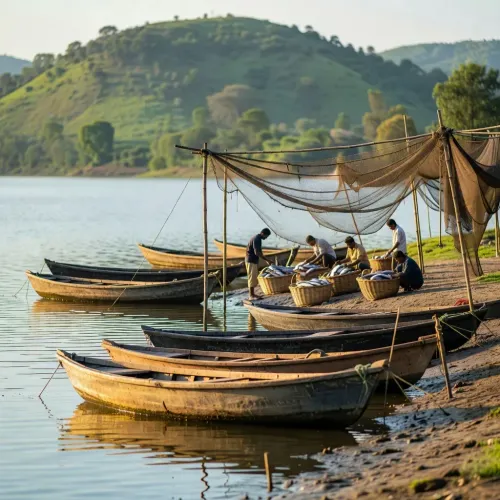
Most visibly, CM Yadav inaugurated 500 cage-culture units established through private investment at the Barna Reservoir in Raisen district — one of Madhya Pradesh's significant inland water bodies. Cage culture, which suspends net enclosures within existing reservoirs to raise fish without new land, is a technique the Centre has actively promoted under the Pradhan Mantri Matsya Sampada Yojana (PMMSY) since 2020. The state also granted administrative approval to an integrated development plan for its reservoirs and Amrit Sarovar water bodies, the Central scheme launched in 2022 to revive ponds and tanks across India.
Linking fish farms to food factories and MSMEs
The policy architecture Dr. Yadav outlined goes beyond catching more fish. The state plans to integrate the fisheries industry with its food processing sector and MSME ecosystem, offering incentives that include land allocation alongside financial inducements — a value-chain play that mirrors the broader national blue economy strategy embedded in PMMSY and its predecessor, the Blue Revolution scheme initiated in 2015–16.
By anchoring fisheries to processing units and small enterprises, the government is betting that every kilogram of additional catch multiplies its economic effect — through packaging, cold storage, logistics, and export. That is the structural logic behind the new export portal and the investor conclave format itself: treating fish not as a subsistence crop but as an industrial commodity capable of competing on global shelves.
Why this matters for MP's fishing communities
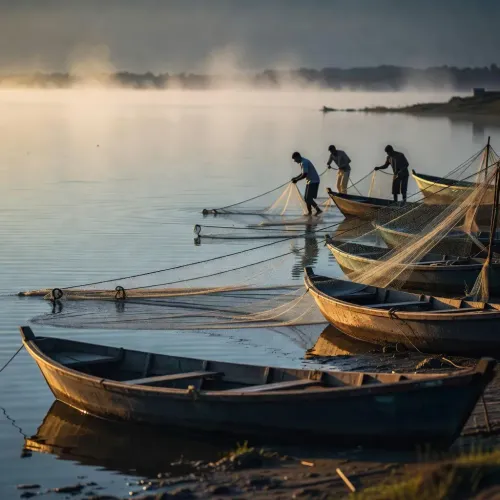
Madhya Pradesh is landlocked, yet it possesses an extensive network of reservoirs, rivers, and seasonal water bodies. The state's fishing communities — farmers, vendors, and transporters — have historically operated at the subsistence end of the value chain. The conclave model, bringing exporters and global investors into the same room as local producers, signals an intent to collapse that distance.
The real test will come in the months ahead: whether the 2026 investment guidelines translate into binding commitments, and whether the export portal's SOP reduces the compliance friction that has long kept small-scale producers locked out of foreign markets. Five hundred cage units at Barna Reservoir are a start — a visible, countable proof-of-concept in Raisen district that private capital is willing to enter inland aquaculture when the state makes room.
A Blue Revolution in a state with no coastline sounds like a paradox. Madhya Pradesh is betting its reservoirs prove otherwise.
Point of View
The BJP government is also building a rural-income narrative ahead of potential electoral cycles, framing fisheries as a jobs multiplier rather than a welfare programme. The critical variable is execution: investment conclaves generate headlines, but MP's landlocked geography means cold-chain infrastructure and export logistics remain the hard constraints that no policy document alone can resolve.
NationPress
23 Oct 2026
Frequently Asked Questions
What is the Fisheries Investors and Exporters Conclave-2026?
It is a national-level conclave inaugurated in Bhopal on October 23, 2026, by Madhya Pradesh Chief Minister Dr. Mohan Yadav to attract domestic and foreign investment into the state's fisheries sector, bring together exporters and producers, and launch new policy tools including an investment guide and export portal.
What is CM Mohan Yadav's target for fish production in Madhya Pradesh?
CM Dr. Mohan Yadav has announced a goal to double fish production in Madhya Pradesh, aiming to increase incomes for fish farmers, sellers, transporters, and aquaculture operators across the state.
What is cage culture, and where is it being launched in MP?
Cage culture involves suspending net enclosures within existing water bodies to raise fish without requiring new land. In Madhya Pradesh, 500 cage-culture units funded through private investment have been launched at the Barna Reservoir in Raisen district.
What is the Madhya Pradesh Fisheries Investment and Export Guide-2026?
It is a newly released state policy document designed to guide domestic and international investors, with provisions for land allocation, financial incentives, and integration with food processing and MSME sectors. Specific details of its provisions are yet to be fully disclosed.
How does Pradhan Mantri Matsya Sampada Yojana relate to MP's fisheries push?
Pradhan Mantri Matsya Sampada Yojana, launched by the Central government in 2020, provides the national framework for boosting fish production, infrastructure, and exports. Madhya Pradesh's conclave, cage culture projects, and export portal build on this central scheme at the state level.