Rijiju quotes Modi on Upanishads at Chinmaya Amrit Mahotsav
Synopsis
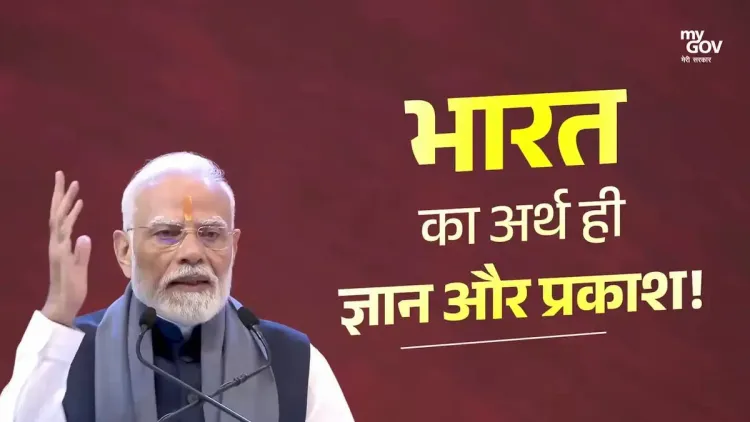
Union Minister Kiren Rijiju quoted PM Narendra Modi at the Chinmaya Amrit Mahotsav, sharing the Upanishadic verse 'Vayam Amritasya Putraah' — 'We are children of immortality' — and clarifying that the immortality meant is of consciousness, not the body.
Key Takeaways
Union Minister Kiren Rijiju quoted PM Narendra Modi at the Chinmaya Amrit Mahotsav on October 23, 2026 .
The Upanishadic verse cited is 'Vayam Amritasya Putraah' — 'We are the children of immortality.' Modi's formulation, as shared by Rijiju, distinguishes between physical immortality (not claimed) and the immortality of chetana (consciousness).
The verse originates in the Shvetashvatara Upanishad and is central to Advaita Vedantic thought.
Chinmaya Mission , founded in the 1950s by Swami Chinmayananda, is among India's foremost organisations for popularising Upanishadic philosophy.
BJP leaders regularly connect ancient Indian philosophical heritage to contemporary national identity at cultural forums.
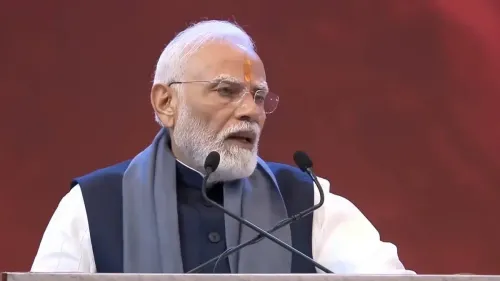
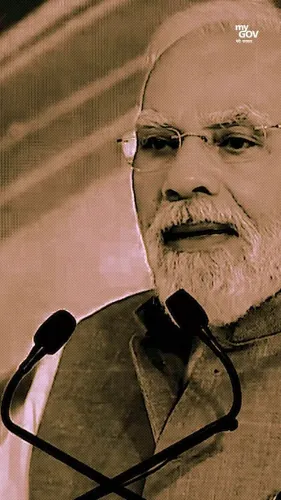
At the Chinmaya Amrit Mahotsav, Union Parliamentary Affairs Minister Kiren Rijiju shared a striking philosophical invocation on Friday, October 23, 2026 — quoting Prime Minister Narendra Modi on one of the Upanishads' most resonant declarations about the immortal nature of human consciousness.
The line at the heart of the post is ancient and arresting: 'Vayam Amritasya Putraah' — 'We are the children of immortality.' Rijiju, sharing Modi's words, was careful to parse what this actually means. 'This does not mean we are immortal in body,' the quote clarifies. 'It means our consciousness is immortal.' The distinction matters — it reframes a spiritual idea not as fantasy, but as lived cultural belief.
What the Upanishadic verse actually says
The phrase 'Vayam Amritasya Putraah' traces to the Shvetashvatara Upanishad, one of the principal Upanishads dealing with the nature of the self, the universe, and the divine. In its original context, the verse is addressed to all human beings, asserting that each person carries within them a spark of the eternal — a consciousness that survives the body's decay. It is a foundational concept in Advaita Vedanta and broader Indian philosophical traditions.
Modi's reading, as quoted by Rijiju, stays true to that classical interpretation: the immortality being claimed is not physical, it is of chetana — awareness, the witnessing self. This is a philosophically precise formulation, not a loose cultural flourish.
Chinmaya Mission and the Mahotsav's larger canvas
Chinmaya Mission, founded by Swami Chinmayananda in the 1950s, has been one of modern India's most influential organisations for making Upanishadic and Vedantic philosophy accessible to ordinary practitioners. The Chinmaya Amrit Mahotsav draws directly from this lineage, gathering spiritual seekers, scholars, and cultural practitioners around exactly these themes of immortality and civilizational continuity.
BJP leaders invoking Upanishadic concepts at such forums is part of a recognisable pattern — connecting ancient philosophical heritage to contemporary national identity. What is notable here is the precise, textual quality of the engagement: this is not a vague 'our culture is great' gesture, but a careful theological distinction between bodily and conscious immortality.
Why the phrasing lands with weight
The political and cultural optics are layered. Rijiju — a minister from Arunachal Pradesh, a state that sits at the meeting point of multiple civilizational traditions — amplifying a Prime Ministerial statement on Vedantic philosophy at a Chinmaya event signals the ruling party's consistent effort to anchor modern governance in classical Indian thought. The message to spiritual communities is deliberate: the state sees itself as a custodian, not just an administrator, of this heritage.
For followers of Chinmaya Mission and Vedantic traditions across India and its diaspora, hearing the Prime Minister's voice — even through a minister's post — articulate Vayam Amritasya Putraah with this level of philosophical care is a moment that will travel far beyond a single social media scroll.
As the Chinmaya Amrit Mahotsav continues, the real question is whether events like this become launchpads for wider cultural programming — or remain powerful but contained moments of philosophical affirmation. Either way, the Upanishads just had a very public prime-time moment.
Point of View
Not a rhetorical one, and it speaks directly to a spiritually engaged constituency. Rijiju amplifying a PM Modi quote — rather than speaking in his own voice — also reinforces Modi's centrality as the party's philosophical anchor, not just its political one. As cultural nationalism remains a live current in Indian public life, events like the Chinmaya Amrit Mahotsav serve as important soft-power arenas where ideology and tradition are woven together before large, influential audiences.
NationPress
23 Oct 2026
Frequently Asked Questions
What does 'Vayam Amritasya Putraah' mean?
'Vayam Amritasya Putraah' is a Sanskrit phrase from the Upanishads meaning 'We are the children of immortality.' PM Modi, as quoted by Kiren Rijiju, clarified that this refers to the immortality of human consciousness, not the physical body.
What is the Chinmaya Amrit Mahotsav?
The Chinmaya Amrit Mahotsav is a cultural and spiritual event linked to Chinmaya Mission, an organisation founded in the 1950s by Swami Chinmayananda to spread Upanishadic and Vedantic philosophy in India and globally.
Which Upanishad contains the verse 'Vayam Amritasya Putraah'?
The phrase 'Vayam Amritasya Putraah' is found in the Shvetashvatara Upanishad, one of the principal Upanishads dealing with the nature of the self and the divine.
Why did Kiren Rijiju post about the Upanishads?
Kiren Rijiju, Union Minister of Parliamentary Affairs, shared a quote from PM Narendra Modi at the Chinmaya Amrit Mahotsav on October 23, 2026, highlighting the Upanishadic concept of immortal consciousness as both spiritual philosophy and cultural belief.
What is Chinmaya Mission and what does it do?
Chinmaya Mission is a spiritual and cultural organisation founded by Swami Chinmayananda in the 1950s. It is dedicated to making Upanishadic and Vedantic teachings accessible to ordinary practitioners through events, centres, and educational programmes across India and the world.