CM Mohan Yadav Launches National Fisheries Conclave in Bhopal
Synopsis
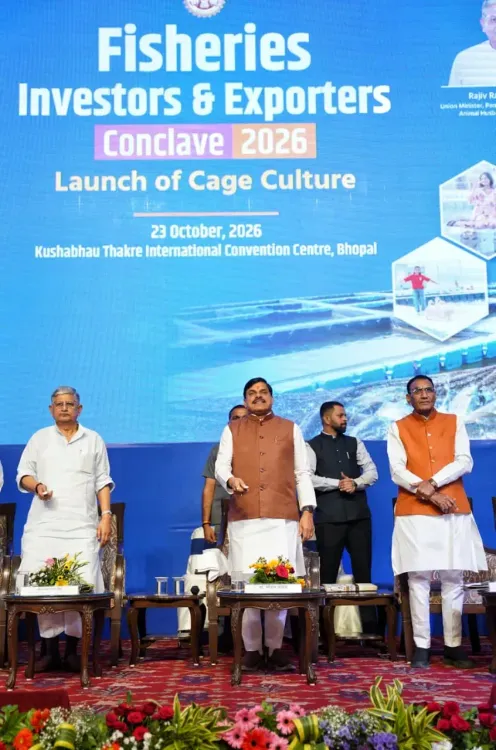
Chief Minister Dr. Mohan Yadav inaugurated the National Fisheries Investors and Exporters Conclave 2026 in Bhopal alongside Union Ministers Rajiv Ranjan Singh and S.P. Singh Baghel. The event saw administrative approval for Amrit Sarovar reservoir development, release of a state fisheries investment guide, new export SOPs, Kisan Credit Card distribution, and virtual launch of cage culture units.
Key Takeaways
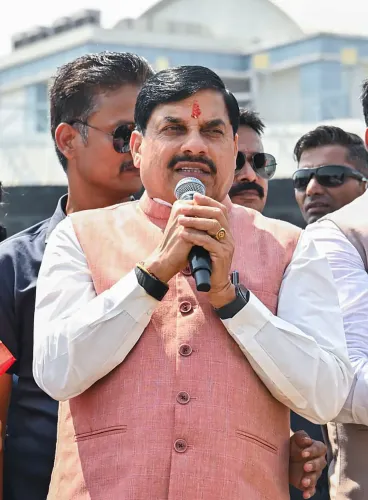
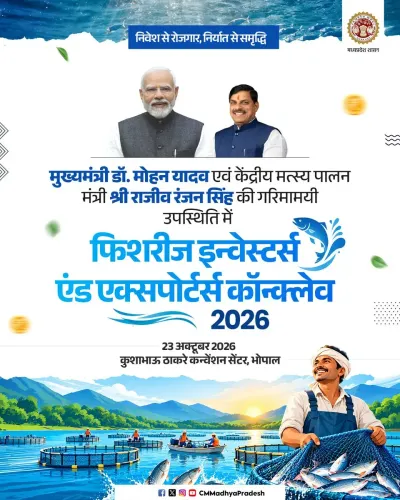
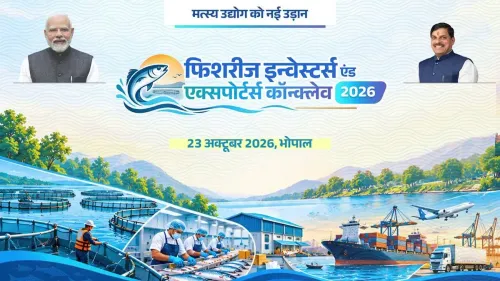
Mohan Yadav inaugurated the National Fisheries Investors and Exporters Conclave 2026 at Kushabhau Thakre International Convention Centre, Bhopal on October 23, 2026 .
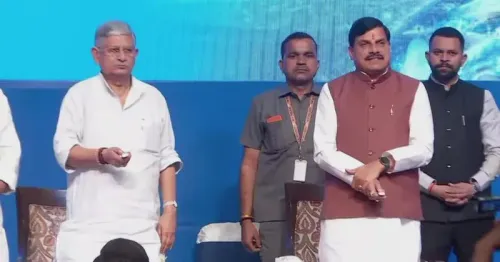
Union Minister Rajiv Ranjan Singh handed CM Yadav administrative approval for an integrated development project for reservoirs and Amrit Sarovars in Madhya Pradesh.
The 'MP Matsya Nivesh evam Niryaat Margdarshika 2026' (investment and export guide) and inland-state export SOPs were officially released at the event.
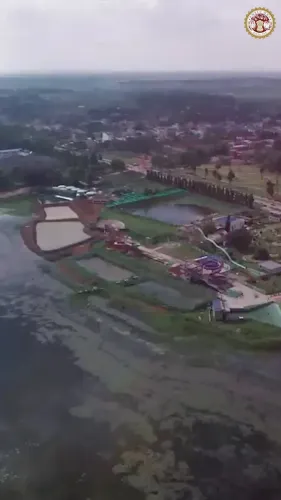
Integrated cage culture units were virtually inaugurated, enabling fish farming within state reservoirs.
Kisan Credit Cards were distributed to fisheries beneficiaries; certificates awarded to cooperatives, startups, and PM Matsya Kisan Samridhi Sah-Yojana beneficiaries.
The conclave reflects Madhya Pradesh's push to leverage its vast inland water bodies under the national Pradhan Mantri Matsya Sampada Yojana launched in 2020 .
A landlocked state is charting a bold new course on the water. Chief Minister Dr. Mohan Yadav inaugurated the National Fisheries Investors and Exporters Conclave 2026 at Kushabhau Thakre International Convention Centre, Bhopal, on Friday, October 23, 2026 — signalling Madhya Pradesh's ambitions to transform its vast reservoirs and water bodies into an engine of aquaculture-led growth.
The Chief Minister's Office framed the moment as 'matsya sampada se samridhi aur vikas ki nayi raah' — 'a new path of prosperity and development through fisheries wealth.' Union Minister for Fisheries, Animal Husbandry and Dairying Rajiv Ranjan Singh and Union Minister of State Prof. S.P. Singh Baghel were present at the launch, underlining the strength of central-state coordination behind this push.
Reservoir Project Gets Administrative Green Light
The conclave's single most consequential moment came when Union Minister Rajiv Ranjan Singh formally handed Chief Minister Yadav the administrative approval for an integrated development project for reservoirs and Amrit Sarovars across the state. The Amrit Sarovar Mission, launched nationally in 2022, was designed to rejuvenate ponds and water bodies — and Madhya Pradesh is now positioning that infrastructure explicitly as aquaculture real estate. Getting the administrative sanction in hand means project execution can begin in earnest.
Investment Guide, Export SOPs, and Cage Culture Units Unveiled
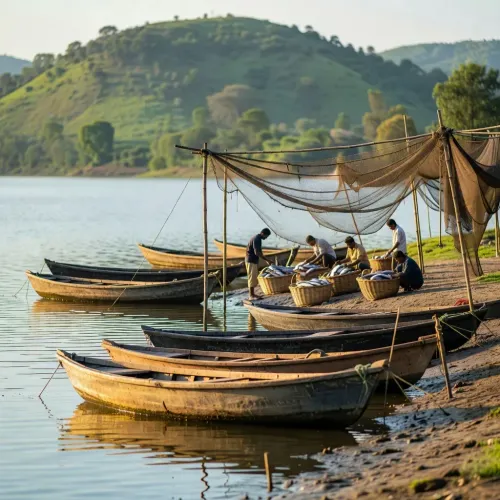
Three outputs defined the policy substance of the conclave. First, the 'Madhya Pradesh Matsya Nivesh evam Niryaat Margdarshika 2026' — a state investment and export guide for the fisheries sector — was formally released, giving potential investors a single-window roadmap. Second, Standard Operating Procedures (SOPs) specifically designed to enhance the export capacity of inland states were unveiled, addressing one of the structural disadvantages landlocked states face in competing with coastal peers. Third, integrated cage culture units were virtually inaugurated, marking the deployment of a production model that allows fish farming directly within reservoirs.
Credit Cards, Certificates, and a Growing Beneficiary Base
The conclave was not only a policy showcase — it put resources directly in the hands of practitioners. Kisan Credit Cards were distributed to fisheries beneficiaries, extending institutional credit to fish farmers who have historically relied on informal financing. Certificates were also awarded to fisheries cooperatives, startups, and beneficiaries selected under the Pradhan Mantri Matsya Kisan Samridhi Sah-Yojana — a sub-scheme under the larger Pradhan Mantri Matsya Sampada Yojana (PMMSY), the central government's flagship 2020 programme to modernise India's fisheries sector and scale up production and exports.
Madhya Pradesh's move is part of a broader national 'blue economy' pivot that goes well beyond the coasts. With some of India's largest reservoirs — including the Indira Sagar and Tawa — lying within its borders, the state has the raw asset base to become a significant inland aquaculture player. The question now is whether the newly approved reservoir projects and freshly minted SOPs can convert that potential into measurable export numbers.
Point of View
Capitalising on its reservoir wealth under PMMSY's framework. Handing the administrative sanction for Amrit Sarovar fisheries integration at a public investor event is a deliberate political signal — it ties central government infrastructure investment directly to the state's economic growth narrative. For CM Mohan Yadav, projecting a 'landlocked state going blue' identity ahead of continued development benchmarks strengthens his government's credentials on rural livelihoods and agri-allied sectors. The proof, however, will lie in the export data from inland states that the new SOPs are designed to move.
NationPress
23 Oct 2026
Frequently Asked Questions
What is the National Fisheries Investors and Exporters Conclave 2026?
It is a national-level conclave inaugurated by Madhya Pradesh Chief Minister Dr. Mohan Yadav in Bhopal on October 23, 2026, to attract investment in the fisheries sector and boost exports, particularly from inland states.
What is the MP Matsya Nivesh evam Niryaat Margdarshika 2026?
It is a state government guide released at the conclave providing a roadmap for investors and exporters interested in Madhya Pradesh's fisheries sector.
What is the Pradhan Mantri Matsya Sampada Yojana?
Launched by the central government in 2020, PMMSY is a flagship scheme to modernise India's fisheries sector, increase production, and support exports through credit, infrastructure, and technology support.
What is the Amrit Sarovar Mission and how does it relate to fisheries?
The Amrit Sarovar Mission, launched in 2022, aims to rejuvenate water bodies across India. Madhya Pradesh is now integrating these reservoirs and sarovars into its fisheries development plans, with administrative approval granted at the conclave.
What were the key announcements at the Bhopal fisheries conclave?
Key announcements included administrative approval for integrated reservoir and Amrit Sarovar development, release of the state fisheries investment guide and export SOPs, virtual inauguration of cage culture units, and distribution of Kisan Credit Cards to fish farmers.