Piyush Goyal: 650+ stolen idols repatriated in 12 years
Synopsis
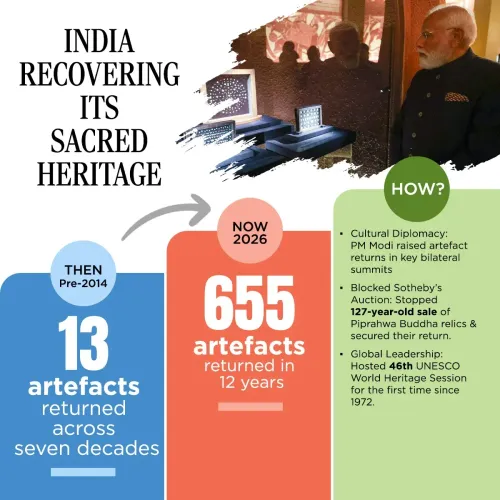
Union Minister Piyush Goyal announced that India has recovered more than 650 stolen ancient idols from foreign countries over the past 12 years, spotlighting the government's sustained diplomatic and legal push to reclaim smuggled cultural heritage under the 1970 UNESCO Convention framework.
Key Takeaways
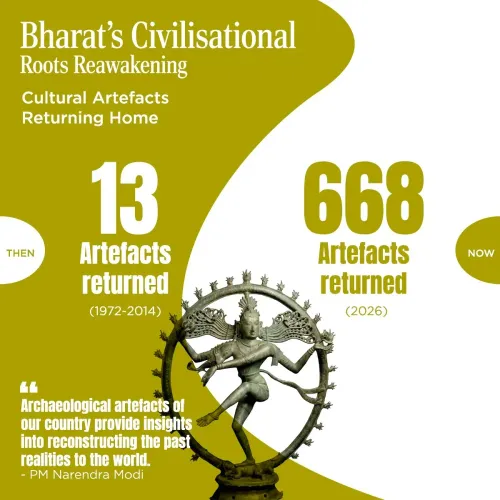
Union Minister Piyush Goyal stated that over 650 stolen ancient idols have been repatriated to India in the last 12 years .
The Archaeological Survey of India (ASI) and the Ministry of External Affairs collaborate on identifying, documenting, and recovering smuggled antiquities.
India's membership in the 1970 UNESCO Convention provides the international legal basis for repatriation claims.
Countries including the United States, United Kingdom, Australia, Germany , and Canada have been involved in past repatriation efforts.
Bilateral agreements have created faster, less litigious pathways for future returns, with thousands of documented pieces still abroad.
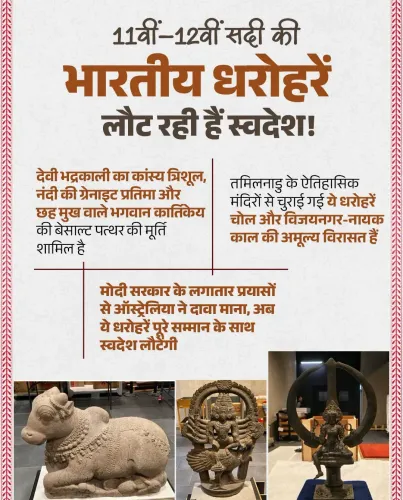
More than 650 stolen ancient idols have been brought back to India from foreign countries over the past 12 years — a milestone that Union Commerce and Industry Minister Piyush Goyal highlighted on Friday, October 23, 2026, underscoring the scale of India's sustained cultural repatriation push.
Goyal posted in Hindi: 'बीते 12 वर्षों में हम 650 से ज्यादा चोरी की गई प्राचीन मूर्तियां विदेशों से वापस लेकर आए हैं।' — 'In the last 12 years, we have brought back more than 650 stolen ancient idols from foreign countries.' The claim frames a long-running effort as a quantifiable national achievement.
How India gets its antiquities home
Recoveries of this kind rarely happen overnight. Each repatriation typically involves a layered process: the Archaeological Survey of India (ASI), operating under the Ministry of Culture, first identifies and documents the missing artefact; the Ministry of External Affairs then engages the host country through diplomatic channels, and in contested cases, legal proceedings follow. India's standing under the 1970 UNESCO Convention on the Means of Prohibiting and Preventing the Illicit Import, Export and Transfer of Ownership of Cultural Property gives it a recognised international framework to press these claims.
Foreign governments, auction houses, and private collectors have been the principal counterparties in these negotiations. Several high-profile returns over the past decade have involved the United States, the United Kingdom, Australia, Germany, and Canada — countries where Indian antiquities surfaced in museum collections or private hands after being smuggled out, often decades earlier.
A global pattern, an Indian push
India is part of a broader global wave of source-country restitution claims — but its scale and pace have accelerated. Heritage conservation groups and cultural historians have long argued that the post-colonial renegotiation of cultural ownership is still unfinished. Each returning idol — whether a Chola bronze, a sandstone yakshi, or a temple panel — carries that argument into physical reality.
The ASI maintains a register of stolen antiquities, and bilateral agreements signed in recent years have created faster, less litigious pathways for returns. That institutional architecture, built quietly across multiple governments and foreign ministries, is the machinery behind the headline number Goyal cited.
Six hundred and fifty artefacts back on home soil is not an end-point — it is a negotiating baseline. Thousands more documented pieces remain abroad, and every diplomatic visit now carries a cultural-property annex alongside the trade and investment agenda.
Point of View
It positions the ruling dispensation as both culturally assertive and administratively effective. The figure of 650-plus idols, if validated by official data, would represent one of the more substantial repatriation records among G20 nations. The broader arc here is significant: India is gradually converting its soft-power 'civilisational heritage' rhetoric into hard legal and diplomatic outcomes, signalling to the world that source-country claims will be pursued persistently rather than symbolically.
NationPress
23 Oct 2026
Frequently Asked Questions
How many stolen idols has India recovered from abroad?
According to a post by Union Minister Piyush Goyal on October 23, 2026, India has brought back more than 650 stolen ancient idols from foreign countries over the past 12 years.
Which government body handles the return of stolen Indian antiquities?
The Archaeological Survey of India (ASI) , under the Ministry of Culture, identifies and documents missing antiquities. The Ministry of External Affairs then pursues diplomatic and legal recovery through bilateral and multilateral channels.
What international law covers the return of stolen cultural property to India?
India is a signatory to the 1970 UNESCO Convention on the Means of Prohibiting and Preventing the Illicit Import, Export and Transfer of Ownership of Cultural Property , which provides the primary international legal framework for repatriation claims.
Which countries have returned stolen artefacts to India?
Several countries including the United States, United Kingdom, Australia, Germany , and Canada have been involved in returning antiquities to India, often after diplomatic negotiations or legal proceedings.
Why is India's cultural repatriation effort significant?
India's push to recover stolen antiquities reflects both a legal right under international conventions and a broader assertion of civilisational heritage. Thousands of documented Indian artefacts are believed to remain abroad, making sustained diplomatic pressure essential.