PM Modi: India recovered 650+ stolen ancient statues in 12 years
Synopsis
India has quietly repatriated over 650 stolen ancient statues in 12 years — a fact PM Modi chose to highlight not in a diplomatic briefing, but at a spiritual-cultural summit. Combined with the restoration of Kashi, Ayodhya, and Kedarnath, the speech signals a deliberate effort to cement cultural heritage as a defining pillar of India's national identity ahead of the 2047 centenary.
Key Takeaways
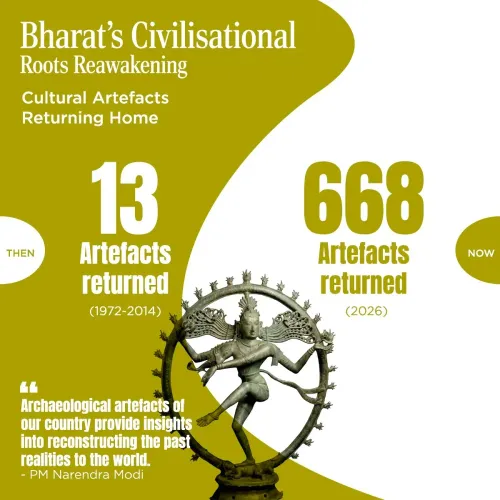
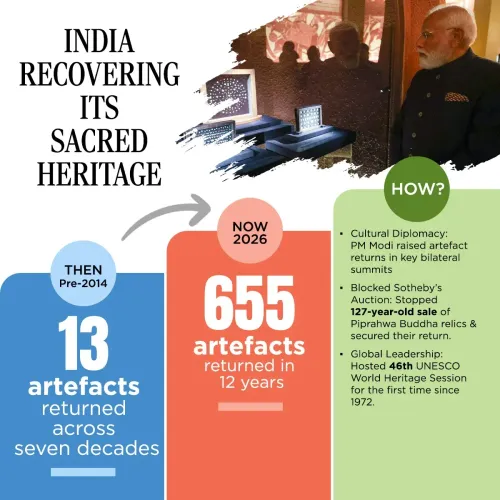
PM Modi announced that India has recovered more than 650 stolen ancient statues over the past 12 years .
The announcement was made at the Chinmaya Amrit Mahotsav Global Sammelan in New Delhi on 23 October 2026 .
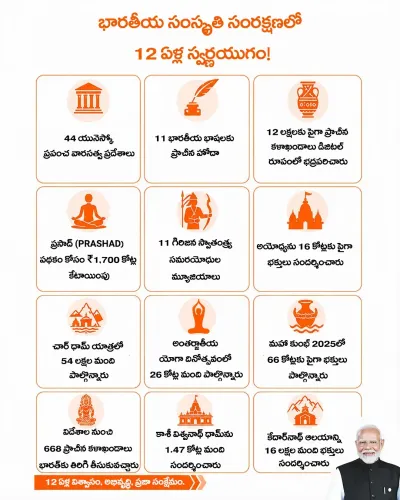
Modi cited the transformation of Kashi Vishwanath Dham , Ayodhya Ram temple , Kedarnath , and Badrinath as evidence of cultural revival.
A statue of Adi Shankaracharya has been installed at Kedarnath , where the philosopher is believed to have attained liberation.
Modi linked heritage restoration to India's 2047 vision of a developed nation, coinciding with the centenary of the Chinmaya Mission .
Prime Minister Narendra Modi on Friday, 23 October 2026, declared that India has recovered more than 650 stolen ancient statues over the past 12 years, describing the repatriation drive as a cornerstone of the government's cultural heritage mission. He was speaking at the Chinmaya Amrit Mahotsav Global Sammelan in New Delhi.
Key Announcement on Statue Repatriation
Addressing the gathering, Modi recalled a period when priceless artefacts were removed from India with little resistance. 'You all know that there was a time when many statues were stolen and taken to foreign countries. They were sold, and no one stopped them. In the last 12 years, we have brought back more than 650 stolen ancient statues,' he said. The figure marks a significant acceleration in repatriation efforts that have involved diplomatic negotiations with multiple countries and coordination with international law enforcement agencies.
Cultural Revival Across India
The Prime Minister cited the transformation of several major pilgrimage and heritage sites as evidence of a broader cultural renaissance. He pointed to the Kashi Vishwanath Dham, the Ram temple in Ayodhya, and the sacred shrines of Kedarnath and Badrinath as examples of sites regaining their former grandeur. Referring specifically to Kedarnath, Modi noted the installation of a statue of Adi Shankaracharya at the site where the eighth-century philosopher-saint is believed to have attained liberation. 'These sites are now returning to their former grandeur,' he said.
Heritage Conservation as a National Mission
Modi framed the repatriation and restoration work within the philosophical tradition of Swami Chinmayananda, the founder of the Chinmaya Mission, describing heritage conservation as one of Chinmayananda's central missions. He also invoked the Vivekananda Rock Memorial as an enduring symbol of that legacy. The Prime Minister connected India's growing cultural confidence to its push against a colonial mindset, arguing that pride in heritage was inseparable from the country's broader developmental ambitions.
India's Global Cultural Footprint
Beyond domestic revival, Modi highlighted India's expanding international cultural presence, pointing to International Yoga Day as a vehicle connecting millions worldwide with India's ancient traditions. 'Just as Swamiji took our religion and philosophy to people across the world, today International Yoga Day is connecting people from all over the world with India,' he said. He also called for collective national effort to foster self-reliance and counter divisive forces ahead of 2047, when India marks 100 years of Independence — a milestone that will also coincide with the centenary of the Chinmaya Mission.
Significance of the 2047 Milestone
Modi urged citizens to align themselves with the vision of a Viksit Bharat (Developed India) by 2047. 'We must connect every citizen with the resolve for a developed India in 2047. We must become more active towards these objectives,' he said. The convergence of India's centenary of Independence and the Chinmaya Mission's centenary, he argued, presents a unique opportunity for shared purpose. The government's cultural repatriation record is likely to feature prominently in diplomatic and soft-power messaging in the months ahead.
Point of View
But it has been offered without a country-by-country or year-by-year breakdown — which limits independent verification and invites scrutiny. Modi's framing of cultural repatriation alongside temple restoration and International Yoga Day is deliberate: it weaves diplomacy, religion, and soft power into a single civilisational narrative ahead of 2047. What the speech does not address is the systemic vulnerability that allowed decades of artefact theft in the first place — smuggling networks, weak export controls, and slow legal frameworks that are still being reformed. The real measure of this mission will be whether institutional safeguards are strengthened, not just whether the headline number keeps climbing.
NationPress
23 Oct 2026
Frequently Asked Questions
How many stolen ancient statues has India recovered in the last 12 years?
Prime Minister Modi stated that India has recovered more than 650 stolen ancient statues over the past 12 years. He made this claim while addressing the Chinmaya Amrit Mahotsav Global Sammelan in New Delhi on 23 October 2026.
Where did PM Modi make the announcement about recovered statues?
Modi made the announcement at the Chinmaya Amrit Mahotsav Global Sammelan held in New Delhi on Friday, 23 October 2026. The event celebrates the legacy of Swami Chinmayananda, founder of the Chinmaya Mission.
Which heritage sites did PM Modi highlight as part of India's cultural revival?
Modi cited the Kashi Vishwanath Dham, the Ram temple in Ayodhya, and the shrines of Kedarnath and Badrinath as examples of India's cultural revival. He also mentioned the installation of a statue of Adi Shankaracharya at Kedarnath.
What is the significance of 2047 in PM Modi's address?
The year 2047 marks 100 years of India's Independence and coincides with the centenary of the Chinmaya Mission. Modi called it an opportunity for collective national effort toward a developed India, urging citizens to align with that shared vision.
How does International Yoga Day connect to India's cultural heritage mission?
According to Modi, International Yoga Day serves as a global vehicle for connecting people worldwide with India's ancient traditions. He drew a parallel with Swami Chinmayananda's mission of taking Indian philosophy to international audiences.