CM Bhajan Lal hails Modi govt's push to restore cultural heritage
Synopsis
Rajasthan CM Bhajan Lal Sharma praised PM Narendra Modi for restoring India's cultural pride through the construction of Ram Mandir in Ayodhya, the Mahakal Lok corridor in Ujjain, and the rejuvenation of Kedarnath Dham — projects the BJP frames as pillars of civilisational renewal.
Key Takeaways
Rajasthan CM Bhajan Lal Sharma posted on 31 May 2026 crediting PM Narendra Modi with re-establishing India's cultural heritage and pride.
The Shri Ram Mandir in Ayodhya was inaugurated in January 2024 following the 2019 Supreme Court verdict enabling its construction.
The Mahakal Lok corridor in Ujjain was inaugurated in 2022 and became a model for combining heritage infrastructure with religious tourism.
The Kedarnath Dham redevelopment in Uttarakhand was launched after the 2013 flash floods and has seen multiple phases of reconstruction and access improvement.
The BJP government has consistently funded large-scale upgrades at Hindu pilgrimage centres since 2014 , boosting both religious tourism and political messaging.
Sharma, CM since December 2023 , has aligned Rajasthan's public communications closely with the central government's cultural revival narrative.
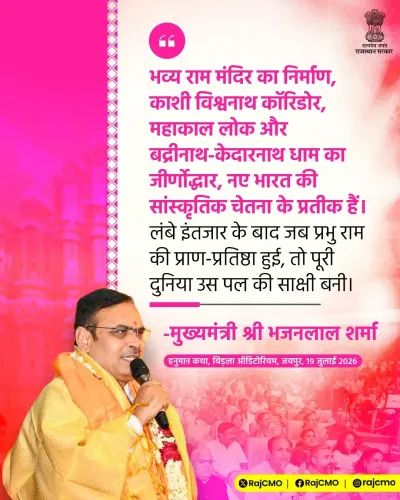
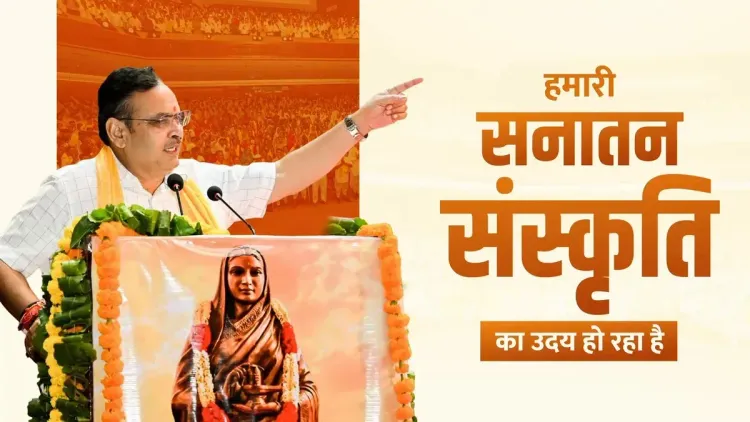
Rajasthan Chief Minister Bhajan Lal Sharma on Sunday, 31 May 2026, credited Prime Minister Narendra Modi with spearheading a nationwide revival of India's cultural and religious heritage, citing the construction of the Shri Ram Mandir in Ayodhya, the development of Mahakal Lok in Ujjain, and the transformation of Kedarnath Dham in Uttarakhand as landmark achievements.
Posting in Hindi on X, Sharma wrote: 'यशस्वी प्रधानमंत्री श्री नरेंद्र मोदी जी के नेतृत्व में आज भारत अपनी सांस्कृतिक विरासत और गौरव को पुनः स्थापित कर रहा है' ['Under the leadership of the accomplished Prime Minister Shri Narendra Modi, India today is re-establishing its cultural heritage and pride']. He added that the construction of the grand Ram Mandir, the Mahakal Lok corridor, and the rejuvenation of Kedarnath Dham are each strengthening the country's centres of faith.
Context
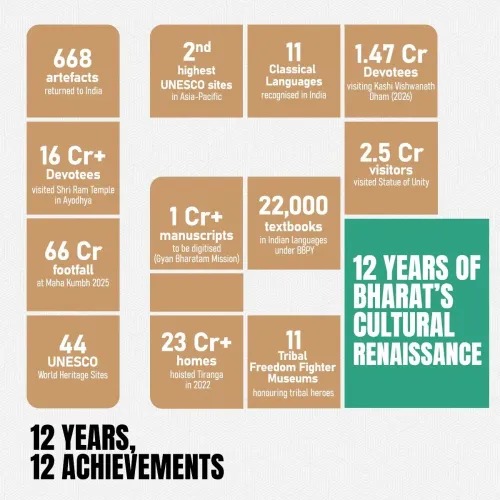
The post comes as the BJP-led central government has, since 2014, made the redevelopment of major Hindu pilgrimage sites a visible plank of its governance agenda. The Shri Ram Mandir in Ayodhya was inaugurated in January 2024 following a 2019 Supreme Court verdict that cleared the legal path for construction. The temple has since emerged as one of India's most visited religious destinations, drawing millions of pilgrims and tourists.
The Mahakal Lok corridor in Ujjain, Madhya Pradesh, inaugurated in 2022, extended the precinct around the Mahakaleshwar Jyotirlinga temple and became an early template for combining heritage infrastructure with religious tourism. The Kashi Vishwanath Corridor in Varanasi, completed between 2019 and 2021, had set the model that subsequent projects followed.
Policy Backdrop
The Kedarnath Dham redevelopment in Uttarakhand was initiated after the devastating 2013 flash floods severely damaged the shrine and surrounding infrastructure. Successive phases of reconstruction improved pilgrim access, added new facilities, and restored the sanctum's surroundings, with the central government committing significant funds to the effort.
Across these projects, the Union government has consistently combined temple reconstruction with corridor development and improved road and rail connectivity, positioning the upgrades as both a cultural mission and a driver of religious tourism revenue for host states. Budget allocations for heritage corridors have featured in multiple Union Budgets since 2019.
Stakeholders and Impact
The primary beneficiaries of these infrastructure upgrades are the tens of millions of pilgrims who visit these shrines annually, as well as the broader tourism and hospitality sectors in Ayodhya, Ujjain, and the Kedarnath valley. Local economies around each site have seen increased footfall and commercial activity following the completion of corridor and access projects.
Bhajan Lal Sharma, who assumed office as Rajasthan Chief Minister in December 2023, has consistently aligned his public messaging with the central government's cultural initiatives, reinforcing the BJP's broader narrative of civilisational renewal ahead of future electoral cycles. Rajasthan itself is home to several significant pilgrimage sites that could be candidates for similar corridor-style development.
What's Next
Analysts and policy watchers will track state and central budget allocations for additional heritage corridors, particularly as the 2027–28 pilgrimage season approaches. Any new temple or corridor projects announced by the Union government are likely to be closely supported by BJP-governed states including Rajasthan. The political salience of cultural heritage projects shows no sign of diminishing as a theme in BJP governance communication.
Point of View
Reinforcing a unified party message. The enumeration of three flagship projects — Ram Mandir, Mahakal Lok, Kedarnath — signals a deliberate attempt to present religious infrastructure as a tangible governance deliverable rather than merely symbolic politics. This framing serves a dual purpose: it consolidates the BJP's core voter base while positioning cultural heritage investment as mainstream development policy. As the 2027 state election cycle draws closer, such messaging is likely to intensify, with Rajasthan's own pilgrimage sites potentially entering the spotlight for similar corridor projects.
NationPress
17 Oct 2026
Frequently Asked Questions
What did Rajasthan CM Bhajan Lal Sharma say about PM Modi and cultural heritage?
Bhajan Lal Sharma said that under PM Narendra Modi's leadership, India is re-establishing its cultural heritage and pride, pointing to the construction of Ram Mandir in Ayodhya, the Mahakal Lok corridor in Ujjain, and the rejuvenation of Kedarnath Dham as key examples.
When was the Ram Mandir in Ayodhya inaugurated?
The Shri Ram Mandir in Ayodhya was inaugurated in January 2024, following a 2019 Supreme Court verdict that cleared the legal path for its construction.
What is Mahakal Lok and where is it located?
Mahakal Lok is a large temple corridor project surrounding the Mahakaleshwar Jyotirlinga temple in Ujjain, Madhya Pradesh. It was inaugurated in 2022 as part of the Modi government's heritage infrastructure programme.
Why was Kedarnath Dham redeveloped?
The Kedarnath Dham redevelopment in Uttarakhand was initiated after the 2013 flash floods severely damaged the shrine and surrounding infrastructure. The central government funded multiple phases of reconstruction and improved pilgrim access.
Who is Bhajan Lal Sharma?
Bhajan Lal Sharma is the BJP Chief Minister of Rajasthan, having assumed office in December 2023. He has consistently aligned his public messaging with the central government's cultural and governance initiatives.