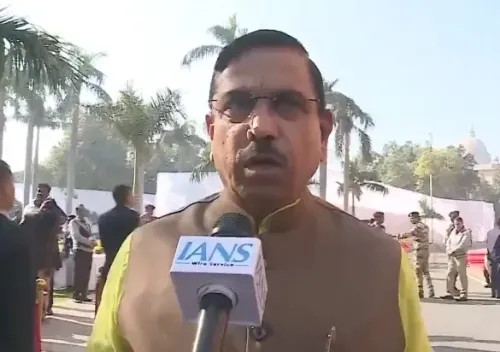
Joshi Hails India's Spiritual Resurgence Under Modi

Synopsis
Union Minister Pralhad Joshi on 18 June 2026 cited massive pilgrim figures — 16 crore at Ayodhya, 66 crore at Mahakumbh — to mark twelve years of the BJP government's 'development and heritage' agenda under PM Modi.
Key Takeaways
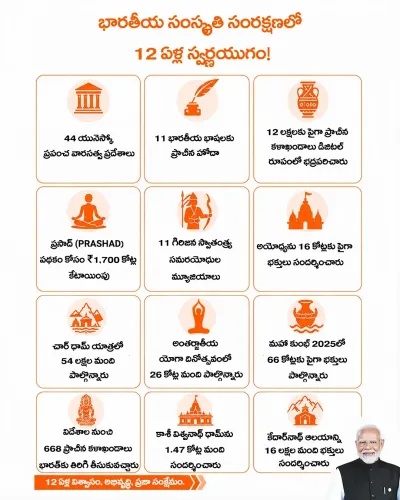
16 crore devotees have visited the Shri Ram Temple, Ayodhya since its consecration in January 2024, according to Joshi's post.
1.47 crore pilgrims visited Kashi Vishwanath Dham , Varanasi, whose corridor was inaugurated in December 2021.
66 crore participants attended the Mahakumbh 2025 at Prayagraj, the post states.
The post marks 12 years of the BJP-led government under the hashtag #12YearsOfVikasBhiVirasatBhi .
Key projects cited include the Kashi Vishwanath Corridor (2021) , Ram Temple consecration (2024) , and the Char Dham road connectivity project (approved 2016) .
The 'Vikas aur Virasat' framing links religious-infrastructure delivery with civilisational identity in official BJP messaging.
Union Consumer Affairs Minister Pralhad Joshi on Thursday, 18 June 2026, highlighted a surge in pilgrim footfall at India's major religious sites, attributing the trend to what he described as the 'visionary leadership' of Prime Minister Narendra Modi. Joshi cited figures of 16 crore devotees visiting the Shri Ram Temple in Ayodhya, 1.47 crore at Kashi Vishwanath Dham, and 66 crore participants in the Mahakumbh, framing them as evidence of a civilisational revival.
Context
Posting under the hashtag #12YearsOfVikasBhiVirasatBhi — translating roughly to 'development as well as heritage' — Joshi invoked a quartet of sites: Ayodhya, Kashi, Kedarnath, and the Mahakumbh at Prayagraj. The post reads: 'From Ayodhya to Kashi, Kedarnath to the Mahakumbh, Bharat's spiritual heritage is witnessing a historic resurgence under the visionary leadership of Hon'ble PM Shri Narendra Modi ji.' The hashtag marks twelve years of the BJP-led government's dual emphasis on infrastructure delivery and cultural identity at heritage sites.
Joshi concluded with a formulation that has become a recurring motif in official BJP messaging: 'A new era where Vikas aur Virasat [development and heritage] advance together.'
Policy Backdrop
The three sites cited have each been the focus of major central government interventions since 2014. The Shri Ram Temple in Ayodhya was consecrated on 22 January 2024, following the Supreme Court's 2019 verdict that cleared the way for construction. The Kashi Vishwanath Corridor in Varanasi — a sweeping redevelopment of the precinct around the ancient Shiva temple — was inaugurated in December 2021, demolishing hundreds of structures to create a wide processional route to the Ganges ghats.
At Kedarnath in Uttarakhand, reconstruction of the shrine town and its access infrastructure accelerated after the 2013 flash-flood disaster, with the Char Dham road connectivity project approved in 2016 to widen and upgrade Himalayan approach roads. The Maha Kumbh 2025 at Prayagraj was supported by both the Uttar Pradesh government and the Centre with large-scale logistics and crowd-management infrastructure.
Stakeholders and Impact
The pilgrim numbers, if sustained, carry significant economic weight for the tourism and hospitality sectors in Uttar Pradesh, Uttarakhand, and across India's religious-circuit economy. Heritage trusts, local traders, transport operators, and state tourism boards all stand to benefit from sustained high footfall at these corridors. Successive Union Budgets since 2014 have allocated funds for temple corridors, ghat beautification, and access roads at multiple Hindu pilgrimage centres, embedding religious tourism within the broader infrastructure push.
For the ruling BJP, the data points serve a dual political purpose: demonstrating governance outcomes on cultural promises while reinforcing the 'Vikas aur Virasat' brand ahead of future electoral cycles.
What's Next
Attention will turn to implementation reports on additional heritage-corridor projects announced in recent Union Budgets, including proposed corridors at other Char Dham sites and temple towns across southern and eastern India. Any parliamentary debate in the coming session on tourism infrastructure allocations or religious-site management will likely reference these footfall figures as a baseline. The government's ability to sustain and expand pilgrim infrastructure — managing both crowd safety and ecological concerns at sensitive Himalayan and riverine sites — will be a key test of the 'Vikas aur Virasat' framework going forward.
Point of View
Anchoring cultural pride in verifiable infrastructure outcomes rather than rhetoric alone. By sequencing Ayodhya, Kashi, Kedarnath, and Mahakumbh in a single post, it reinforces a unified 'pilgrimage economy' narrative that spans Uttar Pradesh and Uttarakhand — two electorally critical states. The 'Vikas aur Virasat' formulation has evolved into a durable governing philosophy that lets the party simultaneously claim modernisation credentials and civilisational stewardship. The scale of the figures cited, if corroborated, would mark a structural shift in India's domestic religious-tourism landscape with lasting economic and political consequences.
NationPress
17 Sept 2026
Frequently Asked Questions
How many people visited the Ram Temple in Ayodhya?
According to a post by Union Minister Pralhad Joshi on 18 June 2026, over 16 crore devotees have visited the Shri Ram Temple in Ayodhya since its consecration in January 2024.
What is the Vikas aur Virasat policy of the BJP government?
' Vikas aur Virasat ' — development and heritage — is a governing philosophy articulated by the BJP-led central government, combining infrastructure investment at religious and cultural sites with an emphasis on India's civilisational identity. Projects under this umbrella include the Kashi Vishwanath Corridor, the Char Dham road project, and the Ayodhya Ram Temple.
What were the Mahakumbh 2025 attendance figures?
Minister Pralhad Joshi's post states that 66 crore people participated in the Mahakumbh 2025 at Prayagraj. The event was supported by the Uttar Pradesh government and the Centre with large-scale infrastructure.
When was the Kashi Vishwanath Corridor inaugurated?
The Kashi Vishwanath Corridor in Varanasi was inaugurated in December 2021 as part of a broader redevelopment of the precinct around the ancient temple, creating a processional route to the Ganges ghats.
What is the Char Dham road connectivity project?
The Char Dham road connectivity project was approved in 2016 to widen and upgrade Himalayan approach roads to the four sacred shrines — including Kedarnath — improving pilgrim access and safety in Uttarakhand.