Pralhad Joshi Hails 655 Artefact Returns Under Modi Era
Synopsis
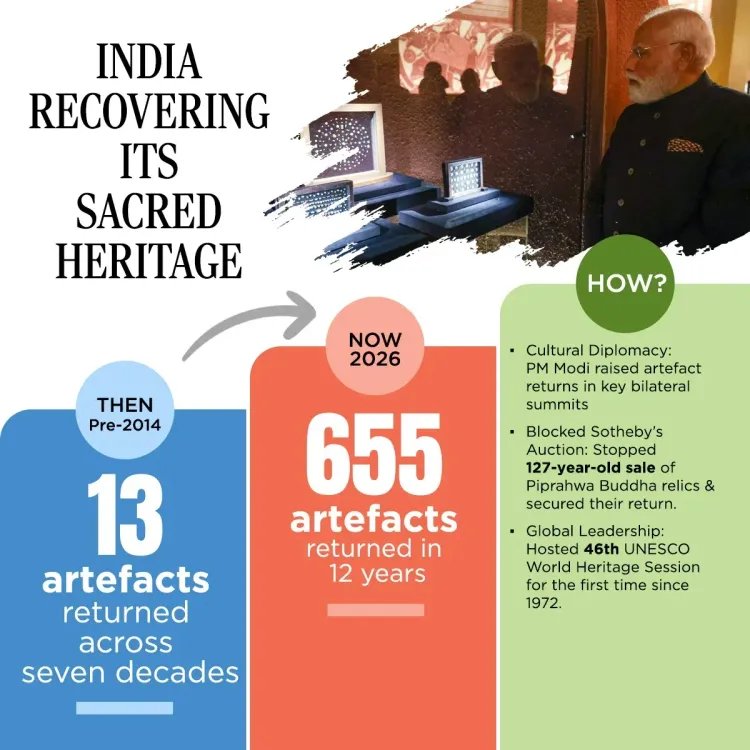
Union Minister Pralhad Joshi has highlighted India's repatriation of 655 cultural artefacts in 12 years under PM Modi, a dramatic leap from just 13 returns across seven decades before 2014, crediting cultural diplomacy and bilateral cooperation for the momentum.
Key Takeaways
Union Minister Pralhad Joshi posted on 18 June 2026 highlighting India's artefact repatriation record under PM Narendra Modi .
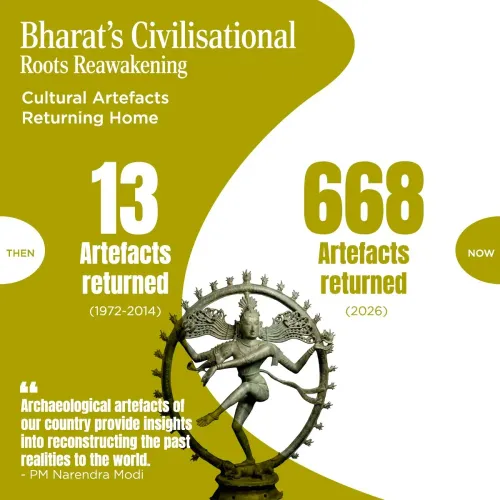
Only 13 artefacts were repatriated across seven decades before 2014; the figure rose to 655 artefacts in the subsequent 12 years .
The post was tagged #12YearsOfVikasBhiVirasatBhi , framing heritage reclamation as a BJP governance milestone.
India's recovery framework is anchored in the UNESCO 1970 Convention and the Antiquities and Art Treasures Act, 1972 .
The Ministry of Culture has expanded use of bilateral agreements and Interpol channels since 2014 to pursue outstanding claims.
Further repatriation announcements are expected during upcoming bilateral summits and UNESCO General Conference sessions.
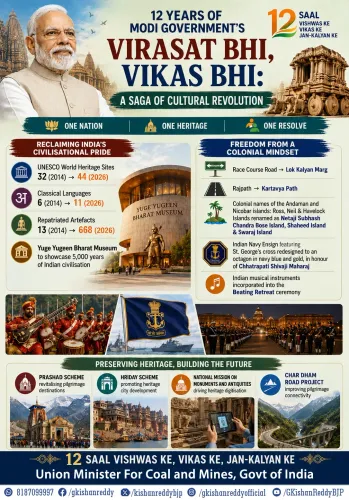
Union Consumer Affairs Minister Pralhad Joshi on Thursday, 18 June 2026, highlighted India's accelerating push to recover its cultural heritage, citing a sharp rise in artefact repatriations under the leadership of Prime Minister Narendra Modi. The minister contrasted just 13 artefacts returned across seven decades before 2014 with an unprecedented 655 artefacts repatriated over the last 12 years, calling it a restoration of India's civilisational pride.
Context
Joshi's post, tagged with the hashtag #12YearsOfVikasBhiVirasatBhi ('12 Years of Development as well as Heritage'), frames the repatriation drive as a signature achievement of the Modi government's cultural diplomacy. The minister credited 'global cooperation and a firm commitment to preserving our heritage' for the momentum, describing the effort as one aimed at 'restoring pride in its rich history for future generations.'
The post comes as the ruling Bharatiya Janata Party (BJP) marks twelve years of the Modi government's governance, with heritage reclamation positioned alongside infrastructure and economic milestones as a symbol of national resurgence.
Policy Backdrop
India's legal architecture for artefact recovery rests on two pillars: the UNESCO 1970 Convention on prohibiting illicit transfer of cultural property, which India ratified, and the Antiquities and Art Treasures Act, 1972, which governs domestic ownership and export controls. Together, these instruments give Indian authorities the standing to lodge formal recovery claims with foreign governments and international institutions.
Before 2014, repatriations were largely dependent on the goodwill of foreign museums and governments, resulting in sporadic, low-volume returns. Since then, the Ministry of Culture has expanded the use of bilateral agreements, Interpol channels, and sustained diplomatic pressure to systematically pursue outstanding claims. This approach mirrors a broader Global South movement to address colonial-era and illicit transfers of cultural property through institutional mechanisms rather than one-off appeals.
India's strategy has drawn on high-profile state visits — artefacts have been returned during bilateral summits with the United States, Australia, Canada, and several other nations — turning cultural diplomacy into a visible instrument of foreign policy.
Stakeholders and Impact
The primary beneficiaries are Indian heritage institutions, including national and state museums, as well as the communities whose cultural and religious objects were removed, often under colonial administration or through illicit trade networks. Scholars and conservationists have noted that repatriated artefacts carry documentary, artistic, and spiritual significance that cannot be replicated by replicas or digital archives.
For ordinary citizens, the returns carry symbolic weight: each repatriated object is presented by the government as evidence that India's civilisational identity is being actively defended on the world stage. The Ministry of Culture has periodically organised public exhibitions of returned artefacts to maximise this visibility.
What's Next
Analysts tracking the repatriation dossier expect further announcements to coincide with upcoming bilateral state visits and multilateral forums, including sessions of the UNESCO General Conference. New memoranda of understanding with countries that still hold significant collections of Indian antiquities are also anticipated. The government's framing of heritage reclamation as a development metric — alongside economic and infrastructure indicators — signals that cultural diplomacy will remain a prominent plank of India's foreign and domestic policy narrative in the months ahead.
Point of View
Though independent verification of those exact figures remains outstanding. Positioning cultural diplomacy alongside economic metrics signals that the ruling party views civilisational identity as an electoral asset, not merely a foreign-policy footnote. The broader significance is structural: India has shifted from reactive, goodwill-dependent recoveries to a proactive, treaty-backed repatriation architecture that is likely to outlast any single government.
NationPress
19 Sept 2026
Frequently Asked Questions
How many artefacts has India repatriated under PM Modi?
According to a post by Union Minister Pralhad Joshi, India repatriated 655 artefacts in the 12 years following 2014, compared to just 13 in the seven decades before that.
What is India's legal basis for demanding artefacts back from other countries?
India relies primarily on the UNESCO 1970 Convention on illicit transfer of cultural property and the Antiquities and Art Treasures Act, 1972 as the legal foundation for its repatriation claims.
Which ministry handles artefact repatriation in India?
The Ministry of Culture coordinates repatriation efforts, working with the Ministry of External Affairs, Interpol, and foreign governments to recover antiquities held abroad.
What is the hashtag #12YearsOfVikasBhiVirasatBhi about?
The hashtag translates roughly to '12 Years of Development as well as Heritage' and is being used by BJP leaders to mark twelve years of the Narendra Modi government, highlighting both economic and cultural achievements.
Why were so few artefacts returned to India before 2014?
Before 2014, India's repatriation efforts were largely dependent on the voluntary goodwill of foreign museums and governments, resulting in sporadic returns; the post-2014 strategy shifted to systematic use of bilateral agreements and international legal channels.