PM Modi Highlights 'Virasat Bhi, Vikas Bhi' Push for Cultural Heritage
Synopsis
Prime Minister Narendra Modi on 18 June 2026 reaffirmed India's cultural heritage push under the 'Virasat Bhi, Vikas Bhi' vision, citing antiquities repatriation and pilgrimage infrastructure upgrades as twin pillars of the government's decade-long policy drive.
Key Takeaways
Prime Minister Narendra Modi posted on 18 June 2026 reaffirming the government's cultural heritage agenda under the 'Virasat Bhi, Vikas Bhi' framework.
The government's dual approach combines antiquities repatriation from abroad with domestic pilgrimage and heritage infrastructure upgrades.
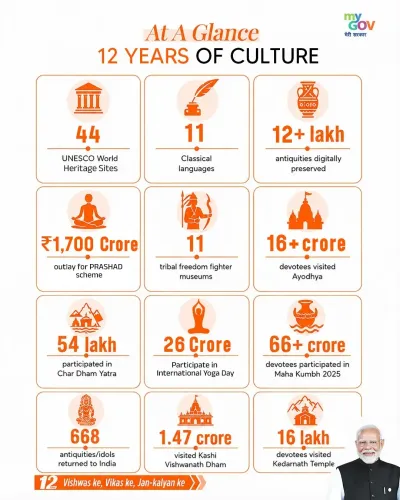
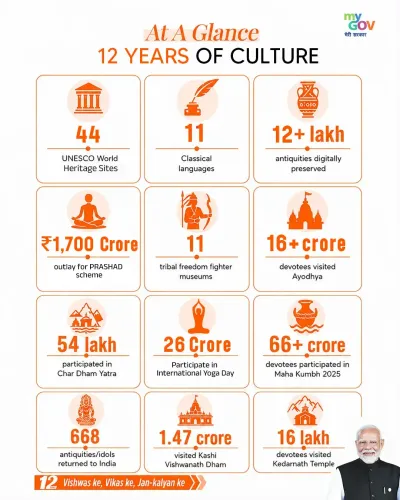
The PRASHAD Scheme and Swadesh Darshan Scheme , both launched in 2014-15 , form the policy backbone of this effort.
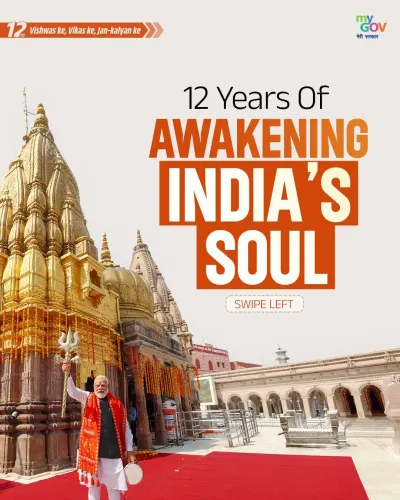
The Kashi Vishwanath Corridor in Varanasi , inaugurated in 2021 , stands as the flagship example of heritage-led urban development.
Key beneficiaries include pilgrims, heritage tourists and local artisans across multiple states.
Upcoming Ministry of Culture budget allocations and new bilateral artefact-return agreements are the next milestones to watch.
Prime Minister Narendra Modi on Thursday, 18 June 2026 posted on X reaffirming the government's commitment to preserving and celebrating India's cultural heritage, citing the guiding vision of 'Virasat Bhi, Vikas Bhi' (Heritage as well as Development) as the framework driving efforts from antiquities repatriation to pilgrimage infrastructure upgrades.
Context
In his post, Prime Minister Modi wrote that 'India's cultural heritage is being preserved, celebrated and carried forward with renewed vigour,' pointing to a dual thrust — bringing back artefacts from abroad and strengthening the physical and spiritual infrastructure that connects citizens to their roots. The statement frames heritage not as a relic of the past but as a living, evolving national asset.
The phrase 'Virasat Bhi, Vikas Bhi' has become a recurring motif in the government's cultural communications, positioning conservation and economic development as complementary rather than competing goals. Heritage tourism, pilgrimage circuits and museum modernisation are all cited as expressions of this philosophy.
Policy Backdrop
The policy architecture behind the Prime Minister's remarks stretches back to 2014-15, when the PRASHAD Scheme — Pilgrimage Rejuvenation and Spiritual Heritage Augmentation Drive — was launched as a central sector scheme to upgrade infrastructure at pilgrimage and heritage destinations across the country. In the same year, the Swadesh Darshan Scheme was introduced to create themed tourist circuits linking heritage sites in multiple states.
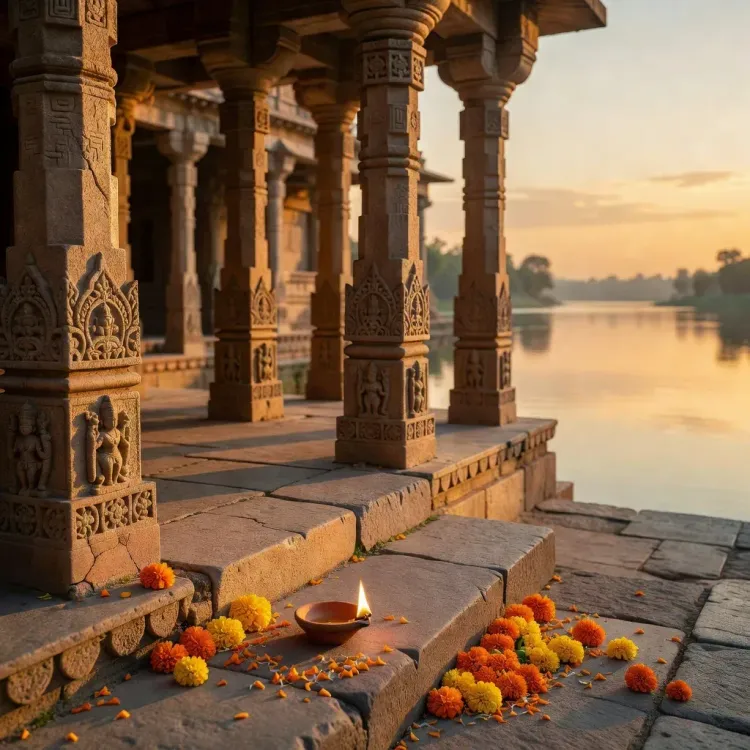
Flagship projects such as the Kashi Vishwanath Corridor in Varanasi, inaugurated in 2021, exemplify the government's approach: connecting a major temple with riverfront ghats through large-scale urban redevelopment that blends devotional access with tourism infrastructure. The Ministry of Culture has simultaneously pursued bilateral and multilateral agreements to repatriate antiquities that had left India's shores over decades.
Repatriation drives have been pursued as instruments of both soft power and domestic heritage revival, with artefacts returned from several countries serving as high-profile diplomatic milestones. These efforts run in parallel with the physical infrastructure push, reinforcing a coherent cultural policy narrative.
Stakeholders and Impact
Pilgrims, heritage tourists and local artisans are among the primary beneficiaries of this twin-track approach. Upgraded pilgrimage infrastructure reduces friction for devotees while drawing domestic and international visitors whose spending supports local economies. Artisan communities around heritage sites gain visibility and market access through state-backed cultural promotion.
The broader pattern holds across states irrespective of which party governs at the state level when central scheme funding is involved, suggesting a degree of institutional momentum behind the policy. Museum modernisation and digital archiving initiatives extend the reach of heritage preservation beyond physical sites to younger, urban audiences.
What's Next
Observers will watch the next Ministry of Culture budget cycle for fresh allocations to the PRASHAD and Swadesh Darshan schemes, as well as any new bilateral agreements on artefact returns expected at forthcoming diplomatic summits. The government's continued emphasis on 'Virasat Bhi, Vikas Bhi' signals that cultural heritage will remain a visible plank of India's domestic and foreign policy identity in the months ahead.
Point of View
Signalling that heritage is not a soft add-on but a core governance priority heading into the second half of 2026. The 'Virasat Bhi, Vikas Bhi' framing is politically significant because it pre-empts any narrative that development and tradition are in tension — a message aimed simultaneously at domestic voters and international audiences tracking India's soft-power projection. Repatriation milestones serve as diplomatic trophies that reinforce national pride, while pilgrimage infrastructure spending translates cultural sentiment into tangible economic activity in constituencies that matter electorally. Analysts will read the timing as a possible precursor to a policy announcement or a forthcoming bilateral summit where artefact returns may feature prominently.
NationPress
17 Sept 2026
Frequently Asked Questions
What is 'Virasat Bhi, Vikas Bhi' that PM Modi mentioned?
'Virasat Bhi, Vikas Bhi' translates to 'Heritage as well as Development' and is the guiding philosophy of the Modi government's cultural policy, positioning conservation of India's heritage and economic development as complementary goals rather than competing priorities.
What is the PRASHAD Scheme in India?
The PRASHAD Scheme — Pilgrimage Rejuvenation and Spiritual Heritage Augmentation Drive — is a central government scheme launched in 2014-15 to develop and upgrade infrastructure at pilgrimage and heritage destinations across India.
How many antiquities has India repatriated under Modi?
India has secured the return of antiquities from several countries under bilateral and multilateral agreements pursued since 2014, though precise cumulative figures for 2026 are subject to official Ministry of Culture announcements.
What is the Kashi Vishwanath Corridor?
The Kashi Vishwanath Corridor is a major redevelopment project in Varanasi that connects the historic Kashi Vishwanath temple with the riverfront ghats. It was inaugurated in 2021 and is considered the flagship example of the government's heritage-led urban development model.
What is the Swadesh Darshan Scheme?
The Swadesh Darshan Scheme, launched in 2014-15 , creates themed tourist circuits linking heritage and cultural sites across multiple Indian states, aiming to boost domestic tourism while promoting India's diverse cultural identity.