Sitharaman Highlights 12 Years of Cultural Revival Under PM Modi
Synopsis
Finance Minister Nirmala Sitharaman invoked the hashtag #12YearsOfVikasBhiVirasatBhi to highlight PM Modi's cultural revival agenda, pointing to heritage preservation, antiquities restoration, and the growth of spiritual tourism since 2014.
Key Takeaways
Finance Minister Nirmala Sitharaman posted on June 18, 2026 citing 12 years of cultural revival under PM Narendra Modi .
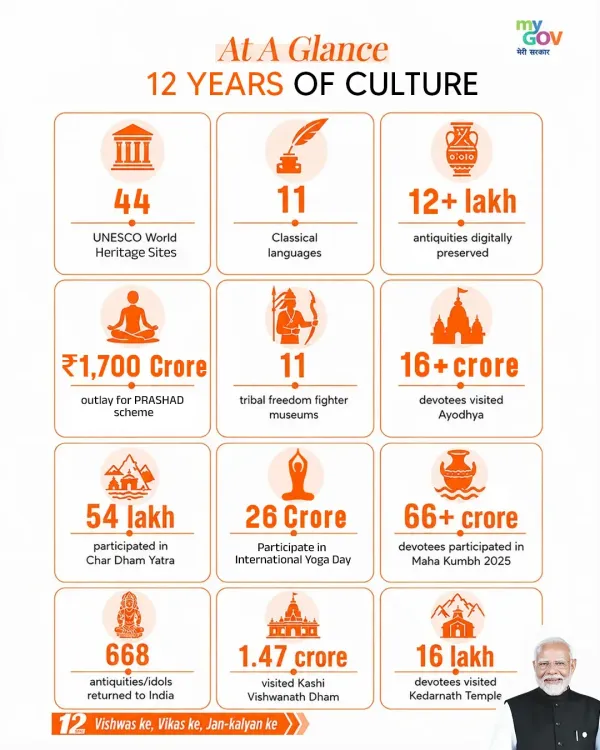
The government's PRASAD Scheme , launched in 2014-15 , has funded infrastructure upgrades at more than 40 pilgrimage sites .
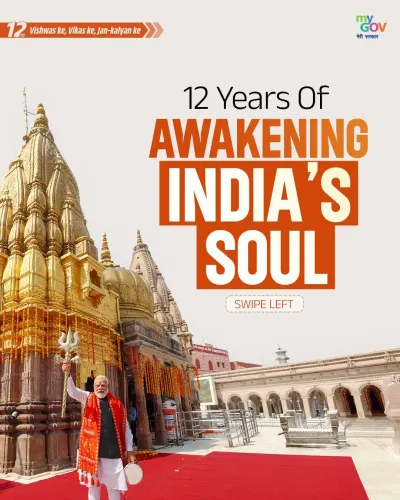
The Kashi Vishwanath Corridor in Varanasi , completed in 2021 , stands as the flagship symbol of heritage-linked urban redevelopment.
Hundreds of stolen antiquities have been repatriated from the US , UK , Australia and other countries through bilateral agreements.
The Swadesh Darshan Scheme has supported theme-based heritage and spiritual tourist circuits nationwide.
Future Union Budget allocations and possible amendments to the Antiquities and Art Treasures Act are being closely watched.
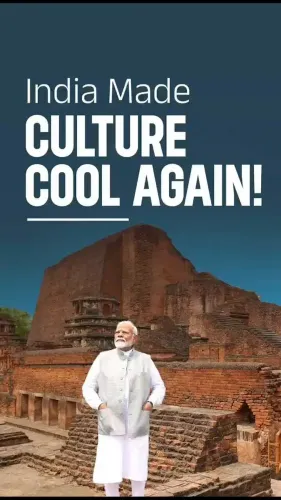
Union Finance Minister Nirmala Sitharaman on Thursday, June 18, 2026, highlighted India's cultural resurgence under Prime Minister Narendra Modi, pointing to heritage preservation, antiquities restoration, and the strengthening of spiritual tourism as defining achievements of the past twelve years.
Context
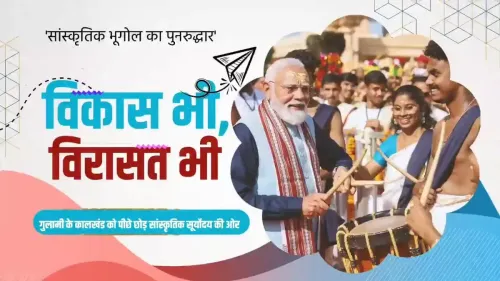
Sitharaman's post, tagged with the hashtag #12YearsOfVikasBhiVirasatBhi ('12 Years of Development as well as Heritage'), frames the government's cultural agenda as a deliberate and sustained policy continuum. The phrase encapsulates the ruling BJP's long-standing argument that economic development and civilisational heritage are not competing priorities but complementary ones.
The minister stated that under PM Modi's leadership, 'India has witnessed a remarkable cultural revival,' citing three pillars: preserving heritage, restoring antiquities, and strengthening spiritual tourism.
Policy Backdrop
The cultural push began in earnest with the launch of two flagship schemes in 2014-15. The PRASAD Scheme (Pilgrimage Rejuvenation and Spiritual Augmentation Drive) channelled central funding to upgrade infrastructure and amenities at more than 40 major pilgrimage sites across India. Simultaneously, the Swadesh Darshan Scheme supported the integrated development of theme-based tourist circuits, including heritage and spiritual routes.
A landmark moment in the heritage restoration drive was the inauguration of the Kashi Vishwanath Corridor in Varanasi in 2021, which became the government's most visible symbol of pairing temple restoration with urban redevelopment. In parallel, the Archaeological Survey of India intensified efforts to repatriate stolen or illegally exported artefacts, securing the return of hundreds of antiquities from countries including the United States, the United Kingdom, and Australia through bilateral agreements.
These efforts collectively signal a policy architecture that links tourism infrastructure investment with the symbolic reclamation of historical and spiritual sites — generating employment in hospitality, crafts, and local pilgrim economies in the process.
Stakeholders and Impact
The primary beneficiaries of this policy direction include communities living around major pilgrimage and heritage sites, whose local economies depend heavily on religious tourism. Artisans, priests, hospitality workers, and small traders in towns such as Varanasi, Ayodhya, Tirupati, and Kedarnath have been among the most directly affected constituencies.
Spiritual tourists — both domestic and international — represent another key stakeholder group. The government has consistently projected India's temple corridors and restored ghats as world-class pilgrimage destinations, aiming to capture a larger share of global religious tourism flows.
What's Next
Attention will now turn to the next Union Budget, where observers will watch for fresh allocations to the Culture Ministry and any new site announcements under existing heritage schemes. Potential amendments to the Antiquities and Art Treasures Act — which governs the protection and repatriation of cultural property — are also being tracked in parliamentary circles. Sitharaman's post, coming from the Finance Minister herself, may signal that cultural heritage spending will remain a budgetary priority in the year ahead.
Point of View
Using the 'Vikas Bhi Virasat Bhi' framing to rebut any narrative that development has come at the cost of cultural identity. For the Finance Minister specifically to amplify this theme signals that the cultural economy — pilgrim infrastructure, heritage tourism, artefact repatriation — is now considered a mainstream economic portfolio, not merely a symbolic one. The hashtag-driven commemoration also serves to consolidate the BJP's core voter base by presenting governance as a restoration of civilisational pride. Analysts will note that such messaging typically precedes budget cycles in which culture and tourism ministries receive visible allocation boosts.
NationPress
19 Sept 2026
Frequently Asked Questions
What is the #12YearsOfVikasBhiVirasatBhi hashtag about?
The hashtag marks twelve years of the Modi government's dual focus on economic development ('Vikas') and cultural heritage ('Virasat'), used by BJP leaders to highlight infrastructure and cultural revival achievements since 2014.
What is the PRASAD Scheme?
The PRASAD Scheme (Pilgrimage Rejuvenation and Spiritual Augmentation Drive) was launched in 2014-15 to fund infrastructure upgrades — roads, amenities, connectivity — at more than 40 major religious and pilgrimage sites across India.
How many antiquities has India repatriated under PM Modi?
The government has secured the return of hundreds of stolen or illegally exported artefacts from countries including the United States, the United Kingdom, and Australia through bilateral cultural property agreements, though exact post-2024 figures are not independently verified.
What is the Kashi Vishwanath Corridor?
The Kashi Vishwanath Corridor is a large-scale heritage and urban redevelopment project in Varanasi completed in 2021, which restored and expanded the precinct around the Kashi Vishwanath temple and became the government's most prominent symbol of cultural revival.
What is the Swadesh Darshan Scheme?
The Swadesh Darshan Scheme is a Ministry of Tourism programme launched in 2014-15 for the integrated development of theme-based tourist circuits across India, including dedicated heritage and spiritual tourism routes.