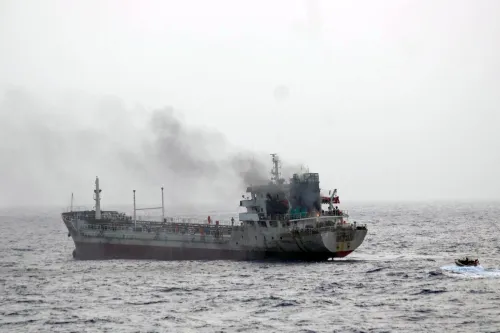
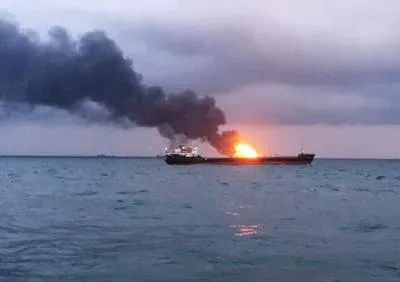
Sonowal confirms Indian seafarer killed in Oman vessel strike

Synopsis
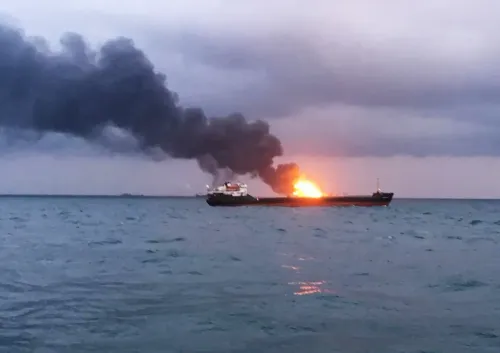
Indian merchant vessel MSV AL JUSUFI was struck by an unidentified aerial object near Oman on November 2, killing Gujarat seafarer Gandhar Nahim Ajij. Minister Sonowal confirmed 13 survivors were rescued by the Omani Coast Guard and that repatriation efforts are underway via the Indian Embassy.
Key Takeaways
MSV AL JUSUFI , carrying 14 Indian seafarers , was struck by an unidentified aerial object near the coast of Oman on November 2, 2026 .
Gandhar Nahim Ajij from Gujarat succumbed to his injuries, making him the sole fatality confirmed in the incident.
13 surviving crew members were evacuated and rescued by the Omani Coast Guard .
The Ministry of Ports, Shipping and Waterways and the Indian Embassy in Oman are coordinating survivor support and repatriation of both crew and mortal remains.
The aerial object that struck the vessel has not been officially identified or attributed to any party.
An Indian merchant vessel navigating near the coast of Oman was struck by an unidentified aerial object on November 2, killing one crew member and triggering an emergency rescue that brought thirteen survivors to safety. Union Minister of Ports, Shipping and Waterways Sarbananda Sonowal confirmed the incident on November 3, identifying the vessel as MSV AL JUSUFI and the fatality as Gandhar Nahim Ajij, a seafarer from Gujarat.
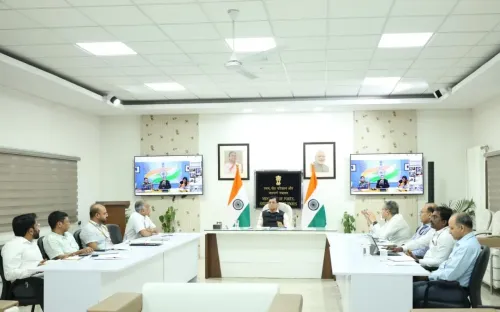
Sonowal's post offered both an operational briefing and a personal note of grief: 'My heartfelt condolences go out to his family and loved ones during this hour of immense grief.' The 13 surviving crew members were evacuated and rescued by the Omani Coast Guard. The Ministry of Ports, Shipping and Waterways and the Indian Embassy in Oman are now coordinating with local authorities on two immediate priorities — welfare support for the survivors and the repatriation of both the living crew and the mortal remains of Ajij.What struck MSV AL JUSUFI — and what remains unknown
The post describes the object as 'unidentified aerial,' a phrase that pointedly avoids attribution. No perpetrator, cause, or weapon type has been named in the Minister's statement. The waters off Oman sit at the edge of one of the world's most strategically sensitive maritime corridors — the Arabian Sea approaches to the Strait of Hormuz — a zone that has seen a pattern of vessel incidents in recent years. The nature of this specific strike, however, remains officially uncharacterised, and any claim beyond that would go beyond what the Ministry has confirmed.
Repatriation and consular machinery now in motion
Established consular protocols govern what happens next. The Indian Embassy in Oman, working in tandem with the Ministry, will facilitate documentation, medical support for survivors, and the legal and logistical steps required to return Ajij's remains to his family in Gujarat. The Ministry of Ports, Shipping and Waterways periodically manages such incidents involving Indian-crewed vessels in international waters, drawing on coordination frameworks with foreign coast guards and diplomatic missions. For the thirteen men who survived, the immediate phase is care and clearance before their journey home begins.
A Gujarat family's loss, a fleet's reminder
Gandhar Nahim Ajij was one of an estimated 14 Indian nationals aboard the vessel — a figure that reflects how heavily India's seafaring workforce is deployed across global shipping routes. India is among the world's largest suppliers of merchant navy personnel, and incidents like this carry weight well beyond a single voyage. Sonowal's decision to name Ajij publicly, identify his home state, and address his family directly signals an intent to place a human face on what could otherwise read as a bureaucratic incident report.
The investigation into what struck the ship, and who or what launched it, is the question that now hangs over the Arabian Sea.
Point of View
Named disclosure — identifying the victim by name and state — is a deliberate departure from the opaque incident-management language that has frustrated seafarer families in past crises. For the Ministry, however, the harder test will come in the investigation phase: the 'unidentified aerial object' framing leaves the government significant diplomatic room to manoeuvre, but also means Indian families and the maritime community will be watching closely for whether accountability ever follows the condolence.
NationPress
3 Nov 2026
Frequently Asked Questions
What happened to the Indian ship MSV AL JUSUFI near Oman?
MSV AL JUSUFI, carrying 14 Indian seafarers, was struck by an unidentified aerial object while navigating near the coast of Oman on November 2, 2026. Thirteen crew members were rescued by the Omani Coast Guard, but one seafarer, Gandhar Nahim Ajij from Gujarat, died from his injuries.
Who was Gandhar Nahim Ajij?
Gandhar Nahim Ajij was an Indian seafarer from Gujarat who was serving aboard MSV AL JUSUFI. He was the sole fatality confirmed in the aerial object strike near the Omani coast on November 2, 2026.
How many Indian sailors survived the MSV AL JUSUFI attack?
Thirteen of the fourteen Indian crew members aboard MSV AL JUSUFI survived and were rescued by the Omani Coast Guard after the vessel was struck.
What is the Indian government doing for the survivors and the deceased sailor's family?
The Ministry of Ports, Shipping and Waterways and the Indian Embassy in Oman are in contact with local Omani authorities to provide immediate assistance to the 13 survivors and to arrange the swift repatriation of both the surviving crew and the mortal remains of Gandhar Nahim Ajij.
What struck the Indian vessel near Oman — was it a missile or a drone?
Minister Sonowal described the object only as an 'unidentified aerial object.' As of his November 3 statement, no official identification, attribution, or weapon type has been confirmed by the Indian government.