Pralhad Joshi shares PM Modi's remarks on renewable energy's role
Synopsis
Union Minister Pralhad Joshi amplified PM Modi's address at a renewable energy summit on November 3, 2026, with the Prime Minister stressing that clean energy has visibly shaped Indian lives and national development this year, reinforcing India's long-standing 500 GW and net-zero commitments.
Key Takeaways
PM Narendra Modi called the summit 'particularly significant' given what he described as 'special circumstances,' according to a post by Minister Pralhad Joshi on November 3, 2026 .
Modi stated that renewable energy has played 'an important role in our lives and development of the country' over the past year.
India committed at COP26 (2021) to 500 GW of non-fossil fuel capacity by 2030 and net-zero emissions by 2070 .
India co-founded the International Solar Alliance with France in 2015 to accelerate global solar deployment.
Minister Joshi holds a dual portfolio spanning New and Renewable Energy and Consumer Affairs, Food and Public Distribution , linking energy policy to household welfare.
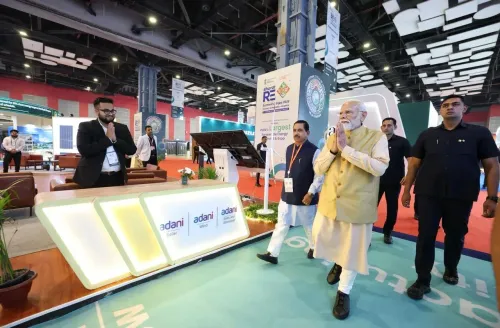
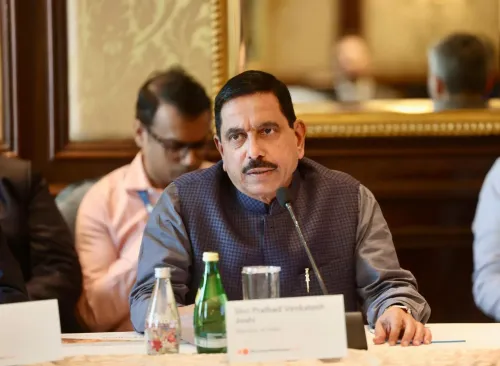
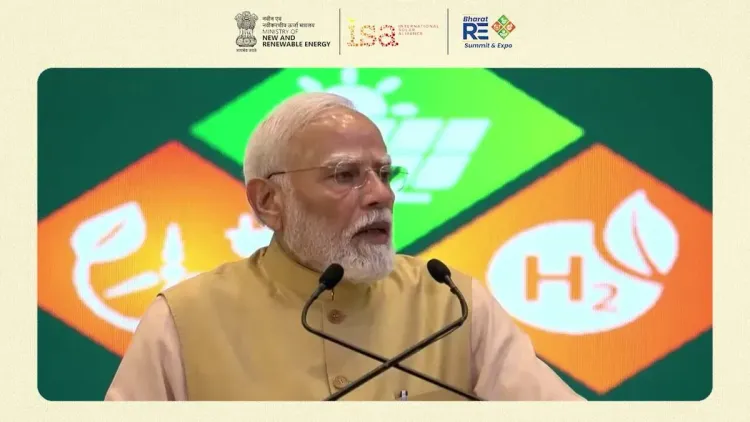
Renewable energy is no longer a future ambition — it is already reshaping everyday Indian life, Prime Minister Narendra Modi declared at a summit whose significance he called exceptional given the 'special circumstances' surrounding it. Union Minister Pralhad Joshi, who holds the New and Renewable Energy portfolio, amplified the remarks on X on Tuesday, November 3, 2026, underscoring the government's continued push to keep clean energy at the centre of India's development narrative.
PM Modi's framing: renewables as lived experience, not just policy
Sharing a video clip of the Prime Minister's address, Minister Joshi quoted PM Modi directly: 'This Summit is particularly significant as it is being held under special circumstances. We have seen this year how renewable energy has played an important role in our lives and development of the country.' The phrasing is deliberate — 'our lives' moves the conversation away from gigawatt targets and into the realm of households, livelihoods, and daily energy access.
The language signals a government keen to personalise an often-abstract policy domain, connecting grid-level capacity additions to the experience of individual citizens.
India's renewable energy arc: from COP pledges to grid reality
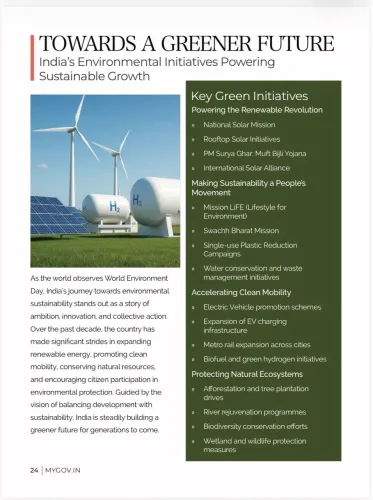
The backdrop to these remarks is years of accelerating ambition. At COP26 in 2021, India committed to reaching 500 GW of non-fossil fuel capacity by 2030 and achieving net-zero emissions by 2070 — pledges that have since shaped successive Union Budgets and energy policy frameworks. Solar, wind and green hydrogen have all received sustained policy and financial attention as India works to diversify away from coal.
India also co-founded the International Solar Alliance with France in 2015, positioning itself as a global champion of solar deployment rather than merely a domestic consumer of clean technology.
Joshi's dual portfolio and the messaging strategy
As the minister simultaneously overseeing Consumer Affairs, Food and Public Distribution and New and Renewable Energy, Joshi occupies a rare vantage point where energy economics and household welfare intersect. His amplification of Modi's summit remarks is consistent with a broader government messaging pattern: frame renewable expansion not as an environmental concession but as an engine of growth and a stabiliser of daily life for ordinary Indians.
With the next tranche of renewable capacity statistics due and international climate meetings on the horizon, the government's choice to spotlight this summit — however its 'special circumstances' resolve — keeps India's clean energy story in the public eye.
For a country that has staked its climate credibility on the world stage, the message from the top is unambiguous: the energy transition is already happening, and it is already being felt.
Point of View
This is strategically important: energy security and affordability resonate with voters far more than abstract emissions targets. Minister Joshi's role as the amplifier is equally telling — with his dual portfolio bridging energy and consumer welfare, he is the natural face to sell this integration. Ahead of any international climate forum, signalling domestic impact alongside global ambition is India's way of asserting it is both a credible partner and a sovereign actor on its own development timeline.
NationPress
3 Nov 2026
Frequently Asked Questions
What did PM Modi say about renewable energy at the summit?
PM Modi said the summit is 'particularly significant' due to 'special circumstances' and noted that renewable energy has 'played an important role in our lives and development of the country' this year, as quoted by Minister Pralhad Joshi.
What is India's renewable energy target by 2030?
India has committed to achieving 500 GW of non-fossil fuel electricity capacity by 2030 , a pledge made at the COP26 climate summit in 2021 .
What is Pralhad Joshi's role in India's renewable energy sector?
Pralhad Joshi is India's Union Minister for New and Renewable Energy, a portfolio he holds alongside Consumer Affairs, Food and Public Distribution. He is a senior BJP leader from Karnataka.
What is the International Solar Alliance?
The International Solar Alliance is a multilateral body co-founded by India and France in 2015 to accelerate solar energy deployment across member countries, especially in sun-rich developing nations.
When did India commit to net-zero emissions?
India committed to achieving net-zero emissions by 2070 as part of its updated climate pledges announced at the COP26 summit in Glasgow in 2021 .